
Our review
 Analysis by Lookingapps
I think of DoorDash as a practical way to handle the meal or household errand I would otherwise have to make myself. It is a free Food & Drink app from DoorDash, and its appeal is the breadth of the job it can do: finding a meal, adding groceries, or looking for a retail essential in one place. That convenience is useful, but it does not automatically make every order the best choice. I would treat the app as a flexible option for particular days, not as a guaranteed bargain or a replacement for every local shop.
What free access does—and does not—tell you
Downloading and using the app is free, so there is no purchase decision just to try it. That is the clearest cost fact I can rely on. It is different from saying that an order itself is free or that every choice costs the same as buying in person. Before committing, I would check the complete amount shown for the specific order and compare it with what I would spend by collecting the items myself.
That distinction matters because a delivery app is valuable partly for the time and effort it can save, not only for the goods it brings. If I am stuck at home, short on time, or coordinating food for other people, paying more than a direct trip might be worthwhile. If I am already near a shop and only need one inexpensive item, convenience may not offset the extra cost or the wait. I would make that decision order by order rather than assume that free access means low-cost delivery.
The app has a 4.7 average across around 6.3 million ratings, and it has been installed over 50 million times. Those figures suggest that many people use it, but they are not a promise that a particular restaurant, grocery selection, or delivery experience will suit me. I would use the app’s actual options and final order details—not its popularity—as the basis for deciding whether a specific purchase makes sense.
More useful than a restaurant-only shortcut
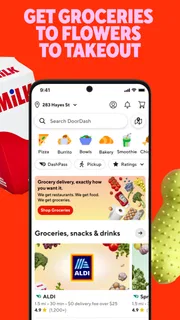
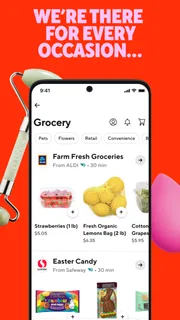
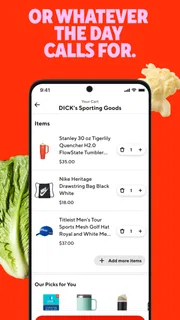
The strongest practical idea here is having food, groceries, and retail essentials within the same general ordering experience. That can simplify a day when my needs are mixed: I may want a prepared lunch now and also need a few basics at home. Instead of starting from scratch with separate searches, I can see whether DoorDash serves those needs in the area I am ordering from.
That breadth is also a trade-off. A large set of possible merchants does not mean each one is equally convenient or equally suited to a particular task. I would start with the thing I need most urgently, check whether a suitable option is available, and only then add secondary items. This keeps a grocery top-up from becoming a distraction from finding a timely meal, or the other way around.
For a restaurant order, I would compare the menu and the total with the restaurant’s own ordering or pickup option when price matters more than doorstep convenience. For routine groceries, a dedicated grocery service or a trip to a nearby store may be a better fit if I need a larger planned shop or want to choose everything in person. DoorDash’s advantage is that it can be the convenient middle ground when I value one ordering app and delivery more than the extra control of shopping directly.
More articles

Instagram Makes Everyday Moments Worth Sharing
A rare social app that can be a photo diary, a neighborhood window, and a lively conversation in the same session—though its best moments still require a little restraint.
A useful way to handle mixed errands
One non-obvious way I would use it is to separate an urgent need from a flexible one. If dinner is the priority, I would choose that first and treat household essentials as optional additions only if the available selection and final cost make sense. It is easy to focus on the convenience of bundling and overlook that the best restaurant choice and the best place to buy a household item may not be the same merchant or the same kind of order.
For a small grocery run, I would make a short list before opening the app. A list helps me avoid browsing broadly and adding items simply because they appear alongside the essentials. I would also check the quantities and descriptions carefully before placing the order; when I cannot inspect goods myself, accuracy matters more than it does during an in-person shop.
Everyday situations where the convenience earns its place
Imagine I finish work late, have nothing ready for dinner, and discover that I am also out of a basic household item. I can use DoorDash to see whether a meal and the needed essential are available for delivery, then decide whether the combined convenience is worth the total. The important step is not assuming that one app guarantees one perfect combined order. I would check what is actually offered and avoid delaying dinner just to force a broader shopping plan.
It can also help when someone in the household is ill or unable to get out. In that situation, the value is the reduced need to travel and carry items, and a somewhat less economical order may still be the sensible one. I would keep the request focused on necessities and choose from what is available, rather than expecting the app to reproduce the selection or personal judgment of walking through a store.
For a group meal, the app can make it easier to browse restaurant choices without making one person travel to collect the food. My practical advice is to settle on the type of meal and the budget before browsing. That gives the group a useful boundary and makes it easier to compare a delivered order with pickup. If everyone is already nearby and can collect food without trouble, direct pickup may offer better control over cost and timing.
Trade-offs I would keep in mind
Delivery is not the same as buying directly from a merchant. The convenience depends on what appears for the location and order at that moment, and I would not build a plan around an item or restaurant until I had checked its availability in the app. A broad catalog can make discovery easier, but it can also take time to sift through choices when I already know exactly what I want.
There is also a practical difference between ordering a prepared dish and ordering groceries. A restaurant meal is usually chosen for an immediate occasion; groceries require more attention to item details, quantities, and whether the selection covers the actual list. I would be more cautious with a grocery order that has several must-have items than with a simple dinner order. If one missing item would make the whole shop pointless, going to the store myself may be the safer choice.
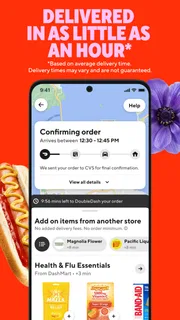
Timing is another reason to avoid treating delivery as a certainty. When I need something by a strict deadline, I would check the options before relying on them and keep a backup plan if the task is essential. The app is most useful when it reduces effort while leaving me some flexibility. If there is no room for a delay or substitution in my plan, direct collection or an in-person purchase can be more dependable for me.
I would also resist browsing when I am trying to control spending. The convenience of having multiple kinds of merchants available can encourage me to add more than I intended. A written list, a clear budget, and a final review of the order are simple safeguards. They make it easier to tell whether I am paying for a real time-saving benefit or just making an unplanned purchase.
Who is likely to get the most from it?
I would recommend trying it to people who regularly need prepared food delivered, value having grocery and retail options in the same app, or have days when leaving home is difficult. It may be especially handy when time, mobility, weather, or a busy household makes an errand inconvenient. The app is free to install, is rated for Everyone, and DoorDash’s long-standing presence makes it a familiar option for many users; those facts make trying it straightforward, but the usefulness still depends on local availability and the order in front of you.
It is less compelling for someone who prioritizes the lowest possible spend above convenience, prefers to inspect every grocery item personally, or can easily pick up meals nearby. In those cases, ordering directly from a restaurant, choosing pickup, or shopping in person may be a better fit. I would not install it expecting every merchant to appear or every purchase to beat a direct alternative. Its value is conditional: it is strongest when avoiding the trip matters enough to justify the actual order total.
The app is currently at version 15.298.4 and supports Android 8.0 or later. The version detail is useful if I am checking whether an older Android device can run it, while the age rating indicates that it is intended for a general audience. For iPhone users, I would check compatibility in the relevant app store before installing rather than assume the Android requirement applies to iOS.
My buy-or-skip verdict
My verdict is to try DoorDash if delivery convenience is something I will genuinely use. It costs nothing to download, and the combination of restaurant food, groceries, and retail essentials gives it a broader role than a meal-only app. I would judge it by the options and total for each order, not by the convenience pitch alone.
I would keep it for occasions when saving a trip is worth more to me than finding the cheapest route, and skip it for routine purchases where pickup is easy or where I need complete control over grocery selection. DoorDash has earned a place as a useful backup and occasional time-saver in my app collection, rather than an automatic choice for every meal or errand.
Pros
- Live order tracking shows progress from pickup to delivery.
- Group ordering makes it easy to collect orders from several people.
- Scheduled delivery helps plan meals ahead of time.
- Pickup options can save on delivery fees.
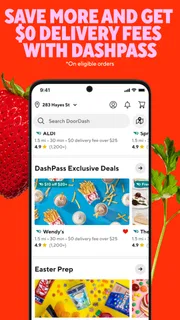
- DashPass can reduce eligible delivery fees for frequent users.
Cons
- Service availability varies by location.
- Menu prices may be higher than in-store prices.
- Small orders can incur extra fees.
- Delivery times may change during busy periods.
- DashPass benefits require a paid subscription.


