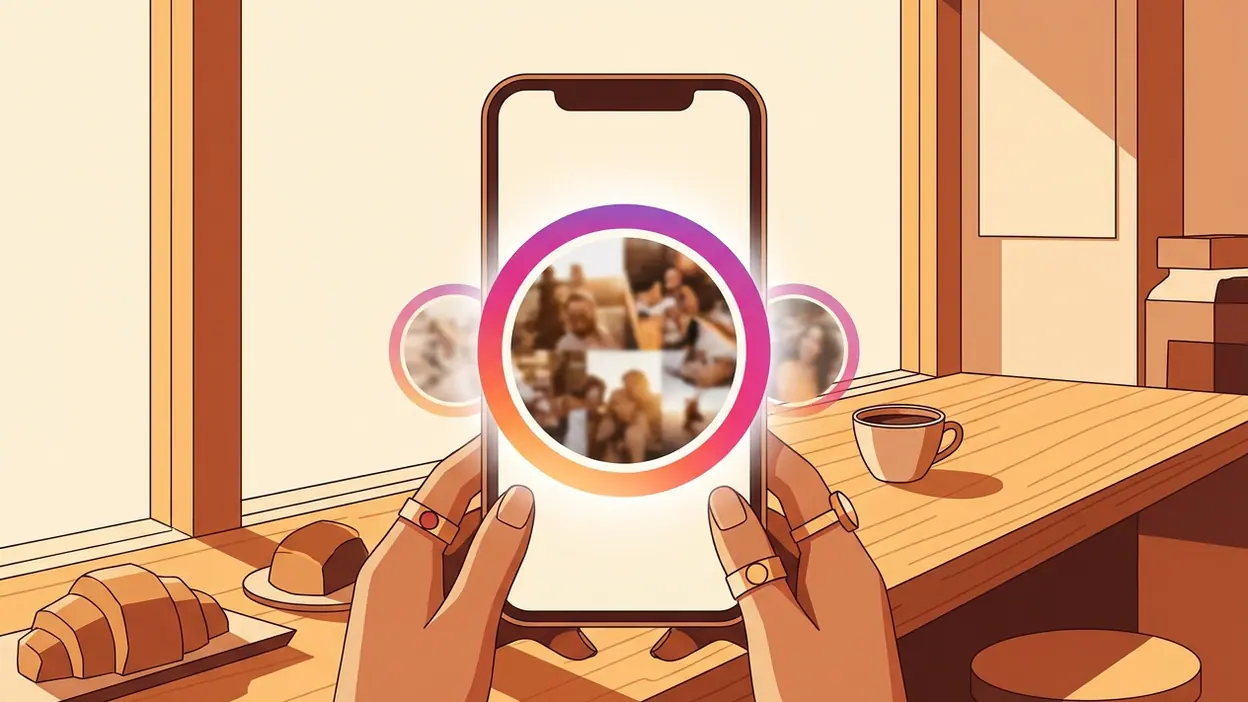
 Article about Instagram
Instagram Makes Everyday Moments Worth Sharing
 Analysis by Lookingapps
Some apps earn a place on your phone by solving a task. Instagram earns its place by making ordinary life feel worth noticing. A coffee shop’s morning light, a friend’s half-finished renovation, a small business showing how its products are made: the app turns these fragments into a visual conversation that can be browsed, answered, and revisited. That mix of discovery and intimacy is why Instagram is our App of the Week—not because it has the most features, but because its strongest ones still feel unusually natural together.
That judgment comes with a qualification. Instagram is crowded, restless, and very good at keeping you scrolling. Its best use is not endless consumption; it is following people and places that make your own world feel a little larger. Used with that intention, it remains one of the most compelling social apps on iOS and Android.

Why it won the week
The app’s central trick is giving different kinds of sharing a common home. The main feed is for posts you may want to keep; Stories make casual updates feel temporary and low-pressure; Reels put short video within easy reach; and direct messages let a public discovery turn into a private exchange. These formats are distinct, but moving between them takes little thought. You can see a restaurant’s dish, watch its kitchen prepare it, and send the clip to a friend without changing apps.
That continuity matters more than a long feature list. WhatsApp Messenger is better when the conversation itself is the point, while YouTube is built for longer viewing and deeper video libraries. Instagram occupies the lively middle: a place where a message, a visual update, and a recommendation can lead into one another. It is at its best when social browsing has a purpose, even a modest one, such as catching up with friends or finding somewhere new for lunch.
It also gives creators and small businesses a practical way to show their work in context. A baker can post a finished cake, share the process in a Reel, answer a customer in messages, and announce a new menu in Stories. No single post has to do everything. The app’s formats let people build a picture over time, which is a more persuasive way to earn attention than a polished advertisement dropped into an unrelated feed.
What you notice first
Instagram is visually fluent. Photos and videos take the lead, while captions, comments, profile details, and messages fill in the human context. A good profile feels less like a static page than a small, changing publication: a collection of interests, places, work, and passing moments. The familiar row of profile circles for Stories makes current updates easy to spot, and the feed gives you a quick sense of what people have been sharing lately.
The interface is dense, but its basic gestures are familiar. Tap to open, swipe to move through, respond when something catches your attention. That low learning curve makes the app welcoming to a new user, while the range of formats gives regulars plenty to do. The strongest detail is how little effort it takes to react. A quick reply to a Story can begin a conversation that would feel too formal as a separate message.
Discovery is another immediate draw. Search and recommendations can take you beyond people you already follow, surfacing a local artist, a useful cooking technique, or a corner of a city you had not considered visiting. The quality varies, and the recommendation feed can drift, but the possibility of finding something specific and unexpectedly relevant is central to the app’s appeal.
Where it earns a place in daily life
The clearest use case is keeping up with people whose lives are too varied for a single group chat. Friends can share quick updates without expecting a full conversation; close contacts can reply directly; and a more considered post can stay on a profile for longer. Instagram lets people choose how public or fleeting a moment should feel, even if the boundaries are not always perfect.
It is equally useful as a visual notebook for interests. Home cooks can save ideas, runners can follow local clubs, and travelers can collect recommendations from people who have actually been somewhere. The app is not a dependable filing system, but saved posts and topic-based accounts can make browsing productive. I have found that following a handful of thoughtful local accounts is more rewarding than chasing viral content: the former can change where you shop, eat, or spend a free afternoon.
For creators and independent businesses, the practical value is direct. A profile can serve as a portfolio, a news channel, and a point of contact. Reels help demonstrate a process; Stories can share time-sensitive updates; messages make questions easy to answer. Zoom Workplace is designed for scheduled meetings and coordinated work, not this kind of casual public presence. Instagram is no substitute for a proper storefront or booking system, but it can make a small operation feel approachable and current.
What feels fresh, even now
Instagram’s freshness is not about being new. It comes from the way its visual formats keep shifting what sharing can feel like. A Story does not have to be a polished performance; it can be a quick glimpse of the walk home. A Reel can be entertaining, but it can also show a craft, a recipe, or a repair in a way a still image cannot. The app gives everyday expertise room to be both useful and watchable.
There is a particular pleasure in seeing someone’s point of view develop across formats. A photographer might post a finished image, show the location in a Story, and explain the editing choices in a caption. A neighborhood shop can introduce its staff and show what just arrived. That layered sense of presence is more compelling than a single post, and it is one reason people return even when they have already checked their messages elsewhere.
The result can be cultural as well as personal. Trends travel quickly, but so do local events, niche skills, and small communities that may not have an obvious meeting place offline. Instagram does not guarantee that discovery will be meaningful; it simply puts an unusually broad range of visual voices within reach. The experience improves when you actively shape what appears rather than treating the recommendation feed as an authority.
Who will connect with it fastest
Instagram clicks fastest for people who think visually and enjoy sharing in small doses. It suits artists, food enthusiasts, travelers, hobby groups, independent shops, and anyone who likes seeing what friends are doing without asking for a formal update. It is also a strong fit for people who discover places through images and short video, then want to pass a find along with a quick message.
People who prefer calm, chronological communication may feel less at home. The app encourages movement between content, recommendations, Stories, Reels, and messages, and its pace can be distracting. If your priority is a straightforward private chat, WhatsApp Messenger is the more focused choice. If you want an uninterrupted library of long-form video, YouTube is a better fit. Instagram is for the social life around the content: who shared it, what they thought, and who else might care.
It can also work for someone who rarely posts. Following a considered set of accounts turns the app into a window onto friends, interests, and nearby places. Still, the experience is richer when you contribute occasionally, whether that means answering a Story or sharing a small moment. You do not need to become a creator. A little participation is enough to make the feed feel less like a broadcast and more like a community.
Where it beats bigger names—and where it doesn’t
Instagram’s advantage is its blend of public discovery and personal response. YouTube excels at sustained viewing, but its relationship with the viewer is often centered on a channel or video. WhatsApp Messenger makes private communication wonderfully direct, but it is not built to introduce you to new creators or places. Instagram connects those modes: a public post can catch your eye, a Story can add a human detail, and a message can carry the exchange somewhere more personal.
That flexibility is a strength, but it also explains the limits. The feed can mix close friends with recommendations and advertising, making it harder to tell why a post appeared. Reels are easy to dip into and difficult to leave, so a quick check can quietly become a long session. Public sharing also calls for care: review who can see your posts, be selective about location details, and remember that screenshots can outlast temporary updates.
Instagram is not the best tool for every kind of connection. Important plans can disappear beneath new content, and messages do not replace a well-organized team workspace. Nor is the app automatically a healthy place to measure your own life against other people’s carefully chosen highlights. The experience depends heavily on whom you follow and how often you let the feed set the agenda. Curating your follows and taking control of notifications are not chores; they are part of using the app well.
Why now is a good moment
Social apps can start to feel like obligations: another inbox, another stream, another demand for attention. Instagram is worth revisiting because its most satisfying use is smaller and more intentional than its reputation suggests. Follow a few people whose work you genuinely admire, add local accounts that help you find things to do, and use Stories or messages to keep real connections warm. The app becomes more useful when you decide what it is for before opening it.
There is also value in the way Instagram lets people show rather than merely announce. A new project, a family recipe, a neighborhood opening, or a personal milestone can be shared with texture and personality. The format gives others something to respond to, not just a line to acknowledge. That is a modest but durable social advantage, especially for people whose interests or work benefit from being seen in motion.
The timing is right not because the app has suddenly become flawless, but because its useful core is easy to overlook beneath its scale. Strip away the pressure to post constantly and the temptation to scroll without a destination, and what remains is a versatile visual network: part catch-up, part inspiration board, part public square for niche interests. Few apps bring those roles together with as little friction.
My editor’s note is simple: Instagram is most rewarding when you use it to notice people, not just content. It deserves the week’s pick for making that kind of connection feel immediate, visual, and easy to share. Keep your feed deliberate, protect your time, and let the app lead you toward a conversation or a real-world discovery. Under those conditions, it is not just another social app to check; it is a lively little window worth opening.