

Our review
 Analysis by Lookingapps
When I need a ride without sorting out a car, parking, or a route myself, Lyft is the kind of app I want to open: put in a destination, check the ride options, and decide whether the trip suits my timing and budget. My impression is that it works best as a practical on-demand ride service, not as a complete replacement for public transit or a way to plan every part of a journey. The key question is less whether it can get you across town and more whether a ride is the right choice for that particular trip.
How Lyft fits into a trip today
Lyft is a free Maps & Navigation app from Lyft, Inc., built around finding and requesting a nearby driver. It is rated for Everyone, and the app has a 4.8 average from around 715,000 ratings. Those figures suggest a service many people rely on, but they cannot tell you whether a driver will be available at your exact location or whether a particular pickup will be convenient. That still depends on the place, time, and conditions when you request a ride.
The most useful way to approach the app is as one option in a broader travel plan. If I am carrying bags, running late, or travelling somewhere that is awkward to reach on foot, a ride can save effort. If I have plenty of time and a direct transit route, public transportation may make more sense. Lyft is most compelling when the convenience of being picked up close to where I am outweighs the expense and uncertainty that come with requesting a car.
For an ordinary evening out, I would use it to compare the available choices with the alternatives before leaving. I would check the pickup point, make sure the destination is correct, and consider whether walking a short distance to a clearer meeting spot might reduce confusion. That last step matters: the app can arrange a ride, but a vague entrance, crowded curb, or unfamiliar venue can still make the handoff harder than the booking itself.
What the current release tells us
The current version is 2026.40.3.1791962843, and the app first appeared on August 28, 2012. That long span and the presence of a current release point to a product that has continued to be maintained, but a version number alone does not reveal what changed in the latest update. I would not treat it as proof that any one screen, ride option, or workflow has recently been redesigned.
For someone who already uses Lyft, the practical takeaway is straightforward: check that the app is up to date before relying on it for a time-sensitive journey, and take a moment to orient yourself after an update rather than assuming every screen is unchanged. If you are new to the service, the release number is less important than whether the app is available on your phone and whether rides can be arranged where you need them. The minimum operating system is 9, so an older device should be checked before making Lyft the centre of a travel plan.
Lyft has more than 50 million installs and around 151,000 reviews. That reach makes it a familiar choice for many riders, but popularity is not a substitute for checking the local experience. A service can be widely used overall and still be a poor fit for a particular neighbourhood, late hour, or trip with an unusually tight arrival deadline. I would treat broad adoption as reassurance that the app is established, not a guarantee about an individual pickup.
More articles

Instagram Makes Everyday Moments Worth Sharing
A rare social app that can be a photo diary, a neighborhood window, and a lively conversation in the same session—though its best moments still require a little restraint.
A useful workflow when the trip matters
One habit I recommend is entering the destination before you are in a rush. Confirm the address and the intended entrance, then look at the pickup location separately. People often focus on where they are going and overlook where a driver can actually stop. Near a large building, station, or busy street, choosing a sensible meeting point can make the ride easier to coordinate than simply standing at the nearest door.
For a routine trip, I would also leave a little breathing room instead of planning around the most optimistic possible pickup. A nearby driver may be matched, but traffic, a busy curb, or a slow handoff can still affect when the journey begins. If arriving at a specific time is essential, I would compare Lyft with transit or another available option and avoid making a fragile plan that depends on everything going perfectly.
Another practical trade-off is convenience versus control. A ride request can spare you from navigating multiple transfers, but you have less control over the exact route than you do when walking or using a map to guide your own drive. For a short trip through a complicated area, I would stay attentive to the destination and the route rather than treating the app as a reason to switch off. The service handles the matching and ride arrangement; it does not remove the need to make sensible travel decisions.
Where it stands beside other ways to get around
Compared with public transit, Lyft is more direct when the pickup and drop-off points are convenient, and it can be particularly appealing when carrying luggage or travelling with someone who finds transfers difficult. Transit is often the better choice when it serves the route well and the schedule works, because it avoids arranging an individual car for the trip. I would not choose a rideshare automatically just because the app is easy to open.
Compared with a taxi, the main difference from a rider’s perspective is the app-led process: the trip begins with a digital request and a driver match rather than flagging down a cab or arranging one through a separate dispatch method. That can feel simpler if you prefer handling the request on your phone. A taxi may be preferable where it is readily available and you would rather take the option already at the curb, especially when the app’s pickup point is awkward.
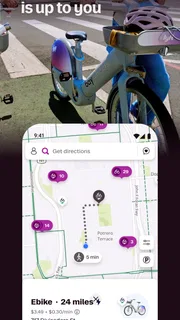
Compared with walking or cycling, Lyft trades physical effort for a car ride and the extra coordination that comes with a pickup. For a very short distance, walking can be more predictable than waiting at a busy location. For longer journeys, a rideshare may be more comfortable, but it is worth considering whether transit can cover most of the route and a short walk can handle the rest. That mixed approach can be more practical than expecting a single app to solve every leg.
What can frustrate riders
The biggest limitation is that an app cannot make local supply or road conditions predictable. A driver match and an easy pickup are not guaranteed simply because the request is clear. If you are in a place where cars have trouble stopping, or if you need to be somewhere at an exact time, the convenience may be less dependable than it first appears. I would keep a backup plan for important appointments rather than assuming every request will work out smoothly.
There is also a small but meaningful burden on the rider to communicate a usable pickup point. Being near a destination does not always mean being easy to collect, and a crowded entrance can leave both parties unsure where to meet. I find it useful to look for a landmark or a safe, accessible place to wait. This is especially relevant when meeting friends at a busy venue: agreeing on a clear pickup spot beforehand can prevent a last-minute scramble.
Lyft is not the right choice for someone who wants every trip to be planned around fixed transit schedules, nor for a rider who would rather avoid app-based coordination altogether. It may also be a poor fit when the journey is short enough to walk, when transit is direct, or when a tight deadline leaves no room for pickup uncertainty. Recognizing those cases makes the app more useful, not less: I reach for it when its convenience genuinely solves a problem.
Who is likely to get the most from it
I would recommend trying Lyft if you often need a car without driving yourself, value arranging a ride from your phone, or occasionally face routes where transfers and carrying things are inconvenient. It can be especially handy as a fallback when a planned transit journey becomes impractical. New users should think through a simple first trip before depending on it for a high-stakes arrival: choose a familiar destination, check the pickup location, and give yourself time to understand the process.
By contrast, someone whose everyday routes are already well served by transit may find that Lyft is useful only now and then. A person who dislikes coordinating a pickup or who cannot comfortably wait at the suggested meeting point may prefer another way to travel. And if your trip depends on a precise arrival, comparing more than one option is wiser than assuming an on-demand ride will eliminate all delays.
What I would keep an eye on
Because the current version identifies a maintained product but does not, by itself, explain its changes, I would judge future updates by their visible effect on everyday use: whether it is easier to select a clear pickup point, understand the request before confirming, and manage a ride when plans change. Those are the details that matter more to a rider than a long version string. For existing users, a release is valuable when it makes a familiar task smoother without making the basic workflow harder to follow.
I would also keep evaluating Lyft against the alternatives available for each route rather than treating it as a default. Local availability, pickup conditions, and the shape of the journey can change the best choice from one day to another. My advice is to open the app early enough to make a considered decision, verify the destination and meeting point, and keep transit or walking in mind when either is more dependable.
Overall, Lyft is a useful, established option for arranging a ride when convenience matters more than having a fully self-directed journey. I like it most as a flexible tool in a wider travel toolkit, not as a promise that every trip will be effortless. If you are comfortable with app-based ride coordination and have a practical reason to avoid driving, it is worth keeping on your phone; if public transit or a short walk already fits your needs, there is no reason to force a rideshare into the plan.
Pros
- Upfront fare estimates help riders compare costs before booking.
- Scheduled rides make it easier to plan trips in advance.
- Driver profiles and ratings offer useful context before pickup.
- In-app ride tracking helps friends follow a trip.
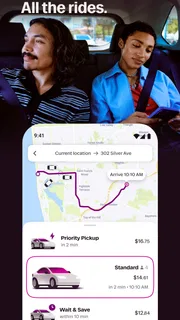
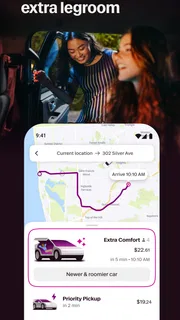
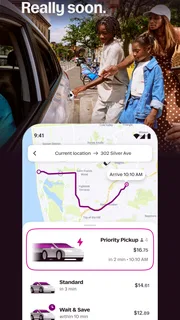
- Multiple ride options suit different budgets and group sizes.
Cons
- Prices can rise sharply during busy periods.
- Pickup times may be unreliable in areas with fewer drivers.
- Ride availability varies widely by city and time.
- Some trips may include extra fees beyond the estimated fare.
- Account or payment issues can delay access to support.


