


Our review
 Analysis by Lookingapps
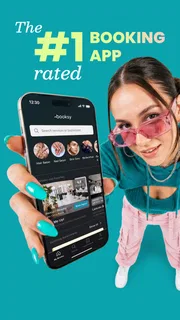
Choosing a beauty or grooming appointment is often less about finding a famous salon than finding a time and service that fit your day. Booksy for Customers is built around that practical problem: it lets me look for local professionals and arrange appointments through an app, rather than relying entirely on phone calls or messages. I see its strongest appeal in making the search and booking process easier to manage, especially when I am flexible about where to go or need to compare available options.
What matters when choosing a booking app
Before using a booking platform, I would ask three simple questions: does it cover the kind of appointment I need, can I judge whether a provider suits me, and does it make scheduling easier than contacting businesses one by one? Booksy is a beauty app from Booksy International sp. z o.o., and its focus extends beyond salon visits to wellness and grooming. That breadth makes it useful for people who want one place to explore different kinds of personal-care appointments.
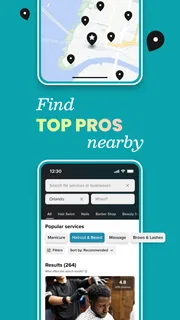
Discovery is most valuable when I do not already have a regular provider. Instead of starting with a general search and then opening several business pages, I can use the app as a place to look for professionals and consider the options together. That changes the task from “find a business, then figure out how to book” into a more direct search-and-schedule routine. It is not a guarantee that every local provider will appear, but it can make the first step less scattered.
I would also think about how settled my preferences are. If I already know the exact professional I want and have a reliable way to contact them, an app may not improve much. If I am new to an area, trying a different service, or coordinating an appointment around work, a searchable booking tool has a clearer advantage. The benefit depends on having relevant local choices and on being willing to make the decision within the app.
Where Booksy earns its place
The most useful part of Booksy for Customers, in my view, is the combination of browsing and booking. A directory alone can help me find names, but it leaves the appointment step for later. A booking-focused app is more convenient when I can move from considering a provider to choosing a time without switching back and forth between search results, calls, and messages.
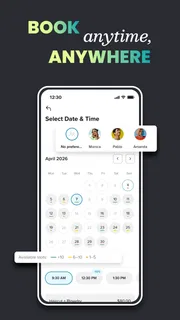
That matters at awkward moments. If I remember during a lunch break that I need a haircut, or want to arrange a beauty appointment after checking my calendar in the evening, I can look for an option then rather than waiting for business hours to make a call. The service is designed for booking at any time, though the actual appointment still depends on what a professional makes available. I would treat the app as a way to check and arrange, not as a promise that a particular slot will always be open.
A practical tip is to search with the appointment itself in mind rather than choosing a business based only on its name or general appeal. For a first visit, I would compare the available service information and timing before committing. Two providers in the same broad category may be a very different fit for the specific result I want. Taking a moment to check the details can prevent the common mistake of booking an appointment that sounds right in general but does not match the actual need.
More articles

Instagram Makes Everyday Moments Worth Sharing
A rare social app that can be a photo diary, a neighborhood window, and a lively conversation in the same session—though its best moments still require a little restraint.
Another useful workflow is to plan the appointment around the rest of the day, not just the first open time. A slot that looks convenient may involve an awkward trip or leave too little room before another commitment. I would use the search-and-book process to weigh timing against location and service choice, rather than treating the earliest available appointment as automatically best. This is a small but meaningful shift: the app helps with scheduling, while I still need to make the judgment about what works in real life.
The app also makes more sense as a repeat-use tool than as a one-off directory. If I find a professional I like, having a booking route in the same place can simplify the next appointment. But I would not assume that every user’s preferred business will be listed, or that every local area offers the same range. Its usefulness is naturally strongest when the professionals I would consider are represented and have appointment options that suit my routine.
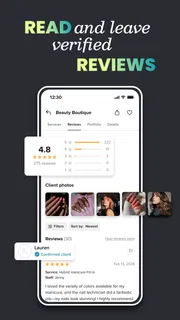
Its standing among users is notable: it has a 4.9 average from around 1.1 million ratings, alongside roughly 26,000 written reviews. More than 10 million installs suggest that many people have tried it, but those figures are context rather than a substitute for checking local coverage. A highly rated platform can still be less useful to someone whose preferred salon does not use it or whose area has few suitable listings.
For a free app rated for everyone, the threshold to try it is low. It was released in 2014, and its current version is 26.10.2200; it requires Android 8.0 or later. I would still check compatibility on the device I plan to use. The important decision is less about the download and more about whether the available local choices are good enough to replace my existing booking habit.
When another route may be better
Booksy is not automatically the best option for someone who has a trusted stylist, barber, or therapist and already books directly without friction. A direct conversation can be better when I need to explain an unusual request, ask several detailed questions, or discuss a schedule that is not represented by the options shown in an app. In that situation, calling or messaging the business may provide more flexibility than browsing standard appointment availability.
It is also not a replacement for every kind of local search. A general map or search service may be the better starting point when I want to discover businesses based on neighborhood, travel route, or other local context. Booksy’s advantage is the appointment-oriented journey; a broader search tool can be more useful for exploring a place or comparing businesses that do not rely on the platform. I would use whichever approach answers the question I actually have, rather than forcing every search through one app.
There is a trade-off in convenience, too. An app can make scheduling feel quick, but a quick booking is only useful if I have checked the service and time carefully. I would pause before confirming a first appointment, especially if I am choosing an unfamiliar professional. If I need reassurance about a specific technique, accessibility need, or other personal requirement, direct contact may be the sensible step before booking. Ease of scheduling should not replace a conversation when the details matter.
Coverage is another reason to keep alternatives in mind. The app can only help with the professionals and appointment choices available through it. If a search does not surface the kind of provider I need, that does not mean the service is unavailable locally; it may simply be easier to search elsewhere and contact a business directly. I would avoid spending too long repeating nearly identical searches when a local directory or a personal recommendation is more likely to answer the question.
For people who prefer to make appointments by phone, or who rarely book beauty and grooming services, the app may add an extra step rather than remove one. Likewise, someone who values an ongoing personal relationship with a provider may prefer to keep scheduling in the channel they already use. Booksy is most compelling when the convenience of finding and arranging an appointment in one place outweighs the familiarity of that established routine.
Making the switch without losing your routine
I would try Booksy alongside my current method before changing everything. For the next appointment, I could search for the kind of professional I already use and see whether the app offers a suitable option. If it does, I can test how well the booking process fits my schedule. If it does not, I have lost little time and can continue with direct contact or another search method.
This gradual approach is useful because the real value is local and personal. A platform may be convenient in one neighborhood and less helpful in another, or work well for one service while leaving another need unmet. Rather than judging it only by its broad beauty and grooming focus, I would assess whether it can handle the appointments I actually make. One successful booking is a better reason to adopt it than a large install count alone.
Before relying on it for a time-sensitive appointment, I would also check the selected service and appointment details carefully. That habit is worthwhile on any booking platform, but especially when trying a new provider. For an important event or a service with specific requirements, I would leave room to confirm details directly if anything is unclear. The app can streamline the routine parts; it cannot make an unsuitable appointment suitable.
My recommendation for the right kind of user
I recommend Booksy to people who regularly book beauty, wellness, or grooming services and want a more organized way to find and schedule local professionals. It is particularly appealing if I am exploring providers, arranging appointments outside the usual call-and-message routine, or trying to fit self-care around a busy week. Its strongest case is practical rather than flashy: it brings discovery and booking into the same process.
I would be more cautious if I already have a dependable direct relationship with a provider, need a detailed conversation before committing, or live somewhere the app does not show appealing options. In those cases, direct booking or a broader local search may be the better choice. My advice is to use Booksy as a convenient first stop, then judge it by the quality and suitability of the appointments it actually helps you arrange. If those choices fit your needs, it can become a genuinely useful part of your routine; if not, there is no reason to abandon the methods that already work.
Pros
- Book appointments with participating businesses at any time.
- See available appointment times before choosing a service.
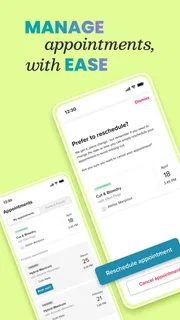
- Manage bookings from one central account.
- Find salons and wellness services near you.
- Appointment details are easy to review in the app.
Cons
- Availability depends on whether local businesses use Booksy.
- Some services may require a deposit or cancellation fee.
- Prices and service descriptions can vary in detail.
- Popular appointment times may be booked quickly.
- You may need to contact a business for special requests.


