



Our review
 Analysis by Lookingapps
I find WEBTOON easiest to appreciate as a personal reading space that happens to work well around a busy household. One person can dip into a few panels during a commute, while another might read a longer stretch at home; the app’s vertical, phone-friendly comics make those short sessions feel natural. But I would treat it as an individual library, not a shared family account. Reading tastes, progress and spending are personal, and a shared device calls for a little thought before anyone starts a series.
Reading in the gaps of a shared day
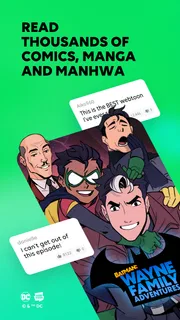
WEBTOON is a comics app from NAVER WEBTOON, built around manga, comics and manhwa presented for mobile reading. Its scale is part of the appeal: it has over 100 million installs, and readers have given it an average rating of 4.6 from around 4.6 million ratings. Those figures suggest a well-established destination, though they do not tell you whether its particular stories will suit your household.
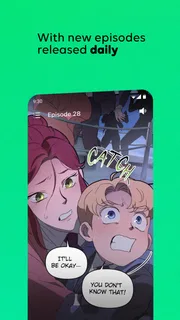
The format is the first thing I notice in everyday use. Instead of handling a traditional page layout, you scroll through a comic in a continuous vertical sequence. That makes it comfortable to read one-handed and easy to pause when something else needs attention. In a realistic household moment, I might read a few installments while waiting for dinner, then hand the phone back without needing to find a bookmark in a physical volume.
That convenience has a trade-off: the app is designed for looking at a screen, not passing a book around. On a shared phone or tablet, I would avoid treating the current screen as a communal reading queue. A child or another household member could open the app and see a series or account state intended for someone else. The simple solution is to agree who uses the app and when, rather than assuming the device itself will keep everyone’s experience separate.
For me, WEBTOON works best when I want a broad stream of digital comics and am happy to explore. It is less suited to someone who wants a quiet, fixed collection of purchased volumes arranged like a conventional bookshelf. If that is your preference, a digital bookstore or a library reading app may feel more deliberate. WEBTOON’s strength is discovering and following serial comics in a format made for quick phone sessions.
Set expectations before sharing the screen
The app is free to download, which makes trying it low-commitment, but free access should not be confused with a promise that every part of the experience costs nothing. In-app purchases range from $0.29 to $199.99 per item. I would explain that clearly before letting a younger reader use a shared device, and make sure the person responsible for the store account understands that purchases can be part of the app experience.
That range is especially worth discussing in a household because a small, casual tap can happen in the same environment as much larger spending choices. I would not hand over a device with a payment method attached and assume the app’s free label settles the matter. Agree on who can authorize purchases, and check the device’s own purchase settings if you want extra protection. Those are sensible shared-device habits; they should not be mistaken for special family controls inside WEBTOON.
More articles

Instagram Makes Everyday Moments Worth Sharing
A rare social app that can be a photo diary, a neighborhood window, and a lively conversation in the same session—though its best moments still require a little restraint.
Account boundaries matter for another reason: one reader’s progress and recommendations may not be useful to someone else. I would use a personal account where possible, keep login details private, and avoid switching readers back and forth through one profile. If a household has only one device, a practical routine is to finish a session, close the app, and have the next person open it intentionally rather than browsing through another reader’s ongoing series.
Before a trip or a stretch without reliable connectivity, I would also check the specific reading options available in the app instead of assuming every comic can be accessed offline. That small check prevents a frustrating surprise when someone expects a saved story to load on the way to school or during travel. More generally, a series-based reading app rewards a bit of planning: pick what you want to read before the short window arrives, rather than expecting a shared device to be ready for everyone’s preferred comic at once.
Making room for different reading routines
WEBTOON’s serial format can fit different schedules surprisingly well. A teenager might read a little after homework, while an adult catches up during a break. Because episodes are delivered as comic installments rather than as a single long book, it is easy to stop at a natural point and return later. I find that more practical than starting a lengthy graphic novel when I only have a few minutes.
The same structure can create mild friction. If several people share one screen, they may be at different points in the same story, or one person may want to read while another is waiting to use the device. I would coordinate around the device, not around the assumption that everyone should share one account. A simple household agreement—whose turn it is and whether the device is available—is more reliable than trying to make one reading history serve several people.
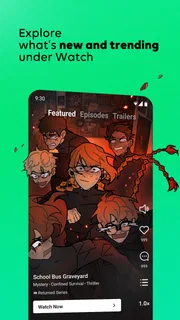
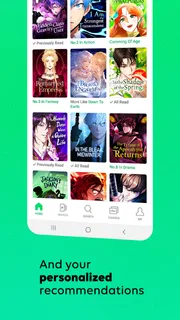
Another useful habit is to treat recommendations as a starting point rather than a verdict. A large catalog means there is room to browse, but it also means the first visible option may not be the right match for a particular reader. I’d encourage a new user to sample a few comics with different tones and art styles before settling into a long-running favorite. That is especially helpful if the app is being introduced to a younger reader: the adult can get a sense of what the reader is choosing without turning the phone into a shared, constantly supervised screen.
Readers who prefer print-like control may find continuous scrolling tiring, particularly during long sessions. The format keeps the story moving smoothly, but it also makes it easy to lose track of time. I would set a natural stopping point before opening a series—one installment, for example—if I were trying to keep a reading break short. That is not a special app feature; it is a practical way to make an absorbing serial format fit around a busy day.
Age context and trust at home
The content rating is Teen, so I would treat WEBTOON as an app for teen readers and adults, not as a default choice for very young children. A rating is useful context, but it does not tell a parent whether an individual comic is right for their child. I would look at the specific series together at first, discuss what the teen enjoys, and keep the conversation open as their reading habits change.
This is where shared use needs a little nuance. A parent may be comfortable with one teen’s choices and still not want a younger sibling casually opening the same screen. The app’s broad comics focus does not make every title interchangeable or appropriate for every age. If younger children use the same device, I would keep their access distinct through household routines and the device’s own user boundaries, rather than assuming a single app profile will sort out different maturity levels.
Trust also cuts both ways. I would avoid turning every reading session into a check-up, because teens are more likely to develop good judgment when they can talk about what they are reading. At the same time, an adult should be comfortable knowing that this is a large, community-oriented comics destination, not a curated shelf limited to a parent’s preselected titles. The best fit is a household willing to pair independence with occasional, genuine conversation about content and spending.
For adults who want to introduce a teen to comics, the app can be a convenient way to explore formats beyond print manga or graphic novels. The vertical layout feels native to a phone, and the installment rhythm lowers the commitment of trying something new. But if a parent wants a tightly controlled catalog or a shared collection with separate age-specific shelves, a dedicated library service or a carefully selected set of books may be a better match.
What the scale means—and what it does not
With around 108,000 written reviews and a large reader base, WEBTOON has clearly become a familiar name in mobile comics. I see that scale as useful for discovery: there is a strong chance that a reader who enjoys serialized comics will find something worth exploring. Still, popularity is not a substitute for personal fit. Someone who wants only a particular publisher’s catalog, a complete story in one purchase, or a print-first reading experience may be happier elsewhere.
The app is free, with optional purchases priced from $0.29 to $199.99 per item, so I would think about the household’s spending expectations before treating it as a casual download for everyone. If nobody plans to buy anything, say so plainly and keep that boundary clear. If a reader is interested in paid options, the person responsible for the account should understand what is being purchased before approving it. This is a more useful approach than assuming all readers will interpret “free” in the same way.
WEBTOON is listed for ages 9 and up as a minimum operating-system requirement, which is a technical compatibility point rather than an age recommendation. The current version is 26.101.0, and the app was released on July 1, 2014. I mention those details mainly because the product is a mature, long-running mobile app, not a new experiment; for a household, though, the more important questions remain whether the device can run it, whether the teen rating suits the reader, and whether everyone understands the purchase boundary.
My household verdict
I would recommend WEBTOON to a teen or adult who likes discovering ongoing comics and wants to read in short, phone-sized sessions. It is particularly appealing if scrolling through illustrated episodes feels more convenient than carrying a book or managing a traditional page layout. The free starting point makes it easy to explore, while the wide readership gives the app the feel of a major destination rather than a niche comic reader.
I would be more cautious about installing it as a shared family entertainment app. A single device can be passed around, but different ages, reading histories and spending expectations make a little coordination worthwhile. Keep accounts and purchase decisions personal, agree on device turns, and help younger readers choose series that suit them. Those steps are simple, but they make the difference between a convenient shared screen and an awkward one.
My bottom line is that WEBTOON is best treated as an individual comics habit that can coexist in a household, not as a common family bookshelf. I like its mobile-first rhythm and the ease of fitting a few panels into a spare moment. I would choose another option for tightly curated child access, print-style reading or a library organized around owned books. For the right reader, though, it is an inviting way to make comics part of an ordinary day—provided the household sets clear boundaries around age and spending.
Pros
- Vertical scrolling makes episodes comfortable to read on a phone.
- A large library includes webcomics from many genres.
- New episodes are released regularly for ongoing series.
- Offline downloads let you read selected episodes without internet.
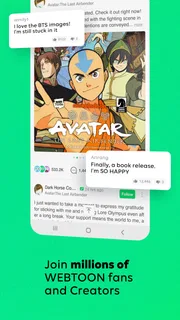
- Comments offer a way to discuss episodes with other readers.
Cons
- Some episodes require Coins or a wait before they unlock.
- The free reading experience can include frequent ads.
- Offline access is limited to supported episodes and downloads.
- Popular ongoing series may take a long time between updates.
- The catalog and available features can vary by region.


