


Our review
 Analysis by Lookingapps
Vinted makes the most sense when I treat it as a place to browse with a purpose, not as a magic shortcut to a perfect bargain. This free shopping app, developed by Vinted, brings second-hand items together with a community of buyers and sellers. Its appeal is straightforward: look for something you need, compare individual listings, and give useful pieces another life. The experience can feel lively and convenient, but it depends just as much on the quality of each listing and the seller’s response as on the app itself.
What the browsing experience feels like
For a buyer, the first impression is of a large, changing selection rather than a conventional shop with identical stock. That difference is important. A particular jacket, book or accessory may appear only in one listing, and another item in the same general category can have different photos, condition and seller details. I find that more interesting than browsing a standard catalogue, but it also asks for more attention.
The practical upside is that Vinted can make second-hand shopping feel approachable. You can explore without committing to a purchase, save time by searching for a specific kind of item, and compare listings before deciding whether one is worth pursuing. The trade-off is that a low asking price alone does not tell the whole story. I’d inspect the description and images carefully, and consider whether the item’s condition and the seller’s explanation match what I actually want.
The app has an average rating of 4.5 from around 2.4 million ratings, and it has been installed over 100 million times. Those figures suggest that it has become a familiar option for many shoppers, though they don’t guarantee that every transaction will be smooth. My own recommendation is to use the size of the community as a reason to search broadly, not as a reason to skip sensible checks.
Why speed depends on how you shop
Vinted is most efficient when I know what I’m looking for. A focused search gives me a clearer way to compare relevant listings than casually scrolling through a wide mix of second-hand goods. If I’m open to alternatives, browsing can be enjoyable, but it can also stretch into a long session because each item is different and there is always another listing to inspect.
One useful habit is to decide on a few requirements before searching: the kind of item, acceptable condition and the details that would make me pass. That turns browsing into a filter rather than an endless hunt. I also avoid judging a listing from its first image alone. Opening the description and checking the rest of the photos takes a little longer, but it is a better use of time than chasing an item that turns out not to fit my needs.
The app’s current version is 26.41.1. I would not assume that a version number by itself tells me how fast the experience will feel on a particular phone or connection. In everyday use, perceived speed is shaped by the device, network and the amount of material being browsed. If a session feels sluggish, narrowing the search and reopening the app are more sensible first steps than expecting a second-hand marketplace to behave exactly like a simple shopping catalogue.
More articles

Instagram Makes Everyday Moments Worth Sharing
A rare social app that can be a photo diary, a neighborhood window, and a lively conversation in the same session—though its best moments still require a little restraint.
When browsing gets busy
The heaviest moments are likely to be the ones that involve lots of comparison: opening several similar listings, switching between photos and descriptions, and returning to the results to weigh up alternatives. That is not a flaw unique to Vinted; it is part of shopping for individual pre-loved items. Each listing needs its own judgement, so the effort is less about tapping through a standard product page and more about deciding whether this particular item is right.
A practical workflow is to shortlist only the listings that genuinely meet the basics, then compare those rather than keeping every possibility in mind. For clothing, I’d pay attention to the measurements or fit information the seller provides instead of relying on a familiar label alone. For other goods, I’d look for clear photographs of the item and any details that matter to its condition. These checks reduce the chance of buying something that looked appealing in a quick scroll but does not suit the intended use.
There is also a social side to the pace. A listing is not the same as a ready-to-ship item from a large retailer: the seller is an individual, and communication can become part of the process. If I need something by a particular moment, I would not plan around a listing until I had a realistic sense of the seller’s availability and the transaction’s timing. For a casual wardrobe refresh, that uncertainty is easier to accept than for an urgent replacement.
Reliability means checking the listing, not just the app
Vinted is a shopping app, but the quality of the experience rests on the interaction between buyer, seller and item. I would treat the description as a starting point, not a substitute for looking closely at the photos or asking a relevant question when a detail affects the decision. This is especially useful when condition matters: a small mark may be no concern to one buyer and a reason to pass for another.
If a purchase does not go as expected, the best first move is to keep the details of the listing and the conversation easy to find and to use the app’s available transaction guidance. I would avoid making assumptions based on how a different marketplace handles problems; each service has its own process. The broader lesson is simple: read the information attached to the specific purchase and act through the appropriate in-app route rather than relying on a seller’s informal promise alone.
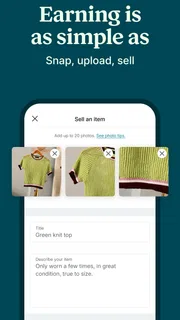
For selling, reliability starts before an item is listed. Clear photos, an honest description and prompt replies help set expectations and reduce avoidable back-and-forth. I would describe flaws plainly instead of hoping they go unnoticed. That may make a listing less polished, but it gives the buyer a fairer basis for deciding and makes the exchange feel more straightforward.
Who gets the most from it
I think Vinted is a strong fit for people who enjoy finding individual pieces, are comfortable comparing condition, and can wait for the right listing. It can also suit someone clearing out a wardrobe who is willing to photograph items and communicate with interested buyers. The app has a Teen content rating, which is useful context for families considering whether it is appropriate for a younger user; buying and selling still calls for thoughtful decisions and adult guidance where needed.
It is less suitable if I need a specific item immediately, want a guaranteed uniform product description, or prefer not to evaluate photos and seller details. In those cases, a conventional retailer or a local shop may be more predictable. A broad classifieds service may also be a better fit when the goal is to find a wider range of non-clothing goods locally, while a dedicated resale shop may offer a more curated selection. Vinted’s strength is the individual second-hand listing, not the certainty of a standardised catalogue.
A realistic use case is replacing a child’s coat as the weather changes. I could search for the size and style I need, compare several listings, and check the photographs for wear before contacting a seller about a detail that matters. If nothing suitable appears, I can leave without buying. That patience is part of the value: the app is most useful when the need is real but the exact item does not have to arrive on a fixed schedule.
Device expectations and everyday stability
The app’s minimum operating system is Android 8.0, so owners of older Android phones should check that their device meets that requirement before trying to install it. On a supported phone, I would expect the experience to depend on ordinary factors such as available storage, connection quality and how smoothly the device handles image-heavy browsing. I would not treat a slow connection as evidence that the marketplace itself is unreliable.
When an app session is interrupted, it is worth reopening the relevant listing or conversation and checking the current state before repeating an action. That cautious habit matters in any shopping app, but especially where people are making decisions around individual items and conversations. If something seems not to have completed, I would verify it in the app rather than assume it failed or try to submit the same action repeatedly.
Vinted is free to download, which makes it easy to try without paying for access to the app itself. That does not mean every item or transaction is cost-free, so I would check the amount shown for the specific purchase before deciding. Keeping the distinction clear helps avoid treating “free app” as a promise about what buying through it will cost.
My performance verdict
Overall, I find Vinted more rewarding as a deliberate second-hand marketplace than as a fast substitute for ordinary retail. Its community is substantial, its basic idea is easy to understand, and the variety of individual listings gives patient shoppers room to find something that feels personal. The experience can be slower than selecting a standard product because the buyer has to assess condition, compare sellers and sometimes communicate before feeling confident.
I’d recommend it to a friend who enjoys browsing pre-loved items and is willing to inspect a listing rather than buy on impulse. I’d suggest another option for an urgent purchase or for anyone who wants identical stock, predictable presentation and minimal seller interaction. The app is rated 4.5 on average and carries a Teen age rating, but those details are only context; the better test is whether its buyer-to-buyer style fits your habits.
My simplest advice is to search with a clear idea of what you need, compare a small number of promising listings, and read the details before committing. That approach keeps the enjoyable discovery aspect without letting browsing take over the evening. For people who value reuse and can tolerate a little uncertainty, Vinted is a practical place to shop and sell; for those who need speed above all, it may be the wrong tool.
Pros
- A large community makes it easier to find niche styles and sizes.
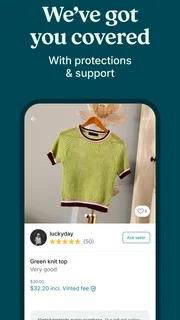
- Seller profiles and reviews help you assess who you are buying from.
- You can bundle several items from one seller into a single order.
- In-app messaging lets you ask sellers questions before purchasing.
- Listing items is straightforward and requires no upfront payment.
Cons
- Item condition and sizing can vary between sellers.
- Popular pieces may sell before you decide to buy.
- Buyer protection and shipping fees can increase the total cost.
- Returns may depend on the seller and the reason for the return.
- Some listings may use edited photos or incomplete descriptions.


