


Our review
 Analysis by Lookingapps
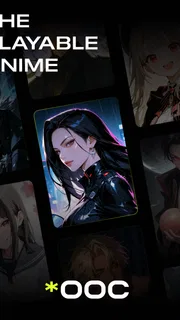
I approach OOC: The Playable Anime less like a conventional reference book and more like a reading app with a creative, anime-inspired premise. It is a free Books & Reference app from OOC, aimed at Teen readers, and its appeal rests on making a story feel participatory rather than asking you simply to turn pages. That distinction matters: if you want a quiet, predictable reading experience, a standard ebook app may suit you better. If you enjoy imagining yourself inside an anime-style narrative, this is a more unusual option to try.
What the interactive format asks of you
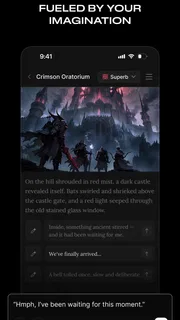
The name points to the central idea: reading is meant to involve your imagination, not just your attention. I would go in expecting a more active relationship with the story than I get from a conventional novel. That can make a session feel personal, but it also changes what “good reading” means. Someone who wants polished prose to carry every moment may find the premise less satisfying than a reader who enjoys filling in details mentally.
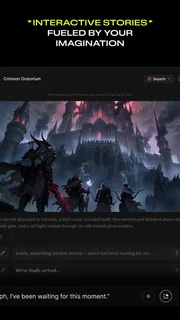
OOC’s store summary describes the experience as driven by the reader’s imagination, which is a useful way to set expectations without assuming a particular branching system or set of controls. The safest approach is to treat it as an experiment in interactive anime storytelling. Give the opening enough time to establish its rhythm before deciding whether the format clicks for you; a premise like this depends heavily on whether you enjoy supplying some of the atmosphere yourself.
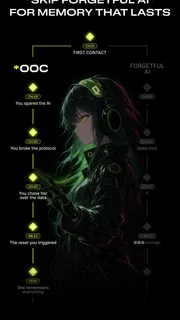
That imaginative element is also the app’s clearest trade-off. It can make a story feel more involving, because you are not only consuming a finished scene. But it can leave less room for readers who prefer a strongly directed narrative, where descriptions and pacing do all the work. I would not choose it as a substitute for a traditional reference title or a straightforward novel. Its place in the Books & Reference category is better understood through its reading focus than through the kind of factual lookup most people associate with reference apps.
How quickly it feels ready to read
With an app built around reading, the most useful kind of speed is not a headline performance figure; it is how quickly I can settle into a story and keep my attention there. I can’t responsibly promise a particular load time or smoothness on every phone, because those depend on the device and the app’s current behavior. In practical terms, I would judge the experience by whether opening a session, following the text, and returning to it feel unobtrusive on your own device.
For a short break, the format has a natural advantage over a game that expects sustained sessions: reading can fit around a commute, a quiet wait, or a few minutes before bed. The reverse is true if the interactive presentation requires you to concentrate closely or imagine scenes in detail. I would avoid starting when you have only a moment and need to stop immediately; a short reading window is useful only if you can leave the story at a comfortable point.
A practical way to test the pacing is to try one brief session when you are not distracted, then another during an ordinary spare moment. If the second feels hard to resume, the issue may be less about raw speed than about how well the story’s flow suits fragmented reading. That distinction is helpful: a fast app is not automatically a good fit for a reader who wants a narrative that is easy to dip in and out of.
More articles

Instagram Makes Everyday Moments Worth Sharing
A rare social app that can be a photo diary, a neighborhood window, and a lively conversation in the same session—though its best moments still require a little restraint.
When longer sessions may feel different
Heavy use is where I would pay closest attention to personal comfort. A reader who spends a long stretch with text on a phone may notice eye fatigue or simply lose focus, regardless of how imaginative the story is. I’d keep sessions at a length that feels comfortable and use a larger screen or a break if reading on a small display starts to feel tiring. Those are sensible reading habits, not claims about a special feature in this app.
The other question is whether a longer session keeps rewarding your attention. Interactive storytelling can be absorbing when you like actively picturing the scene, but that same expectation can become work if you are tired or want something passive. I would use OOC when I’m in the mood to engage with a story, and switch to an ordinary ebook or audiobook when I want the narrative delivered with less imaginative effort.
One useful everyday workflow is to reserve the app for a particular kind of downtime rather than opening it automatically whenever you have a spare minute. For example, I’d try it during a calm evening break, when I can focus on the scene and decide whether its participatory style is enjoyable. If I’m waiting in a noisy place or juggling messages, I’d pick a reading option that I can pause and resume without needing to rebuild the mood in my head.
Reliability and getting back into a story
For any narrative app, reliability is not only about avoiding crashes. It is also about whether you can return to a story without losing your place or your sense of what was happening. I would check how the app behaves through an ordinary close-and-reopen cycle early on, rather than assume that every reading session will be uninterrupted. That small test is especially useful if you tend to read in several short bursts throughout the day.
I can’t claim a specific recovery method or guarantee how progress is handled after an interruption. A cautious reader can still reduce friction: finish a natural passage before switching apps, and make a mental note of the scene if you expect to be pulled away. If returning feels confusing, that is a meaningful sign that this style may work better in longer, more focused sessions than in scattered snippets.
Community response offers some context, though it cannot predict your own experience. The app has an average rating of 4.3 from around 29,000 ratings, with roughly 4,500 written reviews, and it has passed one million installs. Those figures suggest a substantial audience for the concept, not that every device or reader will have the same experience. I would use them as a reason to consider trying it, while still judging its pace and reliability on my own phone.
Choosing a device and a reading setup
The listed minimum operating-system requirement is Android 7.0, and the current version is 0.1.27. That gives Android users a concrete compatibility point to check before installing. It does not tell me how the app will feel on every device that meets the minimum, so I would pay attention to readability and responsiveness on an older phone rather than assume that compatibility guarantees a comfortable experience.
If you read mostly on a compact screen, consider whether the text and presentation are comfortable for your eyes during a full session. If you have a larger phone or tablet available, it may be worth comparing the two for your own reading habits; I wouldn’t assume that the app changes its layout in a particular way. The best setup is simply the one that lets you focus on the story without repeatedly adjusting how you hold or view the device.
Resource demands are another area where it is better to observe than guess. I have no basis for assigning a battery drain, storage footprint, or data requirement to OOC. If you are cautious about those things, note your phone’s battery and storage before a normal session and compare afterward. That gives you a practical answer for your device without mistaking a general impression for a universal performance claim.
Who should try it, and who may prefer another app
I’d recommend giving it a chance if anime-inspired storytelling appeals to you and you enjoy bringing your own mental imagery to a reading experience. It is also a reasonable choice for someone curious about a middle ground between a conventional novel and a game, provided they are comfortable letting the story’s imaginative premise do some of the work. The app is free to install, which makes a low-commitment trial easier, though in-app purchases range from $1.39 to $142.99 per item. I’d review any purchase prompt carefully and decide what, if anything, is worth paying for before spending.
By contrast, I would skip it if you want a broad library of factual reference material, a fully passive reading session, or a story whose appeal depends on detailed visual presentation rather than imagination. Readers who prefer audiobooks may also be happier elsewhere, since listening and imagining through a text-centered experience are different habits. And if your phone struggles with apps generally, test the first session before investing time in a longer read; the minimum OS requirement is a compatibility baseline, not a promise of ideal performance.
Compared with a normal ebook reader, OOC appears to offer a more specialized premise rather than the familiar flexibility of a general reading library. Compared with a typical game, it puts the emphasis on a story and the reader’s imagination rather than on assuming a particular action-heavy format. That makes it appealing to a narrower audience, but also gives it a clearer identity. The right comparison depends on what you want from your spare time: dependable page-by-page reading, a game-like task, or a story that invites you to picture yourself inside its world.
My performance verdict
My overall recommendation is measured: try OOC if the concept itself sounds appealing, and let a short, attentive session decide whether it earns a place in your reading routine. The developer is OOC, the app is rated Teen, and it is free with optional purchases, so the main decision is less about committing to a conventional book and more about whether this interactive approach suits your taste. Its 4.3 average is encouraging context, but personal fit matters more than popularity for a format this particular.
On speed and stability, I would not make promises beyond what a reader can verify on their own device. Focus on how quickly you can settle into a passage, whether the app remains comfortable during a longer session, and how naturally you can resume after an interruption. Those checks answer the questions that matter in daily use without turning uncertain technical details into claims.
My bottom line: OOC is worth trying when you want anime-flavored reading that leaves room for your imagination, but it is not a universal replacement for ebooks, audiobooks, or games. Start with a relaxed session, pay attention to how the story’s rhythm works for you, and be deliberate around optional purchases. If you find yourself picturing the scenes and wanting to return, the format is doing its job; if it feels like effort without enough payoff, a conventional reading app will probably be the better companion.
Pros
- Lets players shape anime-style stories through their choices.
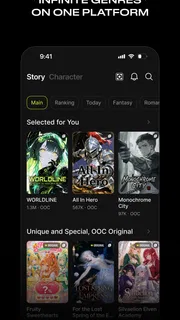
- Offers a variety of characters and fictional settings.
- Interactive scenes make the experience more engaging than passive reading.
- A distinct anime-inspired presentation gives it a clear visual identity.
- Story-focused gameplay is easy to pick up.
Cons
- The experience may feel limited for players seeking action gameplay.
- Choices may not always lead to noticeably different outcomes.
- Some story content may require in-app purchases.
- Progress can depend on spending time reading dialogue.
- The anime theme may not appeal to every player.


