




Our review
 Analysis by Lookingapps
I find Facebook most useful when I treat it as a shared meeting place rather than a stream I’m expected to watch all day. It can help me keep up with relatives, neighborhood groups, event plans, and people I rarely see in person. The payoff is less about discovering a new social network and more about finding many existing connections in one place. That makes its first week easy to understand, but whether it deserves a lasting spot on your phone depends on how deliberately you use it.
What makes the first week feel useful
Facebook is a free social app from Meta Platforms, Inc., and its broad appeal is easy to see: people can use it to share updates, follow groups and pages, and keep in touch with friends and family. It has a 4.6 average from around 187 million ratings and more than 10 billion installs. Those numbers reflect how familiar the service has become, though popularity alone does not guarantee that its feed will suit you.
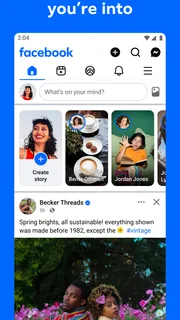
During an initial visit, I’d start by finding the people and communities I actually care about, rather than trying to follow everything the app offers. A family group, a local community, and a few close friends can make the feed feel relevant quickly. If I add too many pages or join groups impulsively, the app can become noisy before I have a good sense of what I want from it.
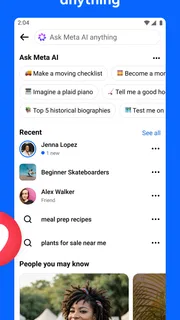
The strongest early use case is practical connection. I might check whether a friend has shared news, see what is happening in a neighborhood group, or find an event discussion in one place. For someone whose social circle already uses Facebook, that convenience can outweigh the effort of learning a different network. If your friends and family are elsewhere, however, the app’s large audience matters less to your everyday experience.
I also recommend deciding what you want the feed to do before opening it. Looking for a specific group update is a different task from browsing for entertainment, and the second can easily stretch longer than intended. A useful habit is to open the app with a destination in mind, such as a group or an event, then leave when that task is done. That small boundary helps the first-week novelty become a routine rather than an obligation.
Make the feed serve a purpose
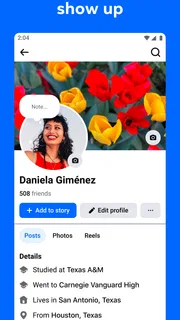
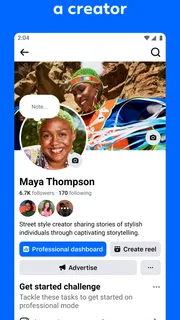
Facebook is at its best when I use its different social spaces for different jobs. A personal update is for people who know me; a group can be a place to ask a focused question or follow a shared interest; a page can keep me informed about an organization. Keeping those purposes distinct makes it easier to judge whether each part earns a place in my feed.
One practical tip is to review group membership after the initial burst of curiosity. A group that looked appealing at first may post too often, cover a topic I no longer need, or simply be less useful than expected. Leaving or muting sources that do not help is more effective than trying to read every post. The value of Facebook often depends less on how much it contains than on how carefully I filter what I see.
More articles

Instagram Makes Everyday Moments Worth Sharing
A rare social app that can be a photo diary, a neighborhood window, and a lively conversation in the same session—though its best moments still require a little restraint.
For everyday planning, I’d use it as a supplement rather than the only record of an arrangement. A neighborhood discussion can help surface recommendations or local updates, but I would still confirm important details directly with the people involved. Social posts are easy to miss in a busy feed, so relying on a casual update for a time-sensitive plan can lead to confusion.
Why it can keep earning space month after month
The app’s long-term value comes from recurring connections. If my family shares photos or updates there, or if a group regularly discusses a hobby, local issue, or community activity, I have a reason to return. Those relationships create a usefulness that a new app cannot provide simply by looking polished. In this sense, Facebook is less compelling as a novelty than as infrastructure for groups that already depend on it.
Consider a realistic week: I check a family group for a birthday plan, look at a neighborhood discussion before choosing a local service, and later respond to a friend’s update. Each visit is short and tied to a different need. The app works well in that pattern because I am not asking one feed to entertain me continuously; I am using it to reconnect with particular people and communities.
Compared with messaging apps, Facebook is broader and more public-facing. A messaging service is usually better when I need a direct, immediate conversation or a small group chat. Facebook makes more sense when I want to follow discussions involving a wider community or see updates from people I do not message every day. Compared with a photo-centered social network, it can feel less focused: the mix of personal posts, groups, pages, and other content is useful for variety but can make the experience harder to steer.
That breadth is also a trade-off. If I mainly want to share carefully selected photos with close friends, a more focused service may feel calmer. If I need a simple place to send messages, a dedicated messenger may be quicker. Facebook earns its keep when several kinds of social connection overlap, not when I expect it to be the best tool for every single interaction.
Keep the routine light
For a month-to-month routine, I’d check in at chosen moments rather than leave the app open as a default. I might visit a group when I have a question, check event details before going out, or catch up with family once in the evening. This makes the app’s recurring value easier to notice: it is helping with a real connection, not merely filling spare minutes.
A second useful habit is to treat the feed as a selection, not a complete picture of my relationships. People who post often are naturally easier to notice than people who rarely share. I make a point of contacting quieter friends directly instead of assuming that a lack of visible updates means there is nothing to catch up on. That is a small but important way to stop a social feed from replacing actual conversation.
Facebook is free to download and use, with in-app purchases listed at a wide range, from five cents to ten thousand dollars per item. That range is worth keeping in mind if you encounter paid options: I would review any purchase prompt carefully and avoid assuming that every feature or transaction is necessary for ordinary social use. The app is rated for teens, so families may also want to discuss what kinds of interactions and content feel appropriate for their own household.
The upkeep and fatigue that can change the equation
The maintenance burden is mostly attention, not technical expertise. To keep Facebook useful, I need to decide which groups deserve my time, which updates I want to see, and when I have had enough scrolling. That is manageable, but it is still work. If I never adjust what I follow, the feed can become less relevant as old interests, busy groups, and casual follows accumulate.
My best maintenance routine is modest: leave groups that no longer serve a purpose, avoid following every suggested page, and revisit the app with a clear reason. I also separate “I want to know this” from “I might be curious someday.” That distinction prevents a long list of low-value sources from crowding out the people I joined to keep in touch with.
Fatigue usually comes from volume and context switching. A quick check for a family update can turn into a sequence of unrelated posts, discussions, and distractions. When that happens repeatedly, I find myself opening the app out of habit rather than because I expect a useful connection. The remedy is not necessarily to delete it; it may be enough to stop using the feed as a default waiting-room activity and visit only the parts that matter.
There is also a social cost to being present in a large network: not every post invites a response, and not every disagreement is worth entering. If I use the app to keep up with people, I try not to confuse visible activity with closeness. A thoughtful message or a real-world conversation can be more meaningful than reacting to every update. For users who feel pressure to perform their lives publicly, a smaller private group or direct messaging may be a better fit.
People often wonder whether Facebook is still worthwhile if they do not want to post frequently. In my view, it can be: following a useful group, checking event information, or keeping up with relatives does not require constant personal updates. But if the people and communities you care about do not use it, passive browsing may not provide enough value to justify the distraction. The right test is whether you can name a recurring purpose for opening it.
Who should choose it—and who should pass
I’d recommend Facebook to someone whose friends, relatives, or local communities already organize there, especially if they want one app for a mix of personal updates and group discussion. It is also a reasonable choice for someone who wants to observe rather than post, provided they can keep the feed focused. The enormous user base is useful because familiar people and established communities are more likely to be present, but the experience still depends on the particular connections you have.
I would steer away from it if your priority is a quiet, tightly controlled social space, or if feeds tend to pull you into prolonged browsing. A focused messaging app is better for direct conversations; a smaller community platform can be more comfortable for a specific interest; and a photo-first service may suit people who want a more curated visual experience. Those alternatives are not automatically better overall, but they can be better for a clearly defined need.
With around 4.2 million written reviews, Facebook is plainly a familiar choice for many people, yet familiarity should not be mistaken for a personal obligation. I would keep it installed only if it helps me maintain relationships or participate in communities that matter. If I find that I am opening it without a purpose and leaving without anything useful, I would reduce my visits or step away instead of trying to force a habit.
My long-term verdict is that Facebook can earn lasting space, but it does so through people and routines, not novelty. Its strongest role is as a flexible gathering place for connections that already exist, while its weakest is as an endless feed left to run on autopilot. Use it intentionally, keep your groups selective, and let real relationships—not the scroll—decide whether it belongs in your daily life. I’d suggest giving it a fair try if your community is there, then keeping only the parts that continue to make your ordinary week easier.
Pros
- Facebook helps you keep up with friends and family in one place.
- Groups make it easy to find communities around shared interests.
- Marketplace offers a convenient way to browse local listings.
- Events tools help you discover activities and coordinate plans.
- Pages let you follow organizations and creators you care about.
Cons
- The feed can feel cluttered with ads and suggested posts.
- Frequent notifications may become distracting.
- Privacy settings can take time to review and understand.
- Marketplace listings may include misleading or outdated offers.
- The app can use substantial battery and mobile data.


