
Our review
 Analysis by Lookingapps
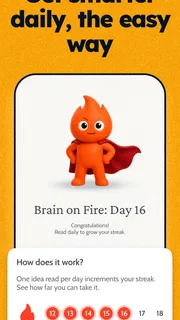
I would describe Deepstash as a learning app for the moments when I want an idea to think about, not another long reading assignment. It’s aimed at people who enjoy books and self-improvement but struggle to set aside time for them. Instead of asking me to finish a whole book, it presents knowledge in short pieces that can fit into an ordinary break. That makes starting feel easy; deciding what to do with a stream of interesting ideas is the harder part.
What to expect from a bite-sized learning app
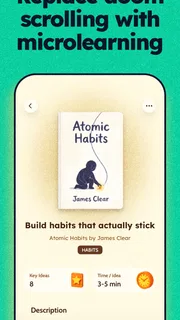
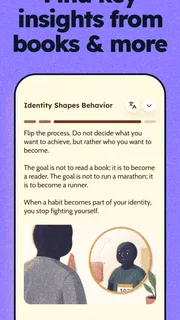
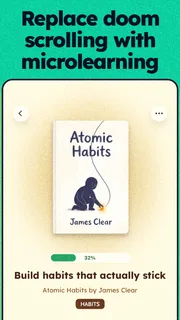
Deepstash is an education app from developer Deepstash, built around brief insights and book-related ideas. Its appeal is not that a few minutes can replace a complete book. It’s that a compact takeaway can introduce a concept, prompt a useful question, or help me decide which subject deserves a deeper look later. I find that distinction important: the app works best as a doorway into learning, rather than as proof that I have mastered a topic.
The short format suits small pockets of attention: a quiet coffee break, a wait before an appointment, or a few minutes at the end of the day. I can approach it with a narrow purpose, such as looking for a fresh perspective on habits, or simply browse when I’m curious. That flexibility is welcoming for a first-time user, though browsing without a goal can also make the experience feel like a succession of disconnected snippets.
There is plenty of social proof for a new user to consider: it has a 4.6 average from around 201,000 ratings, and more than five million installs. The app is free to download, rated for Everyone, and offers in-app purchases ranging from $12.99 to $119.99 per item. I’d treat the free version as a chance to see whether this condensed style fits my habits before deciding whether any paid option makes sense.
Compared with a conventional ebook reader, Deepstash asks for less commitment and gives less room for sustained argument. Compared with podcasts or long-form educational videos, it’s easier to dip into silently and briefly, but it cannot offer the same spoken explanation or narrative flow. And compared with a general social feed, its learning focus gives browsing a clearer purpose—provided I keep my own purpose in view.
Start with a subject, not an endless scroll
On a first visit, I’d avoid trying to explore everything at once. I’d pick one area I genuinely want to understand better and use that as a filter for my attention. A specific intention—finding a way to make a routine stick, for instance—is more useful than a vague plan to become more productive. It gives each short idea a chance to connect with something I already do.
The app’s current version is 33.1.3, and it supports operating systems from version 7.0 onward. Deepstash’s release date was April 16, 2019, so this is an established product rather than a newly launched experiment. Still, my practical recommendation is to check that your device can run it and then judge the experience by whether its format helps you learn, not simply by how much content you can skim.
More articles

Instagram Makes Everyday Moments Worth Sharing
A rare social app that can be a photo diary, a neighborhood window, and a lively conversation in the same session—though its best moments still require a little restraint.
For someone who is unsure what to expect, the useful mental model is a collection of prompts for thought. A short takeaway can clarify a term or put a familiar problem in a new frame, but it may leave out qualifications, evidence, and exceptions that matter in a full treatment. If an idea could influence an important decision, I would use it as a pointer to investigate further rather than treat a compact summary as the final word.
Make the first session small and deliberate
I’d begin with a short session and a simple question: “What would help me today?” That might be a better way to approach a difficult conversation, a reminder to protect time for focused work, or a new angle on a reading habit. The point is not to collect the most ideas. It is to notice one that has a clear connection to a real situation.
A practical first-success routine is to read a few relevant pieces, pause when one feels applicable, and restate it in my own words. If I can’t explain the idea without looking back at it, I probably only recognized the wording rather than understood the point. This tiny check is a useful safeguard against the false sense of learning that can come from quickly consuming summaries.
Then I’d choose one small action to try. If an idea suggests making a habit easier, I could prepare the first step before the next opportunity to do it. If it offers a way to reframe a problem, I could write down how that perspective changes my next decision. This turns a brief reading session into something testable and gives me a reason to return beyond simply wanting another novelty.
A realistic everyday use case is a commute with a few spare minutes. I might open the app with a topic in mind, read until I find one thought worth carrying into the day, and stop there. That stopping point matters. The short format can make it tempting to keep browsing, but a single idea applied later is more valuable to me than a long session whose details I immediately forget.
Keep useful ideas from becoming a pile
My main caution with any bite-sized learning format is fragmentation. A collection of concise takeaways can feel productive while leaving gaps between them. I’d therefore treat each session as an entry point: note the question an idea raises, connect it to something I have read or experienced, or decide that it deserves a full book or a more detailed source. That habit helps separate curiosity from understanding.
Another helpful practice is to give an idea a second encounter. Rather than continually searching for fresh material, I’d revisit a thought I found useful and ask whether it changed anything in practice. Did I use it? Did it fit the situation, or was it too broad? This quick reflection makes the app more like a learning aid and less like a feed designed only to keep attention moving.
It also helps to be selective about what I accept. A memorable line is not automatically a reliable rule for every person or circumstance. When an insight sounds absolute, I’d look for the context behind it before applying it widely. Deepstash’s concise approach is strongest when I want a spark or a starting point; people who need detailed sourcing, technical instruction, or sustained discussion should pair it with more comprehensive material.
Where the format can frustrate
The brevity that makes Deepstash convenient is also its clearest limitation. Complex subjects rarely fit neatly into a small takeaway, and a summary can smooth over disagreement or nuance. If I’m studying for an exam, learning a technical skill, or making a high-stakes choice, I wouldn’t rely on short insights as my main resource. A textbook, course, specialist reference, or complete book is a better fit when depth and sequence matter.
There is also a difference between discovering ideas and building a consistent study practice. A person who wants scheduled lessons, exercises, or a clear progression may prefer a structured course app. Someone who mainly wants to read full books should choose an ebook service or library app. Deepstash makes more sense when the desired unit is a compact idea, and when the user is willing to supply some of the structure themselves.
Free access lowers the barrier to trying it, but the presence of in-app purchases means I would check what is included before committing to a paid option. I wouldn’t subscribe simply because I liked one or two insights; I’d first see whether I return to the app and whether its format changes how I learn. The range of purchase prices is broad enough that it’s worth making that decision deliberately rather than treating payment as an automatic next step.
Choose a next step that matches your goal
After a few sessions, I’d ask whether Deepstash is helping me do one of three things: discover topics, remember useful ideas, or take practical action. If it’s doing the first but not the others, I’d narrow my browsing and connect each takeaway to a question or experiment. If I want more depth, I’d use an insight to choose a book or longer lesson. If I’m not enjoying short-form learning, there’s little reason to force it; a slower format may suit me better.
The app is a particularly good fit for curious readers who want an approachable way to encounter book-inspired thinking in spare moments. It can also help someone who repeatedly intends to read more but needs a lower-friction starting point. I’d be less likely to recommend it as a sole learning tool to people who need a carefully ordered curriculum, rigorous detail, or direct practice with feedback.
For a first-time user, my recommendation is to install it, choose one real-life question, and finish the first session with one idea translated into a small action. That is a more meaningful test than counting how many pieces you read. If the approach leaves you curious and gives you something useful to try, Deepstash has earned a place in your routine; if it leaves you with fragments but no direction, a book, course, or focused reading session will probably serve you better.
Overall, I see Deepstash as a convenient starting point for learning, not a shortcut around learning itself. Its best use is modest and practical: give a spare moment a little direction, find an idea worth examining, and carry it into real life. Keep that expectation, and the compact format can be genuinely helpful without asking it to do a full book’s job.
Pros
- Offers bite-sized ideas that are easy to read during short breaks.
- Personalized recommendations help surface topics that match your interests.
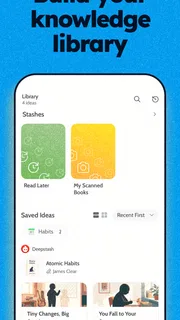
- Lets you save useful ideas for later reference.
- Covers a broad range of subjects including productivity and wellbeing.
- A clean interface makes browsing ideas straightforward.
Cons
- Some content may feel too brief for readers seeking in-depth explanations.
- Several useful features may require a paid subscription.
- Recommendations can become repetitive if your interests are narrow.
- The value of saved ideas depends on keeping your collection organized.
- Frequent notifications may distract unless you adjust their settings.


