



Our review
 Analysis by Lookingapps
I find a Bible app most useful when it gets out of the way: I want to reach a passage quickly, read without a connection, and share a verse without turning a quiet moment into a hunt through menus. Bible Offline-KJV Holy Bible is built around that straightforward purpose. It is a free Books & Reference app from Bíblia Offline, centered on the King James Version and intended for reading and study. Its strong popularity suggests it meets a familiar need, but popularity alone does not tell you whether its style and approach will suit you. For me, the key question is whether a KJV-focused, offline Bible fits the way you actually read.
Reading and finding your way around
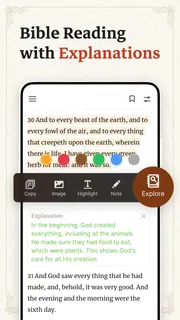
The clearest practical strength is the focus on scripture rather than a broad library of translations or religious media. If you already read the King James Version, that focus can make the app feel direct: you are not first asked to compare editions before getting to a passage. The offline emphasis is equally useful. Once the text is available on your device, reading does not have to depend on a reliable signal, which matters on commutes, during travel, or in places where data service is patchy.
For a new reader, the KJV’s traditional English is both its appeal and its main learning curve. Its phrasing has a distinctive cadence, but words and sentence structures can feel unfamiliar if you are used to contemporary translations. I would not treat that as a fault in the app; it is a choice of Bible edition. Still, someone looking for plain modern wording may find a translation-focused alternative easier to follow, especially for long reading sessions or first-time study.
The app’s store description highlights verse sharing and a verse of the day, which gives it two different entry points: you can read with a particular passage in mind, or use a short daily prompt to begin. I find the second approach helpful when I want a small, manageable reading moment rather than a full study session. A useful habit is to read the surrounding verses before sharing a daily verse. That keeps a memorable line connected to its passage instead of treating it as a standalone slogan.
One trade-off of a focused KJV experience is that it is not automatically a comparison tool. If you regularly want to check how several translations render the same sentence, a multi-version Bible app or a dedicated study reference may serve you better. This app makes more sense when your priority is having the KJV close at hand, not building a side-by-side translation workspace.
Making reading easier to manage
On a small phone screen, comfort often depends as much on reading habits as on the app itself. I would use short sessions, keep the device at a comfortable distance, and avoid trying to read a long chapter in one stretch when tired. If the display feels crowded, check the app’s available reading controls rather than assuming every Bible app handles text in the same way. The useful point is to test it with an actual passage you read often; a quick look at the opening screen will not tell you whether sustained reading feels comfortable.
Navigation matters especially when someone is following along in a group or returning to a passage later. A practical routine is to note the book, chapter, and verse outside the app when a passage is important, then use that reference to return directly. That small habit can reduce frustration if you lose your place between sessions. It also works well for readers who prefer paper notes or a study journal alongside a phone Bible.
More articles

Instagram Makes Everyday Moments Worth Sharing
A rare social app that can be a photo diary, a neighborhood window, and a lively conversation in the same session—though its best moments still require a little restraint.
Motor and sensory needs in everyday use
A phone Bible can be convenient for readers who want to carry scripture without a separate book, but touch navigation still asks for accurate taps and swipes. That may be uncomfortable for someone with limited dexterity, tremors, or difficulty making precise gestures. I would test chapter selection and passage movement before relying on it in a setting where you need to find a verse quickly. If handling a phone is difficult, a printed Bible, a larger-screen device, or a reading setup already adapted to your needs may be more dependable.
Visual comfort also varies from person to person. Long periods of screen reading can be tiring, and the KJV’s older vocabulary can add a separate comprehension burden for readers who process language more slowly. Try a familiar short passage first and see whether both the text presentation and wording work for you. If you need larger text, strong contrast, screen-reader support, or other specific adjustments, verify those options on your own device and in the current app before making it your main reading method; I would not assume a particular accessibility control is available without checking.
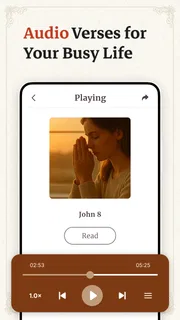
For readers who rely on audio rather than visual text, the KJV’s written style may be easier to engage with when read aloud, but the app’s confirmed focus is on Bible reading and study. If spoken scripture is essential, choose a Bible app or audio edition that clearly supports the listening tools you need. The same rule applies to captions, voice control, and other assistive features: match the app to the access method you use instead of relying on a general claim that it will work for everyone.
Where offline access fits
Offline reading is not just a backup for emergencies. It can make the app a more reliable companion in a routine: I might open a chapter on a train, revisit it during a break where reception is poor, and share a verse later when I have a connection. It also suits people who want to keep their reading separate from browsing the web. The trade-off is that offline access does not make every surrounding activity independent of connectivity; sharing, for example, still depends on the communication service you use.
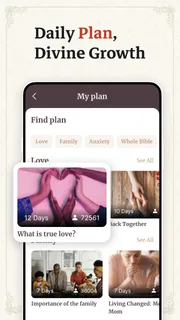
A realistic use case is a reader who wants a brief morning passage before leaving home. The verse of the day can provide a starting point, while reading the neighboring verses gives the thought some context. Later, the offline text remains available during a commute without needing to load a webpage. This is a simple workflow, but it is more useful than opening a random verse and scrolling without a plan.
For group study, I would use the app as a personal text reference, not as a substitute for every study resource. You can bring the KJV passage to a discussion and share a verse, but if the conversation turns to historical background, original-language terms, or translation differences, a commentary or specialist reference will be needed. Knowing that boundary helps set realistic expectations: this is a convenient Bible-reading app, not a complete theological library.
Popularity, cost, and what they mean for you
The app has an average rating of 4.9 from around 12 million ratings, with roughly 49,000 written reviews and over 100 million installs. Those figures show that many people have found a reason to keep it, though they cannot establish whether its reading experience fits your eyesight, device, or preferred translation. I would weigh the KJV focus and offline use more heavily than the headline numbers when deciding.
It is free to install and is rated for Everyone. The app is currently at version 6.5.8, and its in-app purchases range from $0.99 to $49.99 per item. That means the basic price is approachable, but it is sensible to check what a purchase covers before confirming anything. I would start with the free experience and only consider an optional purchase if its purpose is clear and useful to your routine.
For a quick comparison, the usual alternatives fall into two broad groups. A printed KJV avoids screen glare and touch controls, and it never needs a charged phone, but it is less convenient to carry and search digitally. A multi-translation Bible app may be better for readers who compare wording or prefer modern English, while an online reference can offer broader study material but depends more heavily on access to a connection. This app occupies a practical middle ground: one familiar translation, on a phone, with offline reading at its center.
Who may want another option
I would recommend it to someone who already values the King James Version, wants scripture available without dependable internet, and appreciates having a daily verse to prompt a short reading. It can also suit readers who share passages with friends or family and prefer a simple Bible-centered routine over a large collection of study tools.
I would look elsewhere if you need modern-language wording, frequent translation comparisons, advanced research tools, or a confirmed assistive feature that is essential to your reading. It may also be a poor fit if you strongly prefer print or find phone screens tiring. Those are not minor preferences: they affect whether you will actually use the app comfortably, so it is worth trying a short passage before making it part of a daily habit.
A practical verdict on inclusion
My overall view is that Bible Offline-KJV Holy Bible lowers some everyday barriers by keeping a widely used scripture edition on a phone and making offline reading part of its appeal. The daily verse and sharing focus can help readers build a modest routine, while the KJV gives the app a clear identity. Its inclusive value is therefore strongest for people whose translation, device, and reading style already fit that setup.
It is not a universal solution for every ability or context. Screen-based reading, touch interaction, traditional wording, and the limits of a single-translation focus can all create friction. My recommendation is to test a passage you know, try reading it in the setting where you expect to use the app, and check any accessibility requirements directly on your device. If that experience feels comfortable, this is a useful, uncomplicated way to keep the KJV nearby; if not, a print edition, audio-focused option, or more flexible Bible reference will be a better companion.
Pros
- Read the King James Bible without an internet connection.
- Search scripture by keyword or passage reference.
- Bookmark verses for quick access later.
- Adjust text size for more comfortable reading.
- Share selected verses with others.
Cons
- The King James wording can feel dated to modern readers.
- Some features may require an internet connection.
- Ads may interrupt the reading experience.
- The app may request permissions users do not expect.
- Search results can be less helpful for broad or vague terms.


