
Our review
 Analysis by Lookingapps
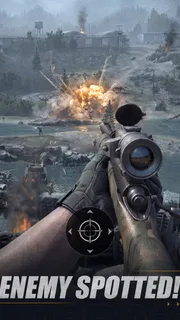
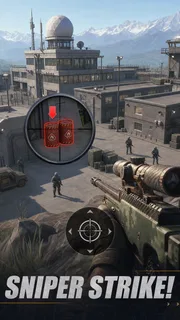
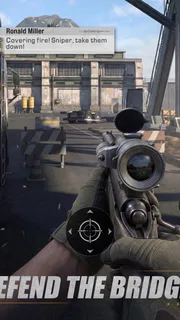
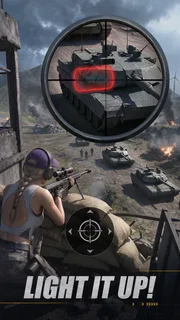
I see Warline: Sniper Strike as a strategy game for people who want tactical decisions to feel immediate rather than spend most of a session arranging armies from a distant map. Its appeal is the combination suggested by its identity: aiming and battlefield choices are meant to sit close together. That is a compelling premise, but it also sets a high bar. A satisfying tactical shooter needs more than quick action; it needs decisions that matter, and the strategic layer has to add purpose instead of slowing everything down.
Where its tactical appeal comes from
What makes this kind of game interesting to me is the change in perspective it asks of the player. In a conventional strategy title, I might think primarily about units, territory, or the order of a sequence of moves. A shooter-led strategy game invites a more immediate question: what is the important threat right now, and how does dealing with it affect the wider fight? That shift can make a familiar battlefield objective feel personal without abandoning the larger tactical picture.
The sniper angle is especially promising because it encourages patience as well as precision. The useful decision is not simply whether I can take a shot, but whether acting now helps the situation. In a battle-focused game, a target may be tempting while a more urgent threat is elsewhere. Looking for the consequential choice, rather than treating every visible enemy as an automatic target, is the mindset I would bring to Warline. That is also the difference between a tactical game and a shooting gallery.
The other half of the pitch is real-time strategy. That matters because it suggests that the shooting is not meant to exist in a vacuum: the player is being asked to consider the battle as a whole, not just aim well. When those two modes of thinking reinforce each other, a short encounter can still demand attention. The trade-off is that multitasking becomes part of the attraction. Anyone hoping for a quiet, slow puzzle may find the pressure less relaxing than the strategy label first suggests.
Powerfantasy HK Limited develops the game, which is listed as a free download. It has a 4.9 average from around 250,000 ratings, and has passed five million installs. Those numbers point to a broad audience, but they do not settle whether its particular mix suits you. I would treat its strong reception as a reason to take a look, not as a substitute for deciding whether you enjoy games that put aiming and battlefield thinking side by side.
Why the combination matters more than the label
It is easy to file Warline under either “shooter” or “strategy,” but neither description alone tells me what sort of player is likely to enjoy it. The key question is whether you like switching between an immediate action and a broader decision. If you want to focus exclusively on careful aim, a straightforward shooter may feel cleaner. If you prefer to plan without the interruption of real-time combat, a more traditional strategy game is probably a better fit.
The blended approach can be a useful change of pace for someone who finds either extreme tiring. A purely tactical map can feel abstract after a long day; an action game can feel repetitive if every encounter asks for the same reflexes. Here, the concept promises a middle ground: pay attention to what is happening now while keeping the wider conflict in mind. That is a strong reason to try it, provided you are comfortable with the possibility that both sides of the design demand attention at once.
More articles

Instagram Makes Everyday Moments Worth Sharing
A rare social app that can be a photo diary, a neighborhood window, and a lively conversation in the same session—though its best moments still require a little restraint.
The practical trade-off: attention and pacing
The biggest potential friction is cognitive load. Aiming rewards focus, while strategy asks you to step back and judge priorities. When both are active, it can be harder to relax into either one. I would not recommend this as an automatic choice for a player who wants a calm game to fill a few distracted minutes. It sounds better suited to moments when you can give the screen your attention and respond deliberately.
That has a practical implication for everyday play. If I had a brief break between tasks, I would choose a game whose central action can be handled without much warm-up. With a title built around shooting and real-time tactics, I would be more inclined to start when I have enough uninterrupted time to understand what the fight is asking of me. The important point is not that every session must be long; it is that splitting attention can make a tactical game feel more demanding than its quick-action framing suggests.
There is also a genre trade-off in how much control you want. Players who love direct, hands-on combat may appreciate having their decisions tied to the battle rather than reduced to menu choices. But someone who enjoys strategy chiefly for careful planning may prefer a game where the consequences of each decision can be considered without the added urgency of aiming. Warline’s premise makes that tension central, not incidental.
How I would approach a first session
For a new player, I would focus first on learning what the game expects me to prioritize, rather than trying to act as quickly as possible. In any hybrid tactical game, speed can feel productive while actually obscuring the important decision. Taking a moment to distinguish the immediate threat from the most consequential one is a more useful habit than reacting to everything on screen. It gives the strategy side a chance to shape the shooting instead of letting the shooting dominate every choice.
A second useful habit is to judge a session by decision quality, not by how much activity it contains. A busy screen does not necessarily mean the player is making meaningful choices. If I found myself responding mechanically, I would pause mentally between actions and ask what outcome I am trying to improve. That small reset is a practical way to tell whether the blend is clicking for me or whether I would rather play a more focused shooter.
I would also be selective about when to spend. The game is free to start, but it offers in-app purchases ranging from $0.99 to $199.99 per item. That is a wide span, so I would make sure I genuinely enjoy the basic experience before considering any purchase. I would not treat spending as a way to solve uncertainty about the game: first establish whether its tactical rhythm and action are enjoyable on their own.
Who is likely to enjoy it—and who may not
I would recommend giving Warline a try if you like tactical shooters, enjoy weighing priorities under pressure, and are curious about a strategy game that puts the player closer to the action. It may also suit players who want a change from standard real-time strategy, where the focus is often on managing the whole battlefield from a distance. Its distinct appeal is the expectation that personal, moment-to-moment action and broader military thinking belong in the same experience.
I would be more cautious if you mainly want a pure sniper game, a slow planning exercise, or something effortless to play while multitasking. Those preferences point in different directions, and a hybrid can frustrate someone who wants one style to take the lead consistently. Likewise, if you dislike the pressure of responding while also deciding what matters most, choosing a single-genre alternative is not a failure to appreciate the game; it is simply a better match for how you want to play.
The audience rating is Teen, which is useful context for families considering the game. I would still make the decision based on the player’s comfort with military-themed action and the game’s particular demands, rather than relying on the label alone. Warline is described as a strategy game, but its shooter element is an important part of its identity, so it is worth considering whether that combination is appropriate for the person who will use it.
Version and device basics
The current version is 1.3.01, and the listed minimum Android requirement is version 6.0. Before installing, I would check that the device meets that baseline and that there is room for a game I plan to give focused attention. The age rating is Teen. These details help answer the basic compatibility and suitability questions, while the more important choice remains whether you want a game that asks you to juggle tactical judgement with direct action.
The game has 1.2 thousand written reviews alongside its much larger rating count, so I would not assume a high average means every player values the same thing. For a decision like this, the most useful test is whether the core premise appeals to you: a battlefield experience where the shot and the strategy are meant to connect. If that sounds more engaging than a conventional shooter or a distant command simulation, trying the free version is a sensible way to judge the fit before spending.
My verdict: a distinctive fit, not a universal one
Warline: Sniper Strike stands out because it aims to connect the immediacy of a shooter with the broader judgement of real-time strategy. That combination gives it a clear identity and a genuine reason to exist alongside more conventional games in either category. Its strongest draw is also its main caution: the player has to enjoy moving between precise action and battlefield priorities, rather than expecting one to disappear behind the other.
I would start with it if I wanted a tactical change of pace and could give the game my attention. I would skip it in favor of a focused shooter or a slower strategy title if I wanted a more predictable rhythm. Free entry lowers the barrier to finding out, but the broad range of optional purchases makes restraint sensible until the basic experience has earned your interest. For players drawn to its particular blend, it is an appealing experiment; for everyone else, the genre label alone is not a reason to install it.
Overall, I see it as a promising choice for players who want their decisions to feel both immediate and consequential. Go in looking for a mix of aiming and tactical judgement, not a pure version of either genre, and you will have a much clearer sense of whether it belongs in your rotation.
Pros
- Sniper controls are easy to learn for newcomers.
- Short missions fit well into quick play sessions.
- Distinct enemy positions reward careful aiming.
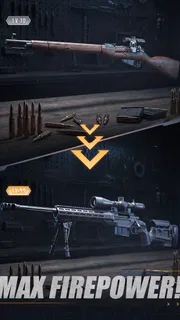
- Weapon upgrades give players a clear sense of progression.
- The focused gameplay avoids lengthy open-world distractions.
Cons
- Repeated mission formats can become predictable.
- Precision aiming may feel difficult on small screens.
- Progression can slow down without upgrades.
- Touch controls may take time to master.
- Frequent action can drain battery on older devices.


