





Our review
 Analysis by Lookingapps
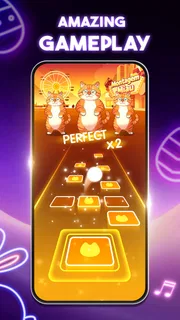
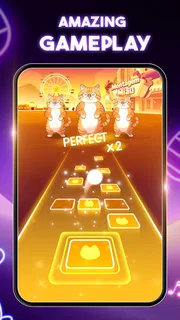
The first thing I like about Tiles Hop is how quickly it turns a spare moment into a small test of timing. You guide a bouncing ball across a path of tiles, trying to land with the music rather than simply watching the beat go by. A tap can feel effortless when I settle into the rhythm, then suddenly tricky when I get ahead of the song. That immediate action-and-reaction is the game’s real appeal: I don’t need a long tutorial or a big time commitment to understand why I want another try.
Tiles Hop Music & Ball Game is a free music game from AMANOTES PTE. LTD., with in-app purchases ranging from $0.99 to $49.99 per item. It has a 4.3 average from around 3.4 million ratings, and more than 500 million installs. Those figures suggest broad appeal, but the game’s simple core is easier to judge for yourself: it suits people who enjoy turning a song’s pulse into a quick, hands-on challenge, rather than anyone looking for a deep music-production or rhythm-training tool.
One tap turns the beat into a decision
The basic action is easy to grasp: keep the ball moving from tile to tile by tapping in time. What makes that less automatic than it sounds is the need to read the path while listening. I’m not only reacting to a beat; I’m trying to judge where the next landing should happen. When the timing clicks, the ball’s movement feels connected to the music. When it doesn’t, a small lapse can break the run, which makes each attempt feel focused even when it lasts only a short while.
This is a different sort of music game from a conventional piano-tile setup. Instead of concentrating on striking a long stream of fixed keys, I’m steering a bouncing ball through a route and using the song as a timing cue. That makes Tiles Hop feel more spatial and less like a test of finger speed alone. It is approachable for a casual player, but the combination of listening and looking still gives the challenge some bite.
For a first session, I’d suggest treating the opening attempts as practice rather than trying to chase a perfect run. Keep your attention on the beat, then let your eyes check the upcoming tile. If I stare only at the ball, I can miss the next move; if I focus only on the path, I may lose the song’s pulse. Learning to divide attention between those two signals is one of the more satisfying parts of getting comfortable.
The game is rated Everyone 10+, and I can see why it is easy to pick up across a wide range of players: the central idea is immediate, and the challenge comes from timing rather than complicated controls. Still, “easy to understand” does not mean every run will feel relaxed. A player who dislikes restarting after a missed move may find the short, precision-focused loop more irritating than fun.
How the rhythm gives you feedback
Tiles Hop’s most useful feedback is the relationship between a tap and the ball’s landing. A well-timed move feels like a continuation of the song; a mistimed one makes the gap between intention and result obvious. That clarity helps me adjust without needing a detailed explanation after every mistake. I can ask myself whether I tapped too early, watched the route too late, or simply lost the beat, then make one change on the next run.
More articles

Instagram Makes Everyday Moments Worth Sharing
A rare social app that can be a photo diary, a neighborhood window, and a lively conversation in the same session—though its best moments still require a little restraint.
That makes the game a decent fit for short, repeatable practice. I might play while waiting for someone or during a brief break, using one attempt to get a feel for a song and another to respond more carefully to the path. The important distinction is that I’m practicing the game’s timing and visual coordination, not learning an instrument or studying music theory. If your goal is structured rhythm training, a dedicated practice app or a more traditional note-matching game is likely a better choice.
A practical tip is to avoid tapping frantically when a run starts to go wrong. Rapid corrections can make it harder to hear where the beat actually sits, and the game’s appeal depends on matching movement to music rather than trying to overpower the rhythm with speed. I get more useful feedback when I pause mentally, listen for the pulse, and make the next tap deliberately. That small reset in attention can be more helpful than simply trying harder.
There is also a trade-off in the game’s immediacy. A short run means mistakes are easy to recover from by starting again, but repeated failure can make the experience feel repetitive if I’m not enjoying the song or the timing challenge. Tiles Hop works best when I’m in the mood to refine a little skill through repetition. It is less compelling when I want a long session with a developing story, a substantial set of strategic choices, or a strong sense of progression between play sessions.
Why a successful run feels rewarding
The reward here is primarily the feeling of getting into sync. When my taps land cleanly and the ball keeps following the route, the music stops being background sound and starts functioning like a guide. I find that more satisfying than a score alone: the run feels earned because I had to coordinate what I heard with what I saw. It is a small payoff, but it arrives quickly enough to make another attempt tempting.
That reward is personal and immediate rather than something I would describe as a deep achievement system. If I’m someone who needs a long-term collection goal, a narrative, or a team to keep me invested, this may not hold my attention for long. If I like chasing a cleaner performance on a familiar track, the simple premise can be enough. The best reason to continue is that I can feel my timing becoming steadier, not because the game promises a larger experience than it offers.
Compared with common rhythm games that ask players to hit notes as they reach a line, Tiles Hop puts more emphasis on guiding movement across a path. Compared with music-listening games that mostly reward passive discovery, it asks for active input throughout a run. That middle ground is its specific strength: I get a song-led challenge without needing to learn a complicated control scheme. The compromise is that players seeking precision note charts or a more instrument-like simulation may prefer a different music game.
For a realistic everyday use, I’d choose it when I have a few minutes and want something that occupies both my ears and eyes. It can work as a quick break between tasks because the action is immediate and a failed run doesn’t require me to rebuild a long strategy. I would not open it while trying to concentrate on a conversation, reading, or another task that needs attention: listening for the beat and tracking the next tile are the whole point, and splitting focus makes the game less enjoyable.
What makes me start again
The reset is part of the design’s appeal and its main limitation. A missed landing brings the current attempt to an end, so I can quickly try again with a clearer idea of what went wrong. That creates a neat loop: act on the beat, read the result, enjoy a successful stretch, then reset after a mistake and adjust. It is easy to see why one more run feels reasonable. The same loop can become tiring, though, if I keep repeating the same error without changing how I listen or watch.
When I’m stuck, I try to make the next attempt about one thing rather than everything at once. For example, I can focus on staying with the pulse instead of chasing the ball visually, then switch attention to route-reading once the rhythm feels stable. This is a more useful way to replay than treating each run as a test of reflexes alone. It also helps me decide whether I’m enjoying the challenge or merely repeating it out of habit.
The game is free to start, with optional in-app purchases priced from $0.99 to $49.99 per item. I’d approach those purchases according to what I actually want from the experience, rather than assuming they are necessary to enjoy the core timing loop. Anyone who wants to avoid spending should pay attention to purchase prompts and keep the decision separate from the fun of a run. The price range also means it is sensible to check the specific item before buying, since items can differ in cost.
On compatibility, Tiles Hop requires Android 7.0 or later, and its current version is 8.18.1. It was released on January 16, 2018, and has had time to build a very large audience. The game’s rating and reach are useful context, but they do not tell me whether its short-session style suits an individual player. I’d choose based on whether I enjoy music-led timing challenges and can accept repeated attempts as part of the fun.
Who will enjoy the loop, and who should skip it
I’d recommend Tiles Hop to casual players who want a music game that starts quickly, gives clear moment-to-moment feedback, and rewards attention more than memorizing complicated controls. It is especially suitable for short breaks, for someone curious about rhythm games who finds piano-style note lanes intimidating, or for a player who likes trying to improve one run at a time. The bouncing-ball movement gives the familiar idea of tapping to music a distinct feel.
I’d skip it if I’m looking for a full musical instrument experience, a serious skill curriculum, or a long campaign that changes substantially as I progress. It may also frustrate players who prefer uninterrupted play, since a mistake can send me back to another attempt. And if I’m not interested in listening closely to music while tracking a moving route, the central mechanic has little else to fall back on.
My verdict is that Tiles Hop makes a good quick rhythm challenge because its action, feedback, reward, and restart all connect cleanly. I tap, hear and see whether I stayed in time, enjoy the run when everything lines up, and restart with a small lesson after a miss. That loop is satisfying in short bursts, but it depends on liking repetition and precise timing. If that sounds like the kind of break you want, it is easy to recommend trying; if you want richer progression or more formal music practice, another type of game will serve you better.
Pros
- One-touch controls are easy to learn.
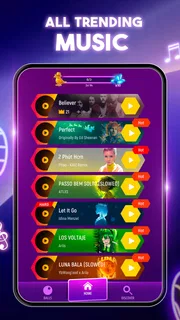
- A wide music selection supports varied moods.
- Bright visuals make the action easy to follow.
- Short rounds suit quick play sessions.
- New tracks can keep repeat play feeling fresh.
Cons
- Precise timing can take practice.
- Ads may interrupt the experience.
- Some songs or content may require payment.
- Fast movement can feel challenging on small screens.
- A stable connection may be needed for some features.


