
Our review
 Analysis by Lookingapps
I like puzzle games that let me get started quickly, but I also want enough room to make a few decisions rather than simply tap through a stream of effects. Block Blast! sits in that comfortable middle ground: it gives me a board to manage, pieces to place, and a steady reason to think ahead. It suits a short break especially well, though the same simplicity can make a session stretch longer than I intended.
HungryStudio’s game is a free puzzle title for Android and iOS, with an Everyone age rating. It has attracted more than a billion installs and holds an average rating of 4.8 from around 5.8 million ratings, which gives a sense of its broad appeal without telling you whether its particular rhythm will suit you. My view is that it works best for people who enjoy spatial decisions and a score-chasing loop, not those looking for a story, a campaign, or a complicated puzzle system.
Quick to pick up, but not always a quick session
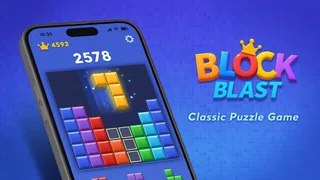
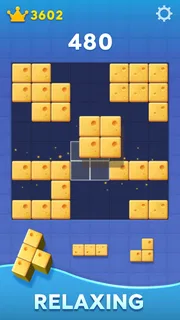
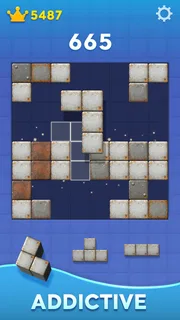
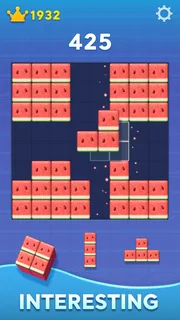
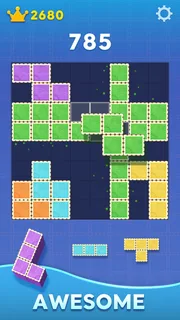
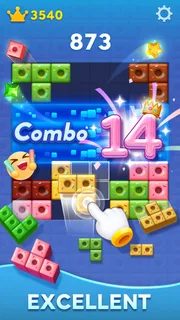
The appeal is easy to understand once you begin: look at the available blocks, decide where each could fit, and try to preserve useful space on the board. The rules are approachable, so I don’t need a tutorial-heavy introduction or a long stretch of uninterrupted time to understand what I’m doing. That makes it a natural choice while waiting for a meal, taking a short pause between tasks, or sitting through a commute.
Starting quickly is different from finishing quickly. A short visit can turn into a longer attempt when the board still looks salvageable and I’m trying to improve my result. I’d treat it as a game to open when I have a little breathing room, rather than something I automatically launch when I need to be focused on another task. The ease of getting into a run is a strength; the temptation to keep going is the trade-off.
The useful skill is not simply finding an empty patch for the next piece. I get better results when I leave several shapes of space open instead of filling the board with one convenient arrangement. A move that looks tidy now can restrict later choices, so I try to judge placements by what they leave behind. Keeping flexible space is more valuable than making every move look neat. That’s a practical habit, not a guarantee of a high score, but it makes the puzzle feel less like guesswork.
For someone new to this style of game, I’d recommend playing a few rounds without chasing a personal best. Pay attention to how quickly the board becomes awkward when empty areas are split into narrow gaps. Once that pattern becomes familiar, it’s easier to spot placements that preserve options. If you already enjoy block-placement puzzles, the initial learning curve will feel gentle; the longer-term challenge comes from making better choices under increasing pressure from the board.
What it feels like during longer play
Block Blast! is most satisfying when I’m in the mood to concentrate lightly. It asks for attention, but the decisions are small enough that I can pause between them and think through a placement. That makes it less demanding than puzzle games built around rapid matching or timed reactions. On the other hand, players who want a deep set of evolving mechanics may find that this basic placement loop becomes familiar quickly.
More articles

Instagram Makes Everyday Moments Worth Sharing
A rare social app that can be a photo diary, a neighborhood window, and a lively conversation in the same session—though its best moments still require a little restraint.
Heavy-use moments are less about complicated controls and more about mental fatigue. After several runs, I notice that I’m more likely to choose the first placement that fits instead of checking how it affects the rest of the board. My practical fix is to slow down before a crowded move and compare the available spaces, especially if a placement would leave a thin corridor or isolated pocket. It takes only a moment and can prevent an avoidable dead end.
This also makes the game a better fit for relaxed, repeatable play than for an intense competition setting. If I’m distracted, I can still understand the board, but I’m more likely to make a poor choice and end a run sooner. If I’m tired and just want something that plays itself, this is not that kind of app: the rules are simple, but the placement decisions still matter.
Offline convenience and the limits of a simple loop
One of the strongest practical reasons to keep it installed is that it can be played without Wi-Fi. That makes it useful in places where a connection is unreliable or unavailable, and it means I can still turn a quiet wait into a puzzle session. I’d choose it over a game that depends on online interaction when I’m travelling or trying to avoid relying on a signal.
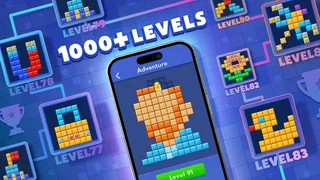
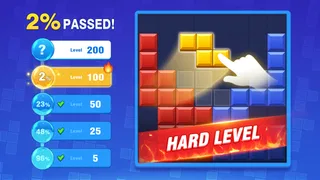
Offline play does not make the game a universal choice. If what I want is a narrative to follow, a collection of distinct puzzle types, or a sense of progression through authored levels, I’d look elsewhere. Block Blast! is centred on its board-and-placement challenge, so its appeal depends on whether repeating that kind of decision feels enjoyable to you. I like that directness, but I wouldn’t mistake it for a broad puzzle collection.
Compared with familiar match-three games, the emphasis here is less on spotting combinations of colours and more on planning where shapes can fit. Compared with word puzzles, it asks for visual and spatial judgement rather than vocabulary. Those differences make it a useful alternative when I’m tired of matching tiles or answering clues, but they also mean it will not replace either style for players who specifically enjoy those mechanics.
There is also a trade-off between a clean, easy-to-grasp premise and variety. Because the central activity stays focused, I can return without needing to remember a plot or a set of special rules. The flip side is that a long session may feel repetitive if I’m hoping for the game to introduce a substantially different kind of challenge. I’d use it in short bursts if variety is important to me, and save longer play for days when I’m happy to refine the same skill.
Reliability, updates, and what to expect from your device
My expectations for speed are modest in a good way: this is a puzzle game built around placing pieces, not a visually elaborate action game that obviously calls for demanding real-time play. The current version is 10.8.9, and the game has been available since September 23, 2022. Those details help identify the release, but they do not promise identical performance on every phone. A device’s age, available storage, background activity, and operating-system condition can all affect how smoothly any app behaves.
I would not infer battery use, loading times, or memory demands from the puzzle format alone. The practical way to judge it on your own device is to try a brief session, notice whether the game opens and responds comfortably, then see whether performance changes when other apps are running. If your phone already struggles with everyday apps, it is sensible to keep expectations cautious rather than assume that a simple-looking game will solve broader device slowdowns.
The minimum operating-system requirement is Android 7.1. If you use an older device, checking compatibility in the app store before planning to install it is worthwhile. For a phone that meets the requirement, I’d still keep some storage free and close unusually demanding background tasks if the device feels sluggish. These are ordinary troubleshooting steps, not a claim that the game needs special hardware.
For reliability, I think about two separate questions: whether the app runs well on a particular phone, and whether a puzzle session is easy to resume after an interruption. The game’s offline availability is useful when connectivity drops, but I would avoid making a run that matters to me at a moment when I may need to switch apps or put the phone away. Mobile interruptions are common, and protecting an ongoing attempt is simply a sensible habit for any score-focused game.
In-app purchases are available, with items ranging from about five dollars to about fifty dollars. The game itself is free to download, so I’d start by playing without spending and decide later whether any optional purchase adds value for my own habits. If you prefer games with no in-app spending at all, that is a reasonable reason to skip it; if you’re comfortable ignoring optional purchases, the free entry point makes it easy to test the core experience first.
Who I’d recommend it to
I’d recommend Block Blast! to someone who wants a low-barrier puzzle they can learn quickly and revisit in spare moments. It’s particularly suited to players who enjoy examining a board, keeping space open, and trying to make a better decision than they did on the previous run. Its Everyone rating also makes it broadly accessible by age, though parents should still make their own choices about in-app purchases and screen time.
I’d be less likely to recommend it to someone who needs a clearly bounded session, dislikes repetition, or wants a puzzle game with a sequence of levels and a strong sense of completion. It may also be a poor match if the pleasure of a game comes mainly from social competition, narrative surprises, or frequent changes in mechanics. The same focused design that makes it easy to return to can feel narrow when you want novelty.
For everyday use, I’d keep it as a spare-minute option rather than a background distraction. On a delayed train, for example, I can start a run without needing a connection, concentrate on the board, and put the phone away when the wait ends. At work or during study, I’d be more deliberate: the quick start makes it convenient, but that does not mean a session will stay short. Setting a stopping point before opening it is a useful way to avoid losing more time than intended.
HungryStudio has made a straightforward puzzle with wide appeal, reflected in its large audience and substantial volume of ratings and reviews. Those figures tell me it has reached many players, but the more important question is whether its repeated placement decisions are satisfying to you. I find the game strongest when I approach each move patiently, protect open space, and treat a run as a small challenge rather than a demanding commitment.
My verdict is positive, with a clear caveat: Block Blast! is an easy recommendation for accessible, offline-friendly block puzzling, but not for anyone who needs variety or a firm end to every session. I’d try the free version if spatial puzzles appeal to you, play a few rounds to see whether its rhythm holds your interest, and spend only if an optional purchase genuinely suits the way you play.
Pros
- Easy to learn with simple block-dragging controls
- No internet connection is needed to play
- Short rounds make it convenient for quick breaks
- A preview shows upcoming blocks to help plan moves
- The clean board keeps the game easy to read
Cons
- Random block sequences can end a run unexpectedly
- There is no undo option after placing a block
- Progress can feel repetitive over longer sessions
- Ads may interrupt play between rounds
- There is no direct way to challenge friends in real time


