

Our review
 Analysis by Lookingapps
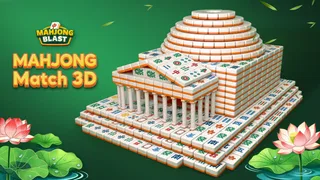
When I want a quiet puzzle rather than a game that demands a long session, I usually look for something I can start, understand, and put down without losing the thread. Mahjong Blast is built around that kind of tile-matching routine: spot pairs, clear the board, and take the next puzzle at your own pace. It is a board game from Nebula Studio, and its appeal is less about a complicated rule set than about making familiar mahjong solitaire feel easy to pick up.
My first impression is that it suits brief breaks particularly well. The basic objective is immediately legible, so I don’t have to learn a sprawling set of controls before I can play. That simplicity is also a useful test of whether the game is right for you: if you enjoy scanning a layout and thinking a few moves ahead, the core loop has room to be satisfying; if you need a story, competition, or a steady stream of new mechanics, tile matching alone may feel repetitive.
Small goals make it easy to begin
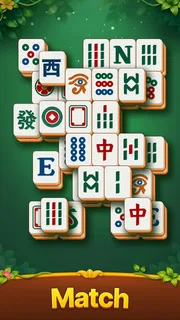
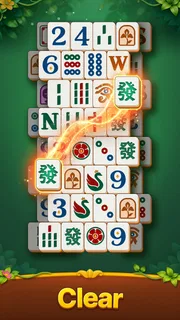
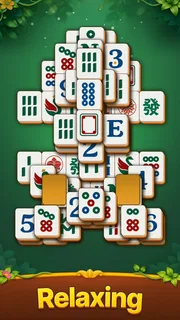
The early goal is pleasingly direct: find matching tiles and clear them from the arrangement. I can focus on the board in front of me instead of juggling several objectives at once. That makes the game a natural fit for a short wait, a quiet pause between tasks, or a wind-down moment when I don’t want a demanding challenge.
There is a subtle decision beneath each match. A pair may be available now, but removing it can change which tiles are accessible later. I get more satisfaction when I pause to check the layout rather than tapping the first obvious pair. A practical habit is to scan for tiles that are likely to open up useful choices, then make a match that leaves the board easier to read. It turns a simple action into a small planning exercise without making the rules feel heavy.
This is still a casual solitaire experience, not a full traditional mahjong match between players. That distinction matters when choosing it. People who want to learn competitive mahjong, manage a hand, or test themselves against another person should look for a different kind of game. Here, the pleasure comes from solving a tile layout on your own.
What progress feels like
In a puzzle game like this, progress is most satisfying when I can tell that a board is becoming more manageable. Each cleared pair changes the shape of the remaining puzzle, and that gives even a small session a visible sense of movement. I don’t need a large narrative payoff to understand what I have accomplished: the board itself is the immediate feedback.
The game has reached a wide audience, with more than 100 million installs and an average rating of 4.8 from around 2.6 million ratings. Those figures suggest that the accessible format has broad appeal, though popularity alone cannot tell me whether its pace will suit a particular player. I would treat it as a familiar, low-barrier style of puzzle rather than assume it offers the depth of a strategy game.
More articles

Instagram Makes Everyday Moments Worth Sharing
A rare social app that can be a photo diary, a neighborhood window, and a lively conversation in the same session—though its best moments still require a little restraint.
One useful way to play is to treat a session as a single focused puzzle, not as an obligation to keep going. Before choosing a pair, I take a quick look at the exposed tiles and ask whether the match opens up more possibilities or merely removes something convenient. That check is especially helpful when several matches seem equally obvious. It keeps the puzzle from turning into automatic tapping and makes the moment-to-moment decisions feel more deliberate.
The strongest progress signal is the board becoming clearer because of your choices, rather than a need to chase a complicated chain of objectives. That can be refreshing, but it also sets expectations: players who want detailed unlock trees, character development, or a persistent competitive ladder may find the experience comparatively spare. I would not choose this primarily for long-term progression systems.
How the challenge and pace hold up
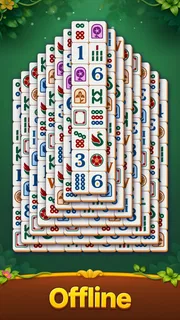
Mahjong solitaire difficulty often comes from the order in which a player removes tiles, not from fast reactions. That is the kind of challenge this format is best suited to. I find it more enjoyable when I slow down enough to notice which tiles are blocked and which choices could leave me with fewer options. If I rush, the game can feel like a sequence of taps; if I study the board, it becomes a compact logic puzzle.
The pace is therefore partly in the player’s hands. Someone who wants a quick mental reset can make obvious matches and keep moving, while someone who wants more thought can inspect the consequences of each choice. This flexibility is a real strength for casual play. The trade-off is that familiar tile layouts and matching rules can become samey if you want every session to introduce a substantially different kind of problem.
I would also avoid treating every board as a test of skill or every pause as evidence that I have made a mistake. Solitaire puzzles can leave a player weighing several plausible moves, and that uncertainty is part of the appeal. When I feel stuck, I find it more useful to re-scan the exposed tiles and consider what each match might uncover than to tap randomly. That approach preserves the thinking element and makes a successful clear feel earned.
Compared with a word puzzle, Mahjong Blast asks for visual pattern recognition rather than vocabulary. Compared with a match-three game, its satisfaction comes from uncovering and clearing a layered arrangement rather than building a cascade of adjacent pieces. And compared with a traditional mahjong app focused on multiplayer play, it is a solo puzzle choice. Those differences make it easy to decide whether this particular style is what you want before settling in.
Where convenience meets friction
The game is free to download, with optional in-app purchases priced from $1.49 to $12.99 per item. That gives curious players a low-cost way to try the core experience, but I would still check purchase prompts carefully and decide in advance whether I want to spend anything. Optional purchases can be a distraction in a game whose main draw is a quiet, uncomplicated puzzle; if you prefer a completely purchase-free experience, that is a reasonable point to weigh before installing.
It is rated Everyone, which fits the straightforward, non-competitive nature of tile solitaire. The current version is 3.1.2, and it requires Android 7.1 or later. The release date is June 23, 2025. Those details are useful when checking whether it suits your device, but they don’t change the central question: do you enjoy solving visual layouts at a relaxed pace?
For a realistic everyday use, I can see opening it while waiting for an appointment or taking a few minutes away from a busy screen. The game’s simple premise is well suited to that gap because I can focus on one board without needing to remember a plot or coordinate with other people. If I have only a moment, I can stop after a short session; if I have longer, I can stay with the puzzle while the process still feels engaging.
There is a possible friction in that very convenience. A familiar solitaire loop can encourage one more round, even when I intended to take only a brief break. I’d use it deliberately—perhaps as a short pause rather than an activity to fill every idle moment—especially if repetitive mobile games tend to keep me playing longer than planned. The game’s calm presentation does not automatically make screen time effortless to manage.
Who I would recommend it to
I would recommend Mahjong Blast to someone who likes solitaire puzzles, wants an easy-to-understand game for short sessions, and enjoys making small visual decisions without time pressure. It is also a sensible pick for anyone who prefers a solo activity over live opponents. The high rating and large player base show that many people enjoy this approachable format, but the best reason to try it is simply that matching and uncovering tiles sounds satisfying to you.
I would skip it if your priority is a deep campaign, substantial changes to the rules, social play, or a strong sense of character-driven advancement. A more varied puzzle collection may be a better fit if you quickly tire of repeating the same basic kind of decision. Likewise, someone seeking the full strategic and social experience of traditional mahjong should choose a game designed around that style rather than expect it from solitaire.
For me, the progression works best as a sequence of manageable puzzles and immediate board-level goals, not as a promise of elaborate unlocks. Its challenge depends on how carefully I read each layout, and its pacing makes it easy to fit around ordinary downtime. That is a modest but clear proposition: when I want a quiet visual puzzle, it gives me one; when I want novelty, competition, or richer long-term goals, I would reach for something else.
Pros
- Quick rounds make it easy to play during short breaks.
- Tile-matching rules are simple for beginners to learn.
- The puzzle format offers a calm alternative to fast-paced games.
- Progressing through levels provides a clear sense of achievement.
- It can be played without needing multiplayer coordination.
Cons
- Some layouts may become repetitive after extended play.
- A timed challenge can feel stressful for casual players.
- Mistakes may require restarting a level.
- Small tiles can be difficult to distinguish on compact screens.
- Frequent play may depend on a steady supply of new levels.


