






Our review
 Analysis by Lookingapps
I like simulation games that let me experiment without turning every session into a checklist. Solar Smash works best in that spirit: it gives me a planet-sized target and room to test different ways of tearing it apart. The appeal is less about mastering a campaign and more about watching cause and effect unfold, then trying another idea. That makes it easy to pick up for a short break, though players who need clear objectives and a strong sense of long-term advancement may find its open-ended approach thin.
Experiment first, set your own early goals
At the start, I found it helpful to invent a simple goal rather than wait for the game to tell me what to do. I might try to change a planet’s surface, create a particular kind of damage, or see how a different attack changes the result. That self-directed loop is the core attraction: choose an experiment, watch the planet react, and adjust the next attempt.
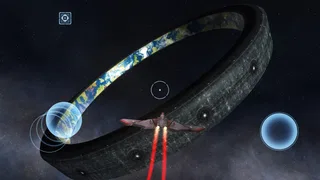
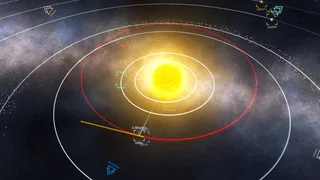
This is a space sandbox simulation from Paradyme Games, and it feels designed around playful destruction rather than a traditional story or mission structure. The setting gives the experiments an immediate visual hook, but the lasting interest comes from comparing outcomes. I would not approach it expecting a structured campaign with a sequence of carefully explained objectives. Instead, it suits players who enjoy making their own small challenges.
One useful way to get more from an early session is to change just one thing between attempts. If I vary several choices at once, it is harder to tell what caused a different result. Keeping the experiment simple makes the sandbox feel more like a toy for testing ideas and less like random tapping. It is a small habit, but it gives each attempt a purpose without needing a formal task list.
That freedom is also the first limitation. If you open a simulation game because you want the game to set goals, teach a technique, and reward each milestone, Solar Smash may feel directionless. I enjoy it more when I arrive with a question of my own, even a silly one. A player who wants guided progression or a defined win condition will probably be happier with a mission-based alternative.
Progress is measured in discoveries, not a long ladder
The sense of progress here is primarily personal: I learn what the available interactions can do, notice how outcomes differ, and become more deliberate about the next experiment. That is satisfying in short bursts, but it is not the same as steadily building a character, base, or campaign. If you are looking for a large progression ladder that keeps adding formal objectives, this is a different kind of game.
That distinction helps set expectations. The game has attracted a broad audience, with an average rating of 4.6 from around 1.7 million ratings and more than 100 million installs. Those figures suggest wide appeal, but they do not mean every player will enjoy an unstructured sandbox. I would treat its popularity as a reason to give the idea a try, not as a promise that its pace will suit someone who prefers explicit goals.
More articles

Instagram Makes Everyday Moments Worth Sharing
A rare social app that can be a photo diary, a neighborhood window, and a lively conversation in the same session—though its best moments still require a little restraint.
For me, a useful progress signal is whether I can predict an outcome better than I could in my first few attempts. When I start thinking, “What if I change this one element?” rather than simply repeating the same action, the game has given me a reason to keep exploring. The reward is understanding the sandbox and producing an outcome I find interesting, rather than collecting a long series of conventional achievements.
That makes it particularly suitable for people who enjoy visual experimentation, casual physics-flavoured play, or short sessions with no pressure to remember a plot. It can also work as a quick shared activity: I can hand the phone to a friend, suggest a small experiment, and compare what happens. It is less suited to players who want competitive matchmaking, a deep management layer, or a sustained narrative to pull them from one session into the next.
The challenge comes from curiosity, not a steep difficulty curve
I would not describe its appeal as overcoming a demanding skill wall. The challenge is choosing what to try and deciding when an experiment has told me something interesting. That can be relaxing because I am free to explore at my own pace, but it also means the game may not provide the escalating tension some simulation fans want. If you need increasingly difficult stages to stay engaged, the open-ended structure may not supply that rhythm.
A practical approach is to treat each session as a handful of experiments rather than an endless attempt to find a hidden “right” answer. I get more enjoyment from setting a modest target, testing a couple of variations, and stopping once I have seen enough. This also helps prevent the central action from becoming repetitive. When I catch myself repeating an attempt without learning anything new, it is usually a good moment to take a break.
Compared with a management simulation, where progress often comes from balancing resources and planning over time, this game puts the immediate result front and centre. Compared with a conventional action game, it is less about reflexes and more about choosing an interaction and observing its effect. That makes it a good alternative when I want something visually dramatic but do not want to commit to a long run. It is not a replacement for a strategy game if careful planning and a meaningful failure state are what I want.
There is also a difference between novelty and depth. Seeing a new result can be fun, but a sandbox built around repeated experimentation naturally depends on how much the player enjoys trying variations. Once I have exhausted the ideas that interest me, I may put it down and return later rather than feel compelled to continue. I consider that a fair trade-off for a game that does not demand a daily routine or a lengthy session.
Its relaxed pace avoids pressure, but may not sustain everyone
Solar Smash is free to download and includes in-app purchases priced from $1.99 to $14.99 per item. I would go in with the expectation that the basic appeal is the experimentation itself, and decide separately whether any optional purchase is worthwhile for me. The presence of purchases is worth knowing before handing the game to a younger player, but I would not treat spending as the reason to try it.
Its content rating is Everyone 10+, which gives parents a useful starting point when deciding whether it fits their household. The theme is planetary destruction, so the tone is obviously not gentle nature simulation, even though the play is abstract and fantastical. I would still check the app’s store page and device settings with a child rather than assuming the age label answers every family’s preferences.
Because the game does not rely on a long chain of goals to explain its appeal, it can be easy to return to after a gap. I do not need to remember a plot or reconstruct a complicated plan before trying another idea. On the other hand, that same low-pressure structure does little to pull me back when I am not already curious. Players who value streaks, daily tasks, or a strong reward schedule should look for a game built around those habits instead.
For an ordinary use case, imagine waiting for a friend at a café with a few spare minutes. I can open the game, pick a small experiment, watch the result, and stop without worrying that I have left a mission half-finished. That is where its pacing works particularly well. If I have a longer evening and want a simulation that steadily introduces new systems or asks me to manage a complicated project, I would choose something more structured.
Who should try it, and who should move on
The game is free, and its current version is 2.7.5. It requires Android 7.0 or later. Those practical details make it straightforward to assess compatibility before installing, while the large install base indicates that it has reached far beyond a niche simulation audience. Still, the best reason to try it is not its reach; it is whether you enjoy making your own experiments in a cosmic sandbox.
I would recommend it to curious players who like watching a system respond to their choices, casual players who want a vivid short-session diversion, and friends who enjoy taking turns inventing challenges. I would steer away anyone who needs a tutorial-led campaign, meaningful long-term management, or a clear sequence of unlocks and increasingly difficult objectives. Those preferences are not flaws in the game; they simply point toward a different kind of simulation.
My overall verdict is that Solar Smash earns its appeal through immediacy and freedom, not through a deep progression structure. Its early goals are easiest to create for yourself, its progress is the knowledge and variety you get from testing ideas, and its challenge depends on curiosity more than mastery. When I want a quick, unusual sandbox session, that is enough. When I want the game to keep setting the next target for me, I would choose another title.
Pros
- Detailed planet models make destruction visually satisfying.
- Multiple weapons offer varied ways to reshape worlds.
- Sandbox mode lets players experiment without objectives.
- Regular updates can add fresh content and features.
- Simple controls make it easy to start playing.
Cons
- Frequent visual effects may strain older devices.
- Gameplay can become repetitive after exploring the weapons.
- Some features may require watching ads to unlock.
- The game offers limited long-term progression.
- Destruction effects may not appeal to younger players.


