

Our review
 Analysis by Lookingapps
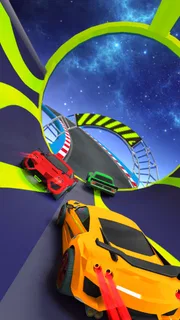
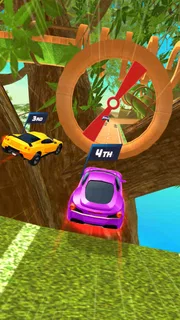
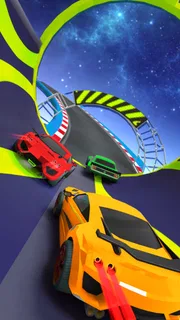
I like Race Master 3D best as a quick-hit racing game: it gets me into a race without asking me to learn a complicated driving model first. The cars are easy to guide, the action is brisk, and the emphasis is on weaving through traffic, using nitro at the right moment, and reaching the finish ahead of rivals. It suits short breaks better than long sessions built around detailed car tuning or realistic driving.
How it feels to play now
Made by Beresnev Games, this free racing game puts accessible arcade action first. The store description points to drifting, nitro, upgrades, boss races, and offline play, which gives a fair picture of its central appeal: keep moving, improve your car, and take on tougher opponents. I find that straightforward loop useful when I want a race I can understand immediately rather than a simulation that demands patience.
The current version is 3.18.7.3579. That identifies the build a new player can look for, but a version number by itself does not tell me what changed between releases. I would not treat it as proof of a particular new feature or a dramatic overhaul. What matters for someone deciding whether to install it is that the game is still presented as a compact, approachable racing experience, with progression and competition alongside its quick races.
The game has a 4.6 average from around 3.5 million ratings, and it has passed 500 million installs. Those figures suggest that its easy-to-grasp format has found a very large audience, but popularity is not a guarantee that its style will suit everyone. If you enjoy direct, arcade-style racing, the premise is appealing; if you want precise simulation, deep event planning, or a strong sense of driving weight, I would look elsewhere.
Quick races, simple decisions
The appeal is less about mastering a complex control scheme and more about making small decisions while the course is moving past. Traffic and the timing of a nitro boost can make a short race feel more involved than simply holding a direction. My practical advice is to avoid spending every boost as soon as it becomes available: save it for a stretch where you can use the extra speed without immediately losing control or running into an obstacle.
That kind of restraint is also a useful way to judge whether the game is working for you. If you enjoy reacting to the road and adjusting your timing, the uncomplicated presentation leaves room for that. If you prefer to plan a race through detailed setup choices before the start, this lighter approach may feel thin. Its strengths are quick access and readable action, not a promise of extensive mechanical depth.
Drifting adds another reason to pay attention instead of treating every course as a straight sprint. I would focus on learning when a turn begins to demand a correction, rather than trying to steer constantly. Small, deliberate inputs are often a better habit in an arcade racer than panicked adjustments. The exact feel can vary with the device and a player’s preference, so it is worth giving the controls a few runs before deciding whether they suit you.
More articles

Instagram Makes Everyday Moments Worth Sharing
A rare social app that can be a photo diary, a neighborhood window, and a lively conversation in the same session—though its best moments still require a little restraint.
Progression without turning every session into a project
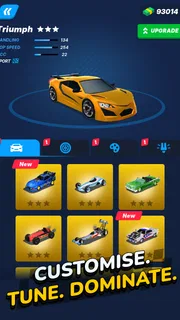
Car upgrades and boss races give the game a goal beyond finishing the next ordinary run. For me, that structure is most satisfying when I treat each race as a short step: try to improve, notice where a rival or course gives me trouble, and make a focused attempt again. It is a more approachable rhythm than a racing game that expects me to spend a long time comparing technical specifications between every event.
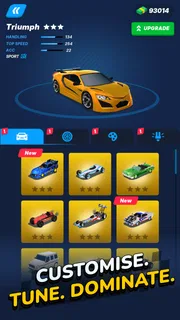
A useful way to approach upgrades is to think about the problem I am trying to solve, rather than assuming that every available improvement is equally important. If I am losing ground because I cannot keep pace, speed is the obvious concern; if I am struggling to navigate a course, better control may be more useful. The game’s broad upgrade-and-race loop supports that kind of practical thinking, though players who want detailed tuning sliders and precise car-by-car engineering may find the choices less granular than they want.
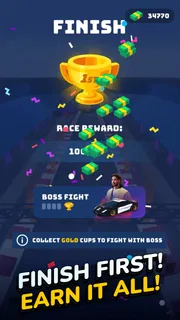
Boss races are a welcome change of emphasis because they give progression a recognizable target. They can also expose whether I have been relying on luck or whether I have learned to handle the racing rhythm. I would not expect a boss encounter to replace a deep championship mode, but it provides a clear reason to keep playing when routine races start to blur together.
Offline use and everyday fit
Offline racing is one of the more useful parts of the pitch for daily life. I can see this working well during a commute, while waiting for an appointment, or in a place where a connection is unreliable: a short race is easier to fit into those gaps than a game that requires a long online session. It is still sensible to check that the mode you want is available offline before relying on it for a particular trip, especially if you expect every part of the progression to work without a connection.
For a typical break, I would open the game, play a few races, and stop once I have made a little progress or reached a boss challenge. That is a better fit than expecting a long narrative arc. The short-session design can also make repeated play feel samey if I keep racing without a goal, so I would vary the objective: one run to practice steering, another to conserve nitro, and another to push progression.
The game is free to download and rated Everyone, making it easy to consider for a broad audience. In-app purchases range from $0.99 to $28.99 per item. I would keep that in mind before handing a device to a child: an Everyone rating speaks to age suitability, while purchases are a separate consideration. If you prefer not to spend, you can start without paying, but it is sensible to review purchase settings on the device and decide how you want to handle optional spending.
What its release history tells me—and what it does not
The game was released on April 29, 2021, and its current version is 3.18.7.3579. Together, those facts show that this is an established title with a continuing version sequence rather than a newly launched experiment. They do not, on their own, explain which individual changes arrived along the way, so I would not attribute specific mechanics or improvements to a particular update without confirmed release notes.
For an existing player, the practical point is modest but useful: the current build number gives you a reference when checking whether your installed copy is up to date. If you return after a break, I would first try a familiar race and see whether the controls and progression still feel comfortable before judging the whole game from memory. That separates your own experience of the current build from assumptions about what a version change must have added.
The minimum operating system is Android 7.1. If your device runs an older system, compatibility may be a barrier; if it meets that requirement, that still does not guarantee identical performance on every phone. I would leave enough storage for the installation and updates, close demanding background apps if racing feels sluggish, and test a short session before relying on it during travel. Those are ordinary checks, not claims about special performance requirements.
Where the arcade approach has limits
The same simplicity that makes the game easy to pick up can limit its appeal over time. Players who enjoy realistic handling, long races, licensed-car collecting, or detailed vehicle setup may find the action too focused on immediate reactions. It also may not be the right choice if you want every session to feel meaningfully different; short arcade races can become repetitive when the course and progression loop stop offering fresh goals.
Compared with simulation-focused racers, this game asks less of the player before the first race and offers a more casual way to fill a spare moment. Compared with other quick arcade racers, its combination of drifting, nitro, upgrades, offline play, and boss encounters gives the loop several things to work toward. That is a useful mix, but it is not the same as deep event variety or a full competitive racing ecosystem. If the latter is what keeps you engaged, a more involved alternative is likely a better match.
I would also be cautious about judging the whole experience by the first few races. A simple start is part of the design, while upgrades and boss challenges give progression a longer horizon. If you prefer games that explain every system in detail before letting you play, the lighter presentation may leave you wanting more guidance. On the other hand, if you want to learn by trying, the low barrier to entry is a real advantage.
Who I would recommend it to
I would recommend it to someone who wants a free, approachable racing game for short sessions, enjoys arcade handling, and likes having upgrades and opponents to work toward. It is particularly convenient for players who value offline play and do not want every race to depend on a long online commitment. Its Everyone rating also makes it broadly accessible, with the separate reminder that optional purchases deserve sensible device-level oversight.
I would steer a friend toward another kind of racer if they care most about realistic physics, detailed car customization, or lengthy competitive events. I would also suggest trying a few races before spending on anything: first see whether the control feel, repeated course rhythm, and progression goals are enjoyable on your own device. That is the clearest way to decide whether its uncomplicated style is a strength for you or a ceiling.
My overall impression is that Race Master 3D knows the kind of racing game it wants to be: fast to understand, easy to fit into a spare moment, and structured around small wins and gradual improvement. Beresnev Games has a well-established title on its hands, though the age of the release and the current version number should not be mistaken for evidence of any particular update history. I would give it a try for casual arcade racing, keep expectations focused on quick action rather than simulation, and watch future version notes for concrete changes before assuming the experience has shifted.
Pros
- Quick races make it easy to play in short sessions.
- Simple controls are accessible to casual players.
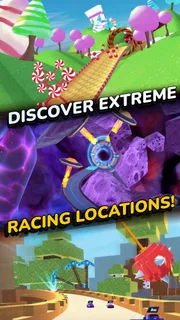
- Changing tracks help keep races varied.
- Unlockable cars give you goals to work toward.
- The colorful visuals are clear on small screens.
Cons
- Races offer limited control over steering.
- Ads can interrupt the flow between races.
- Car upgrades may require repeated play.
- Difficulty can spike as opponents get faster.
- The racing lacks the depth of a full simulator.


