







Our review
 Analysis by Lookingapps
The first thing I notice about EA SPORTS FC Soccer Mobile 26 is how quickly it puts the match itself at the centre. This is a mobile football game from ELECTRONIC ARTS, and its presentation aims for the feel of following a major fixture rather than managing a quiet collection screen. That focus makes it easy to understand why it has found such a large audience: there are familiar clubs and players to care about, a clear sporting goal, and matches that suit short play sessions. My impression is that it works best when I want football atmosphere and hands-on play in the same place, not when I want a deep, uninterrupted simulation.
Football that feels familiar from the first match
As a sports game, it has a useful balance between recognisable football imagery and an accessible mobile format. Premier League and Champions League stars give the game an immediate sense of occasion, while the match setting keeps the experience grounded in the sport rather than turning it into an abstract card or numbers exercise. The result feels tailored to fans who already have favourite players or enjoy building a connection to the teams and names they follow.
The scale of its audience is hard to miss: it has passed 500 million installs, and its average rating is 4.6 from around 23 million ratings. Those figures suggest broad appeal, but they do not tell me whether the game suits every football fan. In my view, the deciding question is whether you enjoy a mobile version of football that mixes playing matches with the ongoing appeal of assembling and improving a squad.
The opening experience is inviting because the core idea is plain: take the pitch, compete, and pursue the cup. That simplicity is valuable on a phone, where a game often has to earn attention in a few minutes. Still, the wider experience has more going on than a single match. If you prefer a traditional console-style career with a long season and a steady narrative, this may feel more fragmented. If you enjoy dipping in, making a few decisions, then playing, the format is a better fit.
A visual identity built around the occasion
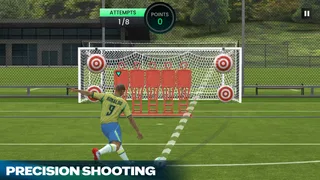
The art direction leans into the spectacle of modern football. Players, stadium presentation, and match framing are there to make each fixture feel like an event, rather than a plain field with moving figures. That approach helps when I’m playing casually: even a brief session has a recognisable football setting, and the licensed star presence gives team-building choices a human hook.
That emphasis also creates a trade-off. A polished presentation can make the game feel more like a broadcast-inspired sports product, but it does not automatically make every moment easy to read on a small screen. When play gets crowded, I find it sensible to focus on the shape of the attack rather than trying to track every player at once. A simple pass into space can be more dependable than attempting a complicated sequence while reacting to several moving targets.
For a practical routine, I’d treat squad decisions and match play as separate parts of the experience. Before a short session, I would check the team and make any deliberate changes; once a match begins, I’d concentrate on a small number of clear choices. That helps keep the visual spectacle from becoming distraction. It is a useful habit for anyone playing during a commute break or between other tasks, when there may not be time to rethink a lineup mid-session.
More articles

Instagram Makes Everyday Moments Worth Sharing
A rare social app that can be a photo diary, a neighborhood window, and a lively conversation in the same session—though its best moments still require a little restraint.
Sound and the pace of a mobile fixture
The game’s football mood depends on more than what appears on screen. Match presentation and sound help signal that I’m in a sporting contest, while the pace of play gives a session a natural beginning and end. I like that the game can feel purposeful without demanding that I settle in for a long stretch every time I open it. It is easier to fit into everyday life than a full-length console session, even if the compact format means the broader rhythm can involve moving between different activities.
That rhythm is not ideal for everyone. If you want to spend an evening immersed in one continuous match-day story, a mobile game built around repeatable sessions may not provide the same sense of continuity as a dedicated football simulation. I’d also avoid treating every short visit as a reason to chase progress. The most enjoyable approach is to play when I’m in the mood for football, rather than letting the game’s ongoing structure dictate how often I pick up my phone.
One small but useful choice is to decide what kind of session I want before starting: a quick match for the feel of playing, or time spent on squad decisions. Switching between those intentions without a plan can make a short break feel busier than it needs to be. This is not a complicated strategy, but it helps the game’s pace work in its favour and makes its many football elements easier to enjoy on their own terms.
Where the mechanics suit football fans
The central appeal is the combination of playing football and caring about the players in your squad. That gives each match a purpose beyond simply reaching the final whistle. Fans who enjoy comparing stars, shaping a team, and seeing those choices take the pitch will find more to hold their attention than someone who only wants a bare-bones kickabout. The Premier League and Champions League names make that team-building angle particularly easy to understand.
Compared with simpler arcade football games, this one gives more weight to the identity of the squad and the wider football setting. Compared with a deeper management game, it puts the match experience closer to the foreground. I see that middle ground as its strongest design choice: it can appeal to people who want more than a quick novelty but do not want football to become a spreadsheet. The compromise is that it may not satisfy either extreme—the pure arcade player or the tactician seeking detailed control over every club decision.
It is also worth thinking about spending before getting invested. The game is free to download, but it includes in-app purchases ranging from $0.39 to $99.99 per item. I would approach those as optional rather than a necessary part of enjoying a match. If you are prone to spending when a game puts appealing players or upgrades in front of you, set a personal limit before you begin. The free entry point is friendly; the range of purchase options means a little restraint is useful.
For families, the age rating is Everyone, which makes it broadly accessible in content terms. That does not remove the need for normal care around purchases on a shared device. I’d make sure the person playing understands that optional items cost money, especially if a child can access payment methods through the device. This is practical advice for any free mobile game with paid extras, and especially relevant when the football collecting side is part of the appeal.
Who will enjoy it, and who may prefer another game
I’d recommend EA SPORTS FC Soccer Mobile 26 to someone who follows football, recognises the star players, and likes the idea of switching between squad choices and match action. It is particularly well suited to short, repeatable sessions: a few minutes while waiting for a ride, a break between classes, or a quiet moment at home when a full console game would be too much commitment. The familiar sporting setting makes those brief visits feel more engaging than a generic time-filler.
I’d be more cautious if you want a completely offline, self-contained experience, a long career with a carefully unfolding story, or a game with no purchase prompts. I would also suggest looking elsewhere if you dislike managing a roster or following ongoing progression around matches. A simpler arcade football title may be more satisfying for instant action, while a dedicated management game is a better choice for someone who enjoys tactics and club planning more than controlling play on the pitch.
Before installing, it is sensible to check your device: the current version is 28.0.01 and the minimum operating system is Android 7.0. That makes it accessible to a broad range of Android devices, though actual comfort will naturally depend on the phone and its available space and performance. The game was released on October 10, 2016, and its continued presence in the mobile football conversation reflects a long-running format rather than a one-off seasonal experiment.
A strong football mood, with mobile compromises
What stays with me is the way the visual presentation, star-filled setting, and match rhythm support one another. The game wants football to feel like an occasion, but it also respects the reality that many people play on a phone in short bursts. That coherence is more persuasive than any single flourish: squad choices matter because they lead back to the pitch, and the pitch gives the wider football setting a purpose.
There are compromises. The mix of match play, team-building, and optional purchases can feel like too much if you only want a clean, immediate football match. The mobile format also cannot replace the room and continuity of a longer console session. I would not call it the best choice for every football fan; I would call it a convincing one for fans who want a portable blend of recognisable players, competitive matches, and a bit of ongoing team investment.
Overall, I think it earns a place on a football fan’s phone if the appeal is more than simply passing the ball for a few minutes. It gives you a recognisable world to enter, a clear reason to care about your team, and a pace that can fit around daily life. Go in expecting a mobile sports game with both match action and progression, keep spending optional, and it is much easier to appreciate what it does well.
Pros
- Authentic club and league licensing adds recognizable teams and players.
- Frequent live events offer fresh goals to pursue.
- Touch controls are responsive and easy to learn.
- Squad-building gives plenty of ways to shape a team.
- Matches are short enough for quick play sessions.
Cons
- Progress often depends on grinding events and daily objectives.
- Competitive play can feel unfair against stronger squads.
- Some upgrades and rewards rely heavily on random packs.
- A stable internet connection is needed for most modes.
- Large updates can use significant storage and mobile data.


