


Our review
 Analysis by Lookingapps
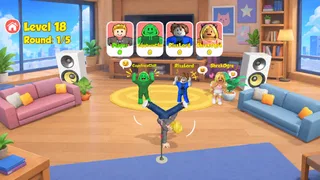
MemeMix Challenge: Funny Party is a casual game built around making amusing sounds and seeing how they land with other people. I think that simple premise is its strongest draw: rather than asking you to master a complicated control scheme, it gives a group an easy excuse to perform, react, and laugh. It is best approached as a quick party activity, not as a deep solo game or a serious test of vocal skill.
What the sound challenge is like
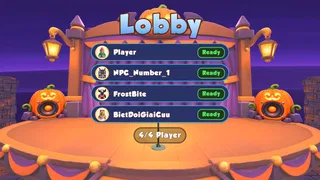
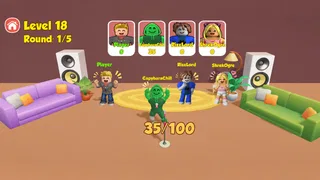
The basic idea is easy to understand. You mimic funny sounds, receive a score, and can challenge friends. That makes the game approachable even for someone who rarely plays mobile games. A friend can understand what to do after watching one round, so there is little need to pause the gathering for a long explanation.
In my view, the sound-making is only half the appeal. The other half is the social performance: choosing how seriously to attempt a sound, hearing other people’s interpretations, and reacting to the result. A deliberately ridiculous attempt may be more entertaining than a polished one. That gives the game a different feel from casual titles focused on matching tiles, clearing levels, or beating a personal best.
As a casual game from Amobear VN Game Global, it fits best into spare moments shared with other people. The game is free to download, and it is rated for Everyone, which makes the premise broadly accessible. The app is currently at version 0.0.9, and its average rating is 4.3 from around 3.5 thousand ratings. Those figures give a newcomer a little context, but they don’t tell you whether the style of play will suit your group; the social setting matters more.
Best played with the right crowd
I would bring it out during a relaxed hangout, a family get-together, or a short wait when everyone is already together and willing to be a little silly. For example, if friends are sitting around before dinner, one person can introduce a sound challenge and the others can take turns. The game gives the moment a shared prompt, while the group supplies the jokes and atmosphere.
That setting is important. If you are alone and looking for a substantial progression game, the central activity may feel thin. The store summary emphasizes mimicking sounds, scoring, and challenging friends; it does not present the game as a long-form adventure. I would choose a puzzle game or a richer single-player title when I want focused play on my own, and save this one for company.
There is also a practical social trade-off: not everyone enjoys making noises on demand. Some people may be shy, self-conscious, or simply uninterested in performing. I’d avoid putting anyone on the spot. It works better when participation is voluntary and the group treats awkward attempts as part of the fun rather than judging someone for them.
More articles

Instagram Makes Everyday Moments Worth Sharing
A rare social app that can be a photo diary, a neighborhood window, and a lively conversation in the same session—though its best moments still require a little restraint.
Keeping a round light rather than stressful
Scoring can make a simple activity feel like a contest, but I would keep the stakes low. The most enjoyable way to use a score is as a conversation starter—who made the most surprising attempt, or which sound inspired the funniest reaction—not as proof that one person is objectively better. That approach preserves the party-game mood even if someone cares more about winning than the others do.
A useful way to keep things moving is to agree on a short turn-taking rhythm before starting. Let each person have a go, react briefly, then pass the device along. This avoids one player dominating the activity and helps the group stay engaged. It is a small hosting choice, but it matters more here than in a game where everyone can play independently at the same time.
I would also treat the score as entertainment rather than a precise measure of performance. The game’s premise involves sound imitation, but the available description does not explain how scoring is calculated or how a result is judged. So I wouldn’t assume that scores reflect vocal accuracy, effort, or any consistent skill ranking. If your friends are competitive, set that expectation before a score becomes an argument.
Fairness, purchases, and what to expect
The game is free, with in-app purchases listed at $1.99 per item. That is the clearest purchase context I can give a prospective player. I wouldn’t infer from that price alone what an item contains, whether it changes play, or whether it affects scores. Those details are not established here, so it would be unfair to describe the purchases as cosmetic, necessary, or advantageous.
For a group deciding whether to try it, the sensible approach is to start with the free game and make any purchase decisions individually in the app store. There is no reason to spend simply to join a casual session unless the game itself shows you something you genuinely want. If you are setting up a device for a child, it is worth reviewing purchase controls beforehand; an Everyone age rating describes the content category, but it does not remove the need for a household’s usual spending safeguards.
Competitive fairness is harder to assess than the basic premise. A score is part of the experience, but the details available do not establish whether players are judged under identical conditions, how challenges work, or whether purchases influence competition. I would therefore frame the game as a friendly social contest, not a balanced competitive platform. That distinction is useful: it lets a group enjoy the challenge without expecting tournament-level consistency.
There are a few other practical unknowns that I would not fill in by guessing. The basic description does not settle whether the game needs an internet connection, whether it works equally well with one player, or what options it offers for accessibility and sound sensitivity. If any of those points are essential for you, check the current app-store details and try the free version in your intended setting before planning an event around it.
How it compares with familiar party games
Compared with word-guessing games, MemeMix Challenge puts the performance in the sound itself rather than in explaining a clue or acting out a phrase. That can make a round feel immediate: a player makes an attempt, and the rest of the group reacts. Compared with conventional score-chasing casual games, its appeal is less about refining a repeatable technique and more about sharing a ridiculous moment.
That difference is also its main limitation. A party game based on talking, drawing, or acting may suit a group that wants more varied prompts or a clear team structure. A solo arcade game may be better for someone who wants a predictable challenge they can repeat privately. Here, the enjoyment depends heavily on whether your friends are willing to perform and whether the sound prompts stay amusing for your group.
One non-obvious tip is to use it as a short activity between other plans rather than making it the entire evening’s entertainment. A quick round can loosen up a quiet group, but repeating the same kind of challenge for too long may make the novelty wear off. Another is to choose a comfortable volume and setting: people need to hear the attempts, but a loud public place can make performing awkward and make reactions harder to catch.
Who should try it—and who should pass
I’d recommend giving it a try if you want a free, low-commitment game to spark conversation with friends, and if your group enjoys goofy performances more than carefully balanced competition. It also makes sense for someone who likes informal challenges and is happy to laugh at their own attempts. The game has reached over five million installs, but popularity on its own cannot guarantee a good fit for every group.
I would skip it if you want a substantial single-player campaign, detailed progression, or transparent competitive scoring. I would also pick a different activity for a group that dislikes making sounds, prefers quiet play, or needs specific accessibility options that have not been established. Those aren’t flaws every player will notice, but they are real reasons the premise may not work for a particular person or occasion.
My overall take is that MemeMix Challenge is a lightweight social game with a clear use: give friends a shared excuse to make funny sounds and enjoy one another’s reactions. Its free entry and simple concept make it easy to consider, while the listed $1.99-per-item purchases are worth keeping in mind without assuming what they change. I’d download it for a casual gathering, keep the competition friendly, and judge it by whether the people in the room are having fun—not by the score alone.
Pros
- Quick rounds make it easy to start playing at a party.
- The meme format encourages spontaneous and creative responses.
- Simple controls are approachable for players of different ages.
- A lighthearted theme suits casual group gatherings.
- Short sessions fit well between other party activities.
Cons
- The fun depends on having other people to play with.
- Repeated prompts may make later rounds feel predictable.
- Humor can vary widely between players.
- The game may offer limited appeal outside social settings.
- Some players may prefer more structured gameplay.


