




Our review
 Analysis by Lookingapps
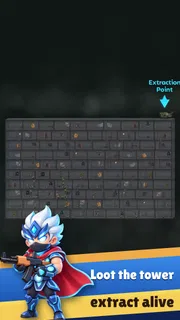
I like the idea behind Last Extract: the outing is not just about finding useful resources, but deciding how much longer to risk carrying them before trying to get out. That gives this adventure game a sharper focus than a straightforward run through enemies. VOODOO’s game is free to start, and its central premise suits players who enjoy making quick, tense decisions rather than settling into a long, carefully scripted adventure.
How the extraction loop shapes a short session
The appeal is easy to understand even if you have only a few minutes. You head into danger, look for resources, and try to survive the horde long enough to escape. The tension comes from the trade-off: staying longer may be worthwhile, but every extra moment can turn a promising trip into a failed one. I find that a simple goal like this can make each decision feel meaningful without requiring a complicated story or a large list of systems to learn.
That structure also makes the game easier to pick up than many adventure titles built around sprawling maps, extended dialogue, or lengthy missions. You can focus on what is happening in the current attempt instead of remembering a long chain of objectives. For players who want immediate pressure and a clear reason to move, that is a practical strength.
I would not mistake that directness for a guarantee that every session feels fresh. A game centred on gathering supplies and getting out depends on how well its moment-to-moment choices hold attention. If you mainly want exploration for its own sake, a slower adventure with a richer sense of place may suit you better. Here, the premise points toward urgency: resources matter because they are part of a risky escape, not simply collectibles to admire.
Speed expectations: quick decisions, not a performance guarantee
The game’s setup suggests brisk play, but that is different from promising instant loading, a fixed frame rate, or flawless responsiveness on every phone. I would approach it as a game designed around fast reactions and compact decision-making, while keeping expectations about technical speed realistic. How smooth it feels can depend on the device and the conditions in which you play.
That distinction matters most when the horde is closing in. In a calm moment, a brief pause may be little more than an annoyance; during a risky escape, delayed input or a stutter could make the same moment feel much harsher. I recommend judging the controls and responsiveness in a low-stakes early session before committing to a run where you are especially reluctant to lose what you have collected.
A useful habit is to avoid starting a run while your phone is already busy with downloads, updates, or several demanding apps. That is sensible advice for any action-focused mobile game, but it matters particularly here because the central loop asks you to make decisions under pressure. It is not a hidden setting or a special trick; it is simply a way to give the game a fair test before blaming the design for a sluggish session.
More articles

Instagram Makes Everyday Moments Worth Sharing
A rare social app that can be a photo diary, a neighborhood window, and a lively conversation in the same session—though its best moments still require a little restraint.
Heavy-use moments and the cost of staying longer
The most demanding moments, from a player’s point of view, are likely to be the ones where several concerns collide: watching for the horde, judging whether to keep gathering, and choosing when to make the escape. Even without assuming any particular combat system or inventory feature, the premise makes clear that attention is a limited resource. If you keep pushing because you hope for one more reward, you may leave yourself less room to react.
My practical advice is to decide on a personal stopping rule before a run gets tense. For example, you might choose to head for safety once you have found enough to make the attempt worthwhile, rather than changing your mind every time another opportunity appears. That approach helps keep greed from taking over and makes a failed attempt easier to assess: was the route too risky, or did you simply stay too long?
This is also where the game may feel less comfortable for someone playing in a distracted setting. A commute with frequent interruptions, a conversation, or a short break at work can make it difficult to stay focused on a session whose core appeal is pressure. I would save it for a moment when I can give the screen my attention, even if I only have time for a brief play.
For resource-conscious players, there is another trade-off worth considering. The game is free to download, but it includes in-app purchases priced from $0.99 to $109.99 per item. That wide range is a reason to check purchase prompts carefully and use device-level purchase controls if you share a phone or want to avoid accidental spending. You do not need to treat a purchase as a prerequisite simply because the game offers them.
Reliability and recovering from a bad run
A tense extraction game needs to make setbacks feel understandable. If a run goes wrong, I want to be able to identify whether I stayed too long, took a poor risk, or simply had a rough moment, rather than feeling that the whole experience was arbitrary. The central premise gives the player a clear lens for reviewing a failure: survival and escape are the goal, and every extra search has a cost.
Still, I would be cautious about assuming that progress, recovery, or saved runs work in any particular way. Those details can affect whether the game feels forgiving, especially if you play in short bursts and sometimes have to close an app unexpectedly. The sensible approach is to treat each outing as something that may require your attention until you can confirm how it behaves on your device, rather than beginning a run when you know you will need to leave at any second.
For day-to-day reliability, the best test is a normal session on your own phone, not a promise based on a rating or download count. The game has an average rating of 4.4 from around 36,000 ratings, which suggests that many players have formed a positive impression, but ratings cannot tell you whether it will run smoothly on your particular hardware or network conditions. I would use them as background context, not as a substitute for trying it yourself.
If an attempt ends badly, I would make one small adjustment on the next run instead of changing everything at once. Leave earlier, pay closer attention to the point where risk begins to outweigh the resources you already have, or choose a less distracted time to play. That makes the loop more useful as a learning process and avoids turning a single frustrating outcome into a reason to spend money or abandon the game immediately.
Device constraints and who should give it a try
The listed minimum operating system is Android 8.0, so anyone with an older Android version should check compatibility before planning to play. Meeting that minimum does not necessarily mean every device will feel equally comfortable, particularly when a game asks for quick attention. If your phone is older, has little free storage, or tends to slow down when several apps are open, test a short session before making it part of your routine.
The Teen age rating is another useful point for families choosing games. I would treat that as a reason to check whether the game fits the player in question, rather than assuming the rating automatically makes it suitable for every younger player. The horde-and-escape premise puts survival pressure at the centre of the experience, so a child who prefers gentle exploration may be happier with a different kind of adventure.
Last Extract is a strong fit for someone who likes compact, high-stakes runs and can enjoy deciding when to stop collecting and make a getaway. It is less likely to satisfy a player seeking a long narrative, relaxed discovery, or an experience that can be played while barely watching the screen. Against more traditional adventure games, it seems to trade breadth and downtime for a clearer risk-and-reward question. If that question sounds fun to you, the game’s focused premise is a good reason to try it.
VOODOO has released it as version 0.0.37, and the game has passed one million installs. Those figures offer a sense of its reach, but they do not tell me whether the current build will suit every player’s expectations. I would go in ready to judge the feel of a few sessions for myself, especially the balance between gathering and escaping, rather than expecting a polished, story-heavy adventure simply because it belongs to the genre.
Performance verdict: a promising idea that rewards attention
My overall impression is that Last Extract is most appealing when I treat it as a focused test of judgement, not as a sprawling adventure or a game to leave running in the background. Its central loop gives each outing a clear purpose, while the possibility of pushing too far supplies the tension. That focus is the strongest reason to try it, and also the main limitation for anyone who wants more variety between sessions.
For a casual player, I would start with a short, uninterrupted session, learn how the game feels on the device, and resist the urge to extend a run just because things are going well. If responsiveness is comfortable and the risk of staying longer keeps you engaged, it could become a satisfying pick-up-and-play option. If the experience feels demanding on your phone, or you would rather explore at your own pace, a gentler adventure is probably the better choice.
With a free starting point, a Teen rating, and an established audience of over one million installs, it is easy to see why the premise attracts attention. My recommendation is measured: try it for its pressure-filled resource-and-escape loop, keep purchase prompts in mind, and decide based on how reliably it runs for you. It works best for players who enjoy making a clear call under pressure; it is not the right fit if what you really want is a relaxed world to wander through.
Pros
- Quick extraction makes loot runs feel rewarding.
- Multiple areas offer variety as you explore.
- Simple controls are easy to learn.
- Combat adds tension to scavenging trips.
- A post-apocalyptic setting gives the game a clear mood.
Cons
- Repeated runs can make the gameplay feel predictable.
- Limited resources may slow progress.
- Combat can feel unforgiving for new players.
- Exploration may lack guidance at times.
- Performance may vary across mobile devices.


