





Our review
 Analysis by Lookingapps
I find Gossip Harbor: Merge & Story most appealing when I treat it as a gentle puzzle with a continuing story, rather than a game I need to race through. Its combination of merging, island restoration, and a beachside mystery gives each session a little more context than simply clearing a board. It suits players who enjoy seeing a place improve while following a cast of characters, though anyone looking for a pure logic challenge or uninterrupted progress may find its pacing less satisfying.
How merging, restoration, and story fit together
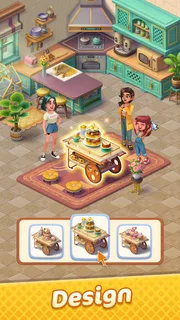
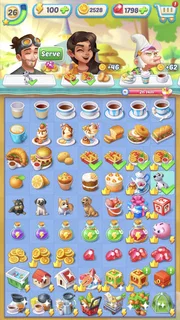
At its heart, this is a merge puzzle game: you combine matching items to create something more useful, then use the results to complete tasks. Those requests move the story forward and help restore Brimwave Beach. The loop makes sense quickly, but the appeal comes from linking small board decisions to visible progress around the setting and new developments in the mystery.
That connection is a strength. In many merge games, the board can feel like a production line detached from the rest of the experience. Here, tasks give the merging a narrative purpose. I am not only tidying a grid; I am working toward the next repair, character interaction, or clue. The story is presented as a fiery mystery, so there is a reason to keep checking what happens next, even when the immediate puzzle is familiar.
The balance will not suit everyone. If you enjoy matching objects but do not care about dialogue or restoration, the story may feel like a pause between board actions. If you mainly want a richly branching mystery, the puzzle work may feel like a toll you have to pay before reaching the next scene. I think the game works best for people who want both strands in moderate doses.
A useful way to approach the board
One practical habit is to avoid merging every available pair the moment it appears. Keep an eye on the current task and preserve useful pieces until you know whether they can contribute to it. This is especially helpful when the board starts to feel crowded: an impulsive merge can create a higher-level item that is less immediately useful than the pieces you had before. I found it more satisfying to make a quick plan around the active request than to merge simply because I could.
It also helps to think of board space as a resource, not just a place to store items. When several task chains are active in your mind, it is tempting to keep everything “just in case.” That can make the puzzle harder to read. I would prioritize the chain that advances a task you actually want to finish, then clear or combine less relevant pieces when they obstruct it. This is not a secret shortcut; it is a way to make the ordinary merge decisions feel less chaotic.
For a realistic everyday use, imagine opening the game during a short break and finding the board already busy. Rather than trying to complete every request, I would pick one clear objective, make a few deliberate merges, and stop when the session no longer feels relaxing. The narrative gives you a reason to return, but it is better approached as a series of small visits than as a checklist to finish in one sitting.
More articles

Instagram Makes Everyday Moments Worth Sharing
A rare social app that can be a photo diary, a neighborhood window, and a lively conversation in the same session—though its best moments still require a little restraint.
What progress feels like over time
Restoring the beach gives progress a visual and emotional dimension beyond the puzzle board. That can be motivating if you like seeing a setting gradually change. It also creates a mild pressure to keep advancing: a task can stand between you and the next story beat or improvement, and the game’s repeated merge loop may become noticeable when you are focused on the outcome rather than the process.
My advice is to decide what a satisfying session means before you start. It could be making room on the board, completing a particular request, or simply following a little more of the story. If your only measure of success is reaching the next scene as fast as possible, any required puzzle work may feel like friction. If you enjoy the small decisions themselves, the same pacing can feel like a pleasant wind-down.
The game is free to download, with in-app purchases listed from $0.99 to $99.99 per item. Those are broad price points, not a recommendation to buy, and I would not treat spending as a requirement based on them alone. A sensible approach is to begin without paying and decide whether the normal rhythm is enjoyable before considering any purchase. If a moment feels slow, taking a break is a better first response than spending just to hurry through it.
Spending, fairness, and what can be judged
For players asking whether this is fair without paying, the honest answer is that the purchase range alone cannot establish how quickly free progress moves or whether purchases provide a competitive advantage. This is a puzzle-and-story experience, not a game I would choose for head-to-head competition, so competitive fairness is not the main test I would apply. The more relevant question is whether you enjoy the pace you get without spending.
I would also separate the existence of optional purchases from the experience of using them. Knowing that items can be bought does not tell me what any particular purchase contains, how often prompts appear, or how much it changes progress. I would avoid assuming that a purchase is necessary, and I would check the in-game details carefully before confirming one. That is especially sensible if you are playing casually and do not yet know whether the longer story will hold your interest.
There is no need to make the game a daily obligation to get value from it. A merge puzzle can be a good fit for brief, low-pressure visits, but it is a poor fit if you dislike waiting for progress, repeated item chains, or being drawn toward optional spending. If you prefer puzzles with a fixed beginning and end, a conventional level-based match game is likely a cleaner choice. If you want a more demanding brainteaser, a logic-puzzle app will put more emphasis on solving than on collecting and restoring.
Who I would recommend it to
I would recommend it to someone who likes combining objects, gradual makeover-style progress, and a mystery that gives those activities a narrative thread. It is also a reasonable choice for a player who wants to dip in during spare moments and does not mind leaving a task unfinished. The beach setting and character-driven framing help it feel more like an ongoing little world than a bare puzzle grid.
I would skip it if you want every session to deliver a complete, self-contained puzzle, or if story scenes and restoration goals are distractions rather than rewards. It may also be a frustrating fit for anyone who dislikes board management. The useful skill here is not only spotting merges; it is choosing what to keep, what to combine, and which task deserves attention. Players who prefer a clean board and a single objective may find that ongoing juggling tiring.
Gossip Harbor is developed by Microfun Limited and is listed as a puzzle game for Everyone. Its average rating is 4.4, based on around 728,000 ratings, and it has passed 50 million installs. Those figures show broad interest, but they do not tell you whether its particular blend of merging and story matches your taste. I would use them as context, not as a substitute for deciding whether the core loop sounds enjoyable.
Compatibility and a grounded verdict
The game was released on September 9, 2022, and the current version is 4.10.5. It requires Android 7.0 or later. Those details are useful if you are checking an older device before installing; on iOS, I would check the app store’s compatibility information for the device you plan to use. The age rating is Everyone, which makes it broadly accessible, while the story and slow-build puzzle loop are still matters of personal taste.
My overall impression is that this is a particularly approachable choice for people who want their merge puzzles to lead somewhere. Its strongest idea is the way board work, beach restoration, and an ongoing mystery support one another. Its main trade-off is that the same loop can feel repetitive when you are impatient for the next narrative step, and the presence of purchases means it is worth setting your own spending boundary from the start.
If I were recommending it to a friend, I would say to try it for the combination of puzzles and gradual story progress, not because of a promise of fast advancement. Play in short sessions, focus on one task at a time, and see whether managing the board feels calming or cluttered to you. If you enjoy that rhythm, Gossip Harbor has a clear, specific appeal; if you want pure puzzles, rapid story access, or no purchase prompts in your game experience, another kind of puzzle title will probably suit you better.
Pros
- Merge chains offer a clear sense of progress.
- New areas unlock as the story advances.
- Short tasks suit quick play sessions.
- The interface makes items easy to identify.
- Regular events add fresh goals to pursue.
Cons
- Energy limits how many actions you can take.
- Waiting for energy can slow story progress.
- Some board items occupy space for a long time.
- Later upgrades may require many merges.
- Optional purchases can speed up progression.


