
Our review
 Analysis by Lookingapps
I’d approach Gangster Miami RP: Grand City as a role-playing game for players who want to step into an open city and make their own fun, rather than follow a tightly guided story. That distinction matters: the appeal is the freedom to roam and imagine a criminal-city life, while the trade-off is that players who need clear objectives or a carefully paced narrative may find the experience less satisfying. My overall view is that it makes most sense as a casual, self-directed game, not as a substitute for a polished, mission-led role-playing adventure.
A city-first game, not a story-first one
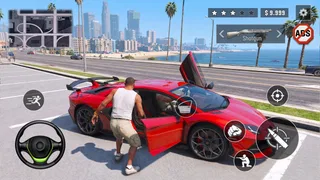
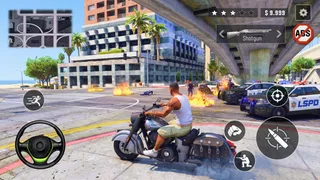
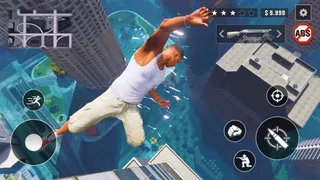
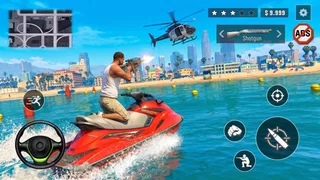
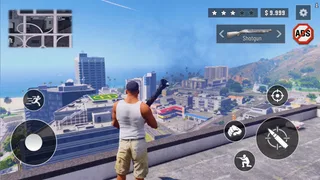
The game is published by Universe Game Labs and sits in the role-playing category, with open-world action at its center. The premise gives you room to treat the city as a setting for your own short sessions: explore when you have a few spare minutes, or stay longer if the free-roaming loop keeps you engaged. That open-ended structure is the most important thing to understand before installing it. You are choosing a mood and a playground, not necessarily a sequence of dramatic plot turns.
That makes the experience easy to sample. I can see it working well when I want something more active than a puzzle but don’t have the attention for a long campaign. A quick visit can be its own outing, and there is no need to schedule a session around a complex storyline. The flip side is that open-ended games place more responsibility on the player: if you do not enjoy setting your own pace or finding your own reasons to keep moving, the city may feel directionless rather than liberating.
Its broad reach suggests that many players have been willing to give it a try: it has passed five million installs, and its average rating is 4.7 from around 6,400 ratings. I treat those figures as a useful signal of interest, not a guarantee that the game will suit my tastes. A smaller pool of written feedback—36 reviews—also means the rating alone cannot answer practical questions about how much structure or variety an individual player will find.
Where the freedom helps—and where it asks more of you
In a conventional role-playing game, the next quest or dialogue scene usually tells me what to do. In an open-city game, the environment itself has to hold my attention. That difference changes how I would use this one: I would start with a short exploration session and ask whether simply being in its urban setting feels enjoyable. If the answer is yes, the freedom can be a strength. If I keep waiting for the game to explain why I should care about the next moment, a more story-driven alternative is probably a better fit.
One practical way to judge it is to avoid treating the first session as a race to “finish” anything. Instead, explore at a relaxed pace and notice whether you naturally begin making small goals for yourself. Perhaps you want to see more of the city, or you simply like the action-oriented atmosphere. This is a useful test for any free-roaming role-playing game, but especially for one whose central appeal is open-world play rather than a clearly advertised narrative hook.
Another trade-off is that an open setting can be less predictable in a good way, but also less efficient for a player with a narrow goal. If you only enjoy games when every session advances a visible campaign, the freedom may feel like wasted time. I would not install it expecting the same rhythm as a quest-heavy fantasy RPG, a choice-driven story, or a compact action game built around quick, clearly defined stages. Those alternatives offer stronger direction; this one is better suited to wandering and making the session your own.
More articles

Instagram Makes Everyday Moments Worth Sharing
A rare social app that can be a photo diary, a neighborhood window, and a lively conversation in the same session—though its best moments still require a little restraint.
How I’d fit it into an ordinary day
Imagine having a short break and wanting to play without remembering a complicated plot from the previous evening. A free-roaming city gives you a simple way in: load up, move around, and see whether the atmosphere and action are enough to hold your attention. That is a more realistic use case than expecting every session to deliver a major story payoff. It is also a good way to decide whether the game’s loose structure suits you before you invest much time in it.
For a longer session, I would set a personal goal before starting. That could be as modest as exploring an unfamiliar part of the city or spending the session seeing what the open-world format has to offer. The point is not that the game requires a particular routine; it is that a small self-chosen objective can make a free-form game feel more purposeful. If you prefer the game to provide that structure for you, a mission-led alternative will likely be more rewarding.
I would also be mindful of the difference between a game’s overall popularity and personal fit. Gangster-themed settings and open-world action are specific tastes. Someone who enjoys roaming through a crime-inspired city may be drawn in immediately, while someone who dislikes that theme should not feel obliged to try it just because the game has attracted a sizable audience. The setting is part of the experience, not merely decoration.
What to consider before installing
The game is free to download, with in-app purchases listed at $8.99 per item. I would start without spending and see whether the basic open-world loop holds my interest first. That is particularly sensible for a game whose value depends heavily on whether its atmosphere and self-directed play click with you. If you do consider a purchase, decide in advance what you expect it to improve and check the purchase details in the app store rather than assuming that spending is necessary to enjoy the game.
It carries an Everyone age rating, so its listed audience is broad. That rating does not mean every family will make the same choice about a gangster-themed game; parents may still want to consider the premise and how it fits their household. The game’s age label is one factor, while the theme and a player’s comfort with open-world action are separate considerations.
On the technical side, the listed minimum operating-system requirement is Android 7.1. I would check that my device meets the requirement before downloading, especially if I am installing it on an older phone. Meeting a minimum requirement is a starting point, not a promise about how every device will feel in use, so expectations should remain practical rather than assuming identical performance across different hardware.
The current version is 1.1.7, and the game was released on June 22, 2026. Those details help identify the version and release timeline, but I would not use them as a substitute for deciding whether the open-city format is actually my kind of role-playing game. The better test remains simple: do I enjoy exploring without a constant stream of explicit instructions?
Who is most likely to enjoy it
I would recommend giving it a try if you like crime-inspired settings, open-world action, and the freedom to decide what makes a session worthwhile. It is also a reasonable pick for someone who wants a free game to sample before committing to a more demanding RPG. The audience most likely to stick with it is comfortable with a loose structure and enjoys the space to explore rather than needing a plot to pull them from one scene to the next.
I would steer story-focused players toward a game with a stronger campaign, defined quests, or character-driven choices. Players who want short rounds with an obvious beginning and end may be happier with an arcade-style action game. And if you tend to lose interest whenever a game expects you to invent your own goals, this is probably not the strongest match, however appealing its open-world premise sounds.
That distinction is more useful than comparing games only by genre labels. Two role-playing games can offer very different experiences: one may reward careful planning and narrative attention, while another asks you to explore and create your own rhythm. Gangster Miami RP: Grand City belongs to the latter kind of pitch. I would judge it by whether the city keeps me curious, not by whether it follows the conventions of a story-heavy RPG.
My verdict after weighing the trade-offs
For me, the strongest case for this game is its accessible, open-ended premise: it offers a crime-themed city to explore and leaves room for players to decide how they want to spend time there. Its free price makes it straightforward to try, and its substantial install base and strong average rating give a new player a reason to take a look. Still, neither popularity nor an appealing setting can replace a good match between the game’s pace and your own preferences.
The weakness is the same quality that gives it freedom. A player who wants clear direction may find that self-directed play does not provide enough momentum. I would not recommend it as a first choice for someone seeking a rich, carefully authored campaign or a tightly structured session. But if you like the idea of dropping into an urban role-playing setting and seeing whether its action and atmosphere hold your attention, it is a sensible free game to test.
In short, Gangster Miami RP: Grand City is best approached with modest, specific expectations: try it for the open-city feel, not for a guaranteed story journey. Start with a brief session, create a small goal for yourself, and notice whether exploring feels entertaining or aimless. If it clicks, the freedom is the point; if it doesn’t, a more guided RPG will probably respect your time better.
Pros
- Open-world streets invite free exploration.
- Role-play gives players room to shape their characters.
- Driving adds variety to city activities.
- The urban setting supports immersive crime-themed play.
- Progression gives players goals to pursue.
Cons
- The crime theme may not suit younger players.
- Online role-play can depend on an active player base.
- Open-world objectives may feel repetitive over time.
- Performance can vary across mobile devices.
- In-game purchases may affect progression or customization.


