






Our review
 Analysis by Lookingapps
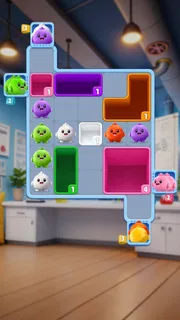
Fluffy Drop is a cozy puzzle adventure that puts a relaxed spin on mobile trivia. Its “No Timer” approach is the quality that shapes the experience most: instead of making every answer feel like a race, it gives you room to think at your own pace. I like that focus because it makes the game feel approachable for a quick break as well as a quieter moment when I want to concentrate without a countdown adding pressure.
A puzzle adventure without the rush
In many mobile puzzle and trivia games, a timer can turn a simple question into a test of speed. That can be exciting, but it also changes what the player is being asked to do: you are not only trying to work out an answer, but also trying to do it before the clock runs out. Fluffy Drop - No Timer takes a different angle. Its defining appeal is the opportunity to consider a puzzle without that particular source of urgency.
That difference sounds small, but it can have a meaningful effect on the mood of a game. With no timer pushing me to tap immediately, I can take a moment to read, notice details, and decide what I think. The experience feels less like a reflex challenge and more like a casual puzzle session. For players who enjoy thinking through a question rather than racing through one, that distinction is likely to be the reason to give it a try.
The game is listed as a trivia title, while its description presents it as a cozy puzzle adventure. Those ideas fit together neatly: trivia supplies the mental challenge, and the gentle framing makes the experience sound less intense than a competitive quiz. It is a simple pitch, but a useful one. I know from the outset that the game is aiming for a softer pace rather than the adrenaline of a timed contest.
What “No Timer” changes
The central capability is straightforward: play without a countdown setting the pace. In practical terms, that means I can treat each puzzle as something to consider rather than a prompt to answer as quickly as possible. When a clue takes a little longer to make sense, there is room to stay with it. When I want to pause and think, the defining premise does not ask me to hurry simply because time is passing.
This is especially welcome in trivia, where speed and knowledge are not the same thing. A player may know the answer but need a few seconds to recall it, or may want to compare possibilities before choosing. A timer can reward quick recognition; removing that pressure makes the act of reasoning feel more central. That makes the game easier to approach for people who prefer measured play, and it can make a casual session feel more comfortable.
The absence of a timer also gives the game a more flexible rhythm. I can imagine playing for a short stretch, working through a puzzle at a relaxed pace, and returning when I feel like another bit of mental stimulation. It does not demand that I enter a high-energy mindset before starting. That low-pressure quality is the strongest part of its identity, and it is more useful than a general promise that a game is simply “casual.”
More articles

Instagram Makes Everyday Moments Worth Sharing
A rare social app that can be a photo diary, a neighborhood window, and a lively conversation in the same session—though its best moments still require a little restraint.
How the relaxed pace feels in practice
Without a countdown, attention shifts toward the puzzle itself. I can read a prompt carefully, think about what it is asking, and give my answer when I feel ready. That can make the experience feel more welcoming if I am new to trivia games or prefer not to make decisions under pressure. It also makes the game a natural choice for moments when I want something engaging but not demanding in the way a fast-paced challenge can be.
This kind of pacing can be useful when I am playing in a distracted setting. A quick interruption does not have to feel like a race against a clock; I can give the question the attention it deserves when I return to it. The appeal is not that every session will be more exciting without a timer. Rather, it is that the game’s central approach leaves more control over the pace with the player.
That control changes the emotional tone as well. A wrong guess in a timed game can feel like a double failure: I may have missed the answer and lost precious seconds. In a no-timer format, the focus can stay on considering the puzzle instead of worrying about a dwindling clock. For me, that sounds like a calmer way to enjoy trivia, especially when the goal is to unwind rather than prove how fast I can respond.
There is a tradeoff, of course. Players who love a ticking clock, rapid-fire decisions, or the tension of racing to finish may find this approach less stimulating. The slower pace is a deliberate part of the appeal, not a universal improvement. If urgency is what makes a puzzle game fun for you, a no-timer experience may feel too gentle. If pressure tends to distract you, however, the same quality can be a real advantage.
Where it fits best
The best fit is a low-pressure break when you want to think without being hurried. That might mean settling in with a puzzle during a quiet moment, using a short session to reset your attention, or choosing a game that does not turn every answer into a race. The cozy framing and untimed premise give the game a clear place among mobile titles: it is for players who want mental engagement with a softer edge.
It also makes sense as an option for people who are curious about trivia but do not enjoy the feeling of being tested against the clock. The format can make it easier to focus on the question and explore an answer at a comfortable pace. That does not mean the game removes all challenge; trivia still asks for thought. It means the challenge is not paired with the additional demand to answer at speed.
Fluffy Drop is free to play, with optional in-app purchases available. The game has reached more than a million installs, and its average rating is 4.5 from around nineteen thousand ratings. Those figures suggest that it has found an audience, while the relaxed premise gives prospective players a straightforward way to judge whether its style suits them. It is available for Everyone, which further supports its approachable, casual positioning.
A cozy identity with a clear tradeoff
The strongest design choice here is also the main limitation: the game is built around not rushing. That makes the experience easy to recommend to someone who wants a calm puzzle break, but less compelling for someone looking for pressure, urgency, or a fast competitive feel. I would not treat “No Timer” as a feature that automatically makes every session better. I would treat it as a promise about the kind of mood the game wants to create.
That clarity is valuable. Mobile games often try to appeal to everyone by mixing many different moods, but a focused pace can make it easier to know what to expect. In this case, the appeal is not speed or intensity. It is the chance to settle into a question without having to beat a clock. If that sounds like the kind of puzzle experience you want, the game’s central idea is easy to understand and easy to appreciate.
There is also a practical benefit to that focus: the game can fit around the player rather than demanding a particular level of alertness. I can choose to take my time, and the experience remains aligned with its cozy puzzle-adventure identity. That can be more inviting than a format that turns every pause into a penalty. For players who value comfort and thoughtful play, this is a meaningful difference, even if it will not appeal equally to everyone.
Who is likely to enjoy it most?
I would point Fluffy Drop toward casual players who like trivia and puzzles but would rather not race through them. It should also appeal to anyone who finds timers stressful, needs a little more room to think, or simply wants a mobile game with a gentler rhythm. The game’s accessible pitch makes it easy to understand what it is trying to offer before deciding whether that style matches your taste.
Players who mainly want quick-fire competition may be better served by a game that makes speed part of the challenge. Here, the appeal is the opposite: a moment to pause, consider, and answer when ready. That difference is not a weakness so much as a preference the game asks you to share. If you enjoy taking your time with trivia, the premise is a strong match; if you thrive on urgency, it may feel too laid-back.
The game is from UniRise Studio, is free to download, and has optional purchases priced from $0.99 to $39.99 per item. It was released on March 29, 2026, and the current version is 1.19.2. It requires Android 7.0 or later. These details make it straightforward to check whether it fits your device and whether its optional spending model suits you before you begin.
Final thoughts
Fluffy Drop’s most appealing quality is its calm, untimed approach to trivia puzzles. By taking away the countdown, it gives the player space to think and helps the game feel like a comfortable break rather than a test of reaction speed. That simple choice shapes the experience from the start, making its identity easy to understand.
I would recommend it to anyone who wants a cozy puzzle adventure with a thoughtful pace, especially if timers tend to make mobile games less enjoyable. The same approach may not satisfy players who want tension or rapid-fire competition, but it does give the game a clear audience and a practical reason to stand out. If you want trivia without the rush, Fluffy Drop - No Timer is an inviting option to consider.
Pros
- No countdown pressure lets you play at your own pace.
- Simple controls make it easy to start playing.
- Short rounds suit quick breaks.
- The fluffy theme gives the game a cheerful look.
- No timer makes each move feel less stressful.
Cons
- The relaxed pace may feel too slow for some players.
- Repeated drop puzzles can become predictable.
- There is little urgency to add excitement.
- Some levels may require trial and error.
- Players seeking competitive challenges may find it limited.


