





Our review
 Analysis by Lookingapps
Chess has a way of making a quiet moment feel surprisingly absorbing. One position invites a careful look; the next turns into a puzzle of its own. Chess - Play and Learn Online takes that familiar appeal and frames it as a place to play, practise, and keep learning, whether you want a casual game with a friend or a more thoughtful session with tactics and analysis. I like that its central promise is easy to understand: chess remains the star, and the app gives players ways to engage with it at different levels of confidence.
A familiar game, an inviting first impression
The first impression is less about spectacle and more about clarity. Chess does not need a sprawling fictional world to draw me in; the board, the pieces, and the choices between them already create plenty of drama. This game’s identity leans into that simplicity. It presents chess as something you can enjoy socially as well as seriously, with online play and learning sitting side by side in the overall experience.
That balance matters. A beginner may arrive wanting to understand how the pieces move, while a regular player may be looking for a worthy opponent or a chance to sharpen a familiar opening. The broad appeal is easy to see: chess can be a quick diversion, a focused mental workout, or a shared activity. Chess - Play and Learn Online is built around those possibilities rather than dressing the game up as something it is not.
The game is free to download, and its audience is clearly broad. It is rated for Everyone, so the presentation is suitable for a wide range of players. There are optional in-app purchases, with listed prices ranging from one dollar to two hundred twenty-nine dollars and ninety-nine cents per item. That makes it sensible to check the purchase details in the app store before buying anything, particularly if you are installing it for a younger player.
Chess as a visual language
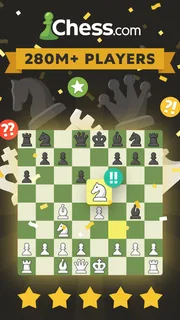
Chess has one of the most readable visual systems in games. Each piece has a recognizable role, each square matters, and the board itself communicates the state of play without needing a long explanation. That gives the experience a clean, deliberate mood: the visual focus naturally returns to the position and the decisions it presents. The strongest art direction for a chess game is often the kind that lets the board remain legible, and that principle suits this app’s central purpose.
There is also an understated sense of setting in an online chess game. The atmosphere comes from the encounter rather than from a story or a landscape. You are considering an opponent’s move, weighing risks, and deciding whether to trade, defend, or press forward. Even a familiar board can feel different from one game to the next because the people and positions change. That human unpredictability gives the experience its own kind of texture.
For me, that restraint is a strength. A more elaborate visual identity could be enjoyable, but it should never make the board harder to read or distract from the match. Chess is already expressive through its patterns: an open diagonal, a threatened king, or a piece left undefended can change the emotional temperature of a game in an instant. The app’s core appeal rests on helping players stay close to those moments.
More articles

Instagram Makes Everyday Moments Worth Sharing
A rare social app that can be a photo diary, a neighborhood window, and a lively conversation in the same session—though its best moments still require a little restraint.
Quiet sound, steady rhythm
Chess is not usually a game I associate with a dramatic soundtrack. Its most memorable rhythm is the pause before a move, followed by the small jolt of seeing what the opponent does in response. That pacing is part of the pleasure. A game can feel measured and calm, then suddenly demand full attention when a tactic appears or a comfortable position begins to unravel.
Because the mechanics carry so much of the mood, sound is best understood as a supporting element rather than the main attraction. The important experience is the flow between thinking and acting. Online play adds a social pulse to that rhythm: a match is no longer simply a sequence of problems on a board but a conversation expressed through moves. Each reply changes what you need to consider, and even a simple exchange can keep the tension alive.
The learning side creates a different tempo. Tactics and puzzles encourage close observation, while analysis invites a player to revisit choices and think about what might have worked better. These activities suit chess particularly well because the game rewards reflection. A mistake does not have to be the end of the story; it can become the starting point for understanding a position more clearly next time.
Mechanics that make learning feel relevant
The main mechanics are the rules of chess, and that is both the obvious point and the key to the app’s appeal. Every decision has a visible consequence. Moving a piece may create an attack, expose a weakness, or help control important squares. The rules are easy to state in broad terms, but mastery comes from seeing how pieces work together and anticipating what an opponent can do in reply.
The app’s emphasis on online games with friends gives those mechanics a personal dimension. Playing another person can make a familiar position feel less predictable, because an opponent is not simply following a script. You have to read the board and adapt. That makes the social side more than a convenience: it is a natural fit for a game whose central challenge is responding to another mind.
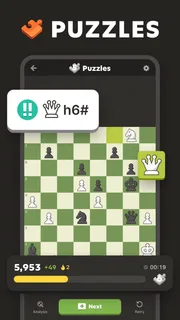
Tactics and puzzles are equally well matched to chess. They focus attention on concrete possibilities, asking you to notice threats and calculate a line rather than move on instinct alone. Analysis supports the same habit from another angle, encouraging a closer look at how a game unfolded. I appreciate that these learning themes connect directly to the board instead of feeling like separate distractions. They give players a reason to pause, inspect, and improve.
That said, chess can be demanding, especially when a player is still learning to spot threats. A position that looks safe may conceal a fork, pin, or overlooked attack. The game’s depth is rewarding, but it also means that progress often comes through patience and repeated practice. I would approach it as a gradual skill-building experience rather than expecting every match to go smoothly. The useful question after a loss is often not simply “What went wrong?” but “Which moment changed the position?”
The strongest fit is for people who enjoy thinking several moves ahead, but newcomers can still find a comfortable way in. Learning through puzzles and analysis gives the game more entry points than competitive play alone. You can approach chess as a hobby, a friendly challenge, or a serious craft. The core rules remain the same, while your goals and level of concentration can change from session to session.
A community built around a timeless board
The scale of the community reinforces the sense that this is a well-established home for online chess. The game has more than one hundred million installs, and its average rating is 4.7 from around three and a half million ratings. It also has roughly forty-seven thousand written reviews. Those figures suggest a broad audience, though what matters most to an individual player is still whether the available style of play and learning suits them.
Chess.com is the developer behind the game, and the app has been around since February 1, 2010. That long-running presence fits a product built on a game with centuries of history: the rules do not need to be reinvented for the experience to remain compelling. Instead, the appeal comes from returning to the board with a different opponent, a new position, or a better understanding of an old mistake.
For a casual player, the social promise may be the easiest reason to try it. For someone working on their game, tactics, puzzles, and analysis provide a more reflective angle. Neither approach needs to exclude the other. I can enjoy a friendly match one day and take a more analytical approach the next, with the same basic board connecting both moods.
A thoughtful atmosphere for a game that rewards attention
What makes this experience coherent is the way its mood follows the logic of chess. The visual language is naturally focused, the pacing makes room for thought, and the mechanics give every move weight. Rather than relying on a dramatic setting, the game finds atmosphere in the tension between two players and in the gradual revelation of what a position can become.
I see it as a strong choice for anyone looking to play chess online, spend time with friends over a match, or build a more thoughtful practice around tactics and analysis. Beginners should be ready for a learning curve, while experienced players will recognize the familiar challenge of trying to make a sound plan under pressure. That mix of accessibility and depth is exactly what gives chess its staying power.
My overall impression is positive: Chess - Play and Learn Online keeps the board at the center and gives players several natural reasons to return to it. It does not need a complicated premise to feel engaging. The atmosphere comes from concentration, anticipation, and the small satisfaction of seeing a position more clearly than before. If you enjoy games that reward patience and curiosity, this is an appealing way to keep chess close at hand.
Pros
- Lessons explain key strategies for beginners and developing players.
- Puzzles offer a quick way to practice tactical skills.
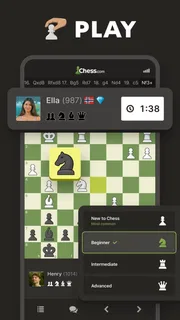
- Play against friends or online opponents at different skill levels.
- Game analysis helps identify mistakes after a match.
- A large player community makes finding opponents easy.
Cons
- Some lessons and features require a paid membership.
- Online play depends on a stable internet connection.
- Ads may interrupt the experience for free users.
- The range of features can feel overwhelming to newcomers.
- Matchmaking may pair players with noticeably different skill levels.


