


Our review
 Analysis by Lookingapps
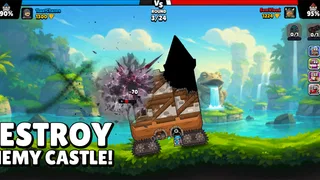
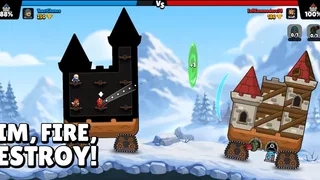
The first thing that makes Castle Busters easy to understand is the promise of a direct contest: two players, a crew to build, and a castle to bring down. I like that clear objective for an action game. There is no elaborate setup to learn before the central question appears: can I make better choices than the opponent and turn them into a win? The appeal is less about wandering through a large world and more about making a compact match count.
From the first move to the first decision
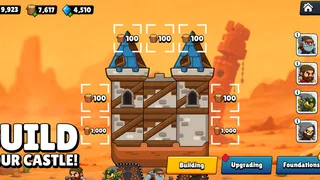
VOODOO’s free-to-play game puts one-on-one competition at the center. Its castle-smashing theme gives the action a concrete target, while crew building adds a strategy layer to the brawler format. That combination is the hook: I am not only reacting to an opponent, but also thinking about the group I bring into the fight and how that choice might shape the encounter.
The first practical question is whether you want a game that rewards focused, repeated bouts or one that offers a sprawling single-player adventure. This is firmly closer to the former. The match premise is easy to grasp, and the PvP focus means the other player is part of the challenge rather than scenery. If you enjoy testing decisions against a human opponent, that can make even a simple objective feel personal. If you would rather explore at your own pace or follow a long narrative, this setup is less likely to satisfy.
I find the crew element especially useful as a reason to think before rushing in. Instead of treating every encounter as a pure reflex test, I can consider whether the way I have put my team together suits the kind of contest I expect. A good habit is to pay attention to what actually changes the outcome of a match, rather than assuming that one preferred approach will work every time. That mindset makes the strategy side more engaging and helps keep losses informative instead of merely frustrating.
That said, the store’s concise description does not explain the exact roster options or match rules, so I would not go in expecting a particular set of units or tactical systems. The safe expectation is the one the game itself establishes: a crew, a castle, and a direct PvP fight. For me, that is enough to make the premise appealing, but players who want detailed planning tools or a deep campaign should check whether the in-game experience suits them before investing heavily.
Why the feedback matters
A competitive game needs to make cause and effect feel understandable. Here, the castle gives the action a visible purpose, while the opponent provides a changing problem. The most satisfying kind of match is one where I can connect a choice to the result: a decision helped me apply pressure, or an opponent’s move exposed a weakness. That feedback is what gives a short contest more staying power than tapping through a sequence of disconnected fights.
My advice is to treat early matches as practice in reading the encounter, not simply as a race to attack. Notice when your crew seems to be contributing and when the opponent is gaining the advantage. Even without turning every round into a study session, that small pause after a loss can tell you whether to adjust your approach or simply try again with better timing. In a one-on-one game, adapting to another person is often more rewarding than repeating the same action mechanically.
More articles

Instagram Makes Everyday Moments Worth Sharing
A rare social app that can be a photo diary, a neighborhood window, and a lively conversation in the same session—though its best moments still require a little restraint.
The trade-off is that PvP can feel less predictable than fighting scripted opponents. That unpredictability is a strength when I want a fresh contest, but it can also make a match feel uneven if I am still learning or meet someone with more experience. Anyone who dislikes losing to other players may prefer a solo action game where progress follows a steadier curve. Here, the opponent is part of the entertainment and part of the friction.
Castle Busters has an average rating of 3.8 from around 219,000 ratings, alongside about 7,900 written reviews. I take that as a reminder to approach it with measured expectations: the concept has drawn a substantial audience, but a strong premise does not guarantee that every player will enjoy its pace or competitive balance. The game has passed 10 million installs, which also makes it a familiar choice in the mobile action space, though popularity alone is not a reason to spend money or keep playing if the matches are not clicking for you.
What keeps the next session tempting
The reward in a match-based game is not only a win. It is also the sense that I have learned something about the crew-building choice or spotted a better way to handle pressure. That small improvement can be enough to make another attempt appealing. When I lose narrowly, I may want one more round to see whether a different decision changes the result; when I win, I may want to test whether I can repeat it against someone else.
This is the strongest part of the loop for players who like short competitive goals. The match supplies a clear task, the result offers immediate feedback, and the next attempt gives me a chance to apply what I noticed. It is a tidy structure for a spare moment: I can play with a specific purpose rather than needing to remember a long mission or manage a complex plot. A realistic use case is waiting for a friend or taking a break between errands, when I want a focused burst of play and can stop after a match.
Still, a satisfying loop can turn into a grind if the only reason to continue is the hope that the next round will feel better. I recommend setting a natural stopping point, especially if you are chasing a win after a frustrating loss. Because the game includes in-app purchases, it is also worth deciding in advance whether you want to spend at all. Purchases range from $0.99 to $99.99 per item, so the free entry point should not be confused with a guarantee that every optional purchase will feel worthwhile.
For me, the sensible approach is to play first and let the game earn any further investment. See whether the crew choices and head-to-head matches stay enjoyable without paying. If a purchase seems to promise convenience or faster progress, ask whether it would actually improve the part you enjoy: making decisions and competing, or merely shorten the route through it. This is a useful distinction in a free game, because buying more is not the same as finding a better match.
The reset that makes another match possible
One useful feature of the format is psychological rather than technical: each contest is a fresh chance to make a better call. A loss does not need to ruin the next session, provided you can separate one result from your overall enjoyment. I like games where I can return with a small adjustment in mind, such as being more deliberate about my crew or watching how the opponent applies pressure. That gives the reset a purpose instead of making it feel like a blank restart.
There is a limit, though. If you want persistent story progress, a carefully authored campaign, or a long list of solo objectives, a PvP-centered brawler may feel thin. Castle Busters is better suited to someone who enjoys the match itself and accepts that replay value comes from facing another player and refining choices. Players who want a relaxed, low-stakes game may also find the competitive framing more intense than they prefer, particularly when they are having a run of losses.
The age rating is Teen, so it is worth checking that rating against the needs of the person who will play, rather than relying only on the bright, accessible premise. The game is available on Android with a minimum OS requirement of 8.0, and the current version is 1.20.2. It is developed by VOODOO, a name familiar to many mobile players. Those details make it straightforward to judge basic compatibility, but they do not change the central question: do you want a mobile game built around direct competition and repeatable bouts?
Who should pick it up—and who should pass
I would recommend it to players who like action games with a tactical wrinkle, enjoy competing one-on-one, and do not mind learning through victories and defeats. It is also a reasonable fit for someone who prefers a clear objective over a large menu of activities. If you enjoy trying a new crew approach and then seeing how it holds up against a real opponent, the cycle has a practical reason to continue.
I would steer away from it if your priority is a rich solo campaign, a calm game with no competitive pressure, or a predictable difficulty curve. A conventional single-player action game is a better choice if you want to control the pace and avoid the unevenness that comes with human opponents. Likewise, if you dislike free-to-play purchases, approach this one with a firm spending limit or skip it; the fact that it costs nothing to begin does not mean its optional items are irrelevant to your experience.
Compared with the usual mobile brawler, the notable distinction is the way the castle objective and crew-building premise frame each encounter. It is not simply a promise of fast action; there is a strategic reason to consider what you bring into a fight, and a visible goal to focus on. That makes it more appealing to players who want a little planning alongside their combat. In contrast, someone who values elaborate character progression or a broad variety of modes may find a larger action game more satisfying.
My verdict on the loop
What works for me is the clean chain from deciding on a crew to facing an opponent, seeing the result, and having a reason to try again. The best matches are the ones that teach you something, not merely the ones that end in a win. That is a worthwhile foundation for a mobile action game, especially when I have only a short break and want a contest with a clear purpose.
What gives me pause is the dependence on PvP enjoyment. The same format that creates variety can make progress feel uneven, and optional purchases deserve a little caution. I would start free, pay attention to whether I enjoy the decisions as much as the action, and stop if another match begins to feel like an obligation rather than a choice. That is a more useful test than judging it by its premise alone.
Overall, I see Castle Busters as a focused pick for competitive mobile players rather than an all-purpose action game. Its central loop can be compelling when I want to build a crew, face a real rival, and come back with a smarter plan. If that sounds like your kind of repeatable challenge, it is worth trying. If you want a self-paced adventure or dislike spending prompts in free games, there are better fits for your time.
Pros
- Quick battles make it easy to play in short sessions.
- Distinct heroes add variety to combat strategies.
- Bright visuals give the fantasy world a cheerful style.
- Progression offers goals beyond winning individual battles.
- Simple controls are approachable for casual players.
Cons
- Later stages may require substantial grinding.
- Progress can feel slow without frequent upgrades.
- Combat may become repetitive over longer sessions.
- Limited strategic depth may disappoint experienced players.
- In-app purchases can affect progression pacing.


