
Our review
 Analysis by Lookingapps
I enjoy racing games most when they give me a reason to care about the next corner, not just the next lap. Car Crash Simulator: Mountain takes a more destructive route: it is a driving game built around steep mountain roads and the spectacle of cars buckling in collisions. That makes it an appealing pick when I want a short, physical-feeling driving session rather than a polished competition focused on perfect racing lines.
Moon Star Games Yazilim’s game is free to download, rated for Everyone, and has attracted over one million installs. Its average rating is 3.5 from around four thousand ratings, which suggests a sizeable audience but also a mixed response. I would treat it as a niche crash-and-driving diversion, not assume it will satisfy someone looking for a deep motorsport career or a carefully balanced racing challenge.
What the mountain-road idea feels like
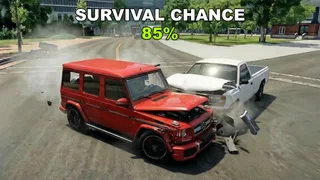
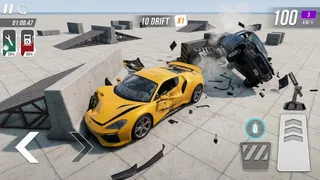
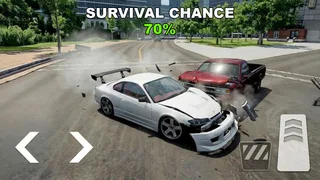
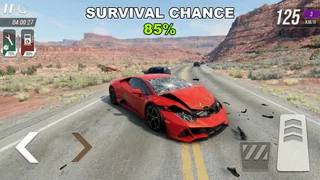
The central appeal is easy to understand: take a car onto a sharply sloped road, try to keep control, and see what happens when driving goes wrong. In many racing games, a crash is simply a penalty that interrupts a run. Here, the collision itself is part of the attraction. The soft-body damage concept points toward visible deformation rather than treating every impact as a harmless bump, giving risky driving a different kind of payoff.
That focus changes how I would approach a session. I would not treat every descent as a time trial. A more satisfying goal is to test how much control I can keep on a difficult stretch, then deliberately push a little further and observe the result. The game’s identity is strongest when the drive and the crash feel connected: speed creates risk, the road makes that risk tangible, and an impact becomes the moment I wanted to see rather than merely a mistake to erase.
Mountain roads also make the setting matter. A steep descent can make ordinary steering decisions feel consequential, because carrying too much speed into a bend is more dramatic than doing the same on a broad, flat track. That is a useful distinction from standard circuit racers, where the challenge usually comes from repeated lap times, overtaking, and learning a fixed racing line. This game is better suited to curiosity about control and impact than to the measured rhythm of a conventional race.
Who will get the most from it
I would recommend it to players who enjoy vehicle damage, arcade-style experimentation, and the simple question of how a car reacts when a road gets demanding. It can fit a brief break especially well: choose a run, concentrate on keeping the car composed, and enjoy the unpredictable moment when control slips. You do not need to be a racing-game specialist to understand the appeal.
It is less suitable if you want serious racing rules, a clear competitive ladder, or realistic driving instruction. A crash-focused game can be entertaining without teaching the habits needed for safe real-world driving, and I would not use it as a substitute for a simulator aimed at careful technique. Players who dislike repeated retries or who prefer clean, uninterrupted races may also find the emphasis on damage frustrating rather than fun.
More articles

Instagram Makes Everyday Moments Worth Sharing
A rare social app that can be a photo diary, a neighborhood window, and a lively conversation in the same session—though its best moments still require a little restraint.
A practical way to approach a run
When a road feels difficult, I would start by treating each descent as a control test instead of immediately chasing maximum speed. Make one run with the aim of staying composed, then use a later attempt to explore what happens when you take more risks. This simple two-pass approach makes the outcome easier to read: if a crash follows a particular turn or a burst of speed, you have a clearer idea of what caused it than if you change everything at once.
That is also a useful way to avoid turning every attempt into the same collision. Deliberately vary one choice at a time—how quickly you approach a bend, for example—rather than making a completely different run each time. I cannot promise a particular handling model or a specific set of tuning options, but this kind of self-imposed experiment suits a game whose main draw is the relationship between driving and damage.
How the current version fits into the picture
The game is currently at version 3.0.45t. That gives a reader a concrete sense of the build they are considering, but a version number by itself does not tell me which features changed or whether a particular issue has been fixed. The game was released on November 29, 2024, so its current version is the sensible reference point for someone deciding whether to install it now; I would not read more into the numbering than that.
For existing players, a newer version can matter if it brings improvements to stability, handling, or the feel of collisions, but those are areas to judge in the game itself rather than assume from a version label. My practical advice is to notice whether a run feels consistent on your device and whether damage behaves as you expect. If you are returning after time away, compare a familiar descent with a new attempt before deciding that your driving or the game has changed.
The available facts establish the current release and release date, not a documented change history. So I would avoid telling returning players that a particular car, road, mode, or physics feature was added in this update. The useful takeaway is narrower: the game is actively presented in a versioned form, and the build number gives players something specific to check when troubleshooting or discussing their experience with others.
What may frustrate players
Crash games depend heavily on the quality of their driving feel. If steering seems unpredictable, or if the damage does not make impacts satisfying, the main idea loses much of its force. The mountain setting raises that standard: a steep road should make me feel that my choices matter, not that the car is simply difficult to place. I would give the handling a few attempts before deciding, since the appeal may depend on learning how cautiously or aggressively to approach a descent.
Another trade-off is repetition. A focused crash experience can make a short session enjoyable, but someone who wants many different kinds of goals may eventually want more variety than a single core premise can offer. I would not buy into it expecting a full racing career or an extensive collection of modes. If your priority is structured progression, close competition, or a broad range of race formats, a traditional racing game is probably a better use of your time.
It is free to download, with in-app purchases listed at $2.49 per item. That makes it easy to try the basic experience before deciding whether it suits you, but I would still check the purchase prompt carefully before confirming anything. If I were installing it for a younger player, the Everyone age rating is reassuring as a content classification; I would still keep ordinary device-store purchase controls in mind, especially when a game is being used casually by a child.
Where it sits beside other racing games
Compared with a conventional arcade racer, this game puts less emphasis on beating opponents and more on what happens when a vehicle meets a difficult road. Compared with a serious driving simulator, its draw is not necessarily precision training; it is the spectacle and consequence of a crash. That middle ground is useful if you want something more physical than a standard lap racer but do not want every session to feel like a lesson in racing technique.
For an everyday example, imagine having a few minutes while waiting for a friend. A long career mode may be awkward to start and stop, while a single mountain drive gives you a compact goal: see whether you can descend without losing control, then try a bolder approach. If you are on a commute or in another situation where you cannot give the screen your attention, save it for later. A game built around steering through steep roads and reacting to collisions is best enjoyed when you can focus on the run.
What I would check before settling in
The minimum operating-system requirement is Android 10. If your device runs an older version, that is a straightforward reason to look elsewhere; if it meets the requirement, I would still pay attention to how smoothly the game behaves during a drive. The listed version is 3.0.45t, so checking that the installed build matches the current one is a sensible first step if your experience differs from what you expect.
New players often wonder whether they need to be good at racing to enjoy it. I do not think so: the more relevant question is whether you like experimenting with speed and seeing the consequences. Another reasonable question is whether the game is a good pick for realistic driving practice. I would say no—not on the strength of its crash-focused premise alone. If realism and disciplined technique are your priorities, choose a simulator built around those goals instead.
Existing players may also wonder whether updating will transform the game. I would keep expectations grounded: the current build identifies what is available now, but it does not by itself promise a particular overhaul. Check the app-store version notes when you update, and judge changes by how the roads, controls, and collisions feel in your own runs. That is more useful than assuming a higher version number guarantees a specific improvement.
My recommendation
Car Crash Simulator: Mountain is easiest to recommend when you want a focused driving game where losing control can be as entertaining as staying on the road. Its mountain-road premise gives crashes a clear context, and the soft-body damage idea offers a different reward from the usual finish-line chase. I would try it for brief, experimental sessions rather than expect it to become my main racing game.
The mixed average rating is a reason to approach it with realistic expectations, not a verdict that settles whether you will enjoy it. Players who like crash physics and steep-road challenges may find its narrow focus refreshing; those who want polished competition, extensive progression, or a realistic training tool should look elsewhere. My strongest advice is to test the controls with a careful run first, then decide whether the more reckless, damage-focused side is your kind of fun.
For me, that is the clearest way to think about Car Crash Simulator: Mountain: a free-to-start mountain driving diversion, not an all-purpose racing package. If the idea of learning a descent and then seeing how far you can push it sounds enjoyable, it is worth a try. If you mainly want clean laps and a predictable competitive structure, I would choose a different racer. The best reason to keep it installed is simple: the crash is part of the driving experience, not just a reason to restart.
Pros
- Mountain roads make each crash test feel varied.
- Realistic vehicle damage adds impact to collisions.
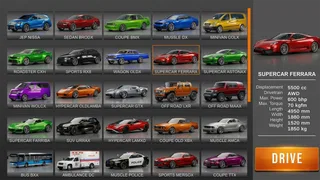
- Several cars offer different driving experiences.
- Simple controls are easy to learn.
- Free driving lets you explore without strict goals.
Cons
- Repeated crash tests can become predictable.
- Mountain routes may feel limited over time.
- Vehicle handling can feel difficult at first.
- Ads may interrupt play sessions.
- Progression offers limited long-term goals.


