
Our review
 Analysis by Lookingapps
I’m usually wary of idle games that promise a satisfying loop but quickly reduce it to tapping through upgrades. Bulldozer Master: Crush & Mine has a more appealing central idea: use demolition to feed a gold-mining business, then let the tycoon side carry on while you’re away. That blend gives the arcade action a purpose beyond simply breaking things. I’d consider it if you enjoy seeing a small operation grow and want a game you can dip into between other tasks, rather than one that demands a long, focused session.
What kind of arcade game is it?
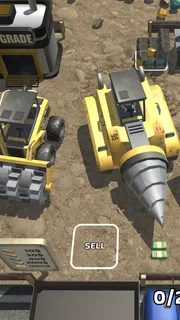
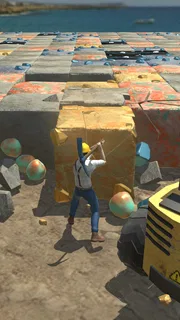
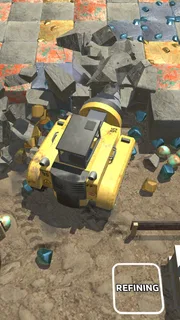
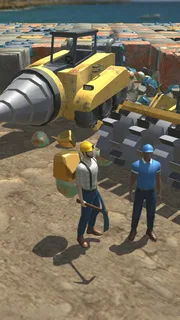
Made by Supercent, Inc., this is an arcade game with an idle tycoon angle. Its appeal rests on two different moods: the immediate satisfaction of demolition and the slower gratification of building up a gold-mining operation. The idea is easy to understand, which helps if you want to start playing without first learning a complicated set of rules.
The idle element also changes what “progress” feels like. Instead of expecting every session to be a continuous challenge, you can treat a visit as a check-in: see how the business is doing, make whatever improvements are available, and return later. In my view, that makes it more suited to short breaks than to players who want every minute to involve precise decisions or a demanding test of skill.
The game is free to download and is rated for Everyone. It has a 4.4 average from around 152,000 ratings, with over 5 million installs. Those figures suggest that the simple premise has found a broad audience, but they don’t tell you whether its particular pace will suit you. The useful question is whether you enjoy a loop where direct, physical-feeling action is tied to a growing virtual business.
Decide by the kind of session you want
If you want an arcade game that asks for your full attention, this may not be the strongest match. Its idle-tycoon framing points toward progress that continues between visits, so the enjoyment is partly in returning to see what has changed. If you prefer games that reward a quick check-in and a few deliberate choices, that structure can make the experience fit naturally around a busy day.
A realistic use case is opening it during a lunch break or while waiting for an appointment. You can spend a short spell engaging with the demolition-and-mining theme, then put the phone away without needing to hold a long sequence of events in your head. That kind of convenience is a real strength, though it also means the game may feel too light if you want a deep campaign or a substantial challenge every time you play.
One practical tip for judging it is to pay attention to the balance between action and management in your first sessions. Ask yourself whether you enjoy the moment-to-moment act of clearing things, or whether you are mainly waiting for the mining side to advance. If only one half appeals, the combined loop may not hold your interest for long. The two-part concept works best when the action feels like a satisfying contribution to the larger operation.
More articles

Instagram Makes Everyday Moments Worth Sharing
A rare social app that can be a photo diary, a neighborhood window, and a lively conversation in the same session—though its best moments still require a little restraint.
Where the demolition-and-mining loop works
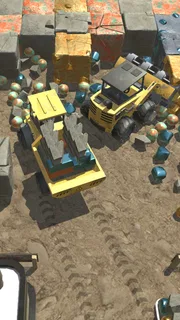
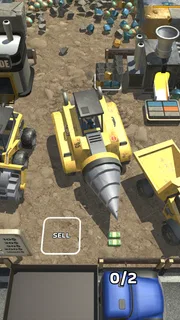
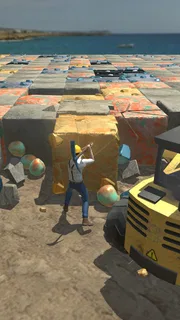
The most distinctive strength is the connection between destruction and business growth. In many arcade games, smashing objects is the whole point; in a tycoon game, management and accumulation are usually the main draw. Here, those familiar pleasures are brought together. I like that framing because it gives demolition a sense of direction: it belongs to a larger enterprise rather than being an isolated spectacle.
That structure can also make the game easier to revisit. A conventional arcade session often depends on wanting another immediate run, while an idle game can offer a reason to come back even when you only have a little time. The useful trade-off is that the satisfaction may be spread across visits. If you like gradual progress, that can feel welcoming; if you expect every session to deliver a dramatic payoff, it can feel restrained.
For a new player, I’d approach upgrades as a way to support the loop rather than as a checklist to clear as fast as possible. Notice which improvements make the next visit more satisfying, and avoid spending just because an option is available. This is a general decision-making habit rather than a promise about a particular upgrade system: it helps you keep the game’s progression meaningful, especially in an idle format where it’s easy to mistake constant advancement for interesting advancement.
The game is currently at version 11.2.0, and Android support starts at version 6.0. That makes it accessible on a range of Android devices that meet the minimum requirement, though the version number alone doesn’t tell me how it performs on any one phone. If your device is older, I’d still judge it by how smoothly the actual play feels and whether the controls remain comfortable during demolition, rather than assuming that compatibility guarantees an ideal experience.
When another kind of game is a better fit
Compared with a traditional arcade title, this game places more weight on long-term accumulation and less on a self-contained challenge. Choose a straightforward action game instead if what you want is a clear skill test, a sense of mastery over precise controls, or sessions that feel complete when you put the phone down. The mining-business layer may be a distraction if you would rather focus on the immediate action.
On the other hand, a more management-heavy tycoon game could suit you better if you enjoy planning a complex operation more than taking part in demolition. Bulldozer Master’s appeal is the mix, not a promise of deep simulation. I’d skip it if you expect detailed business strategy, extensive customization, or a demanding progression puzzle; those expectations go beyond what its simple arcade-and-idle premise suggests.
There is also a useful distinction between idle play and a game that is entertaining only while you are actively doing something. If you dislike returning to a title to collect the benefit of time away, the idle structure may feel like an obligation rather than a convenience. Conversely, if you like games that can occupy small pockets of the day, it offers a softer commitment than a session-based game that asks you to stay focused from start to finish.
Spending, patience, and the cost of switching
The game is free, with in-app purchases ranging from $0.49 to $99.99 per item. That is a wide spread, so I’d treat spending as optional and decide on a personal limit before buying anything. A free starting point lets you test whether the loop suits you before committing money. If you find yourself considering a purchase because progress feels slow, pause and ask whether you genuinely enjoy the game’s pace or are trying to pay your way past a part you don’t enjoy.
One non-obvious trade-off in idle games is that convenience can gradually turn into a routine: check in, claim progress, repeat. I’d avoid letting the habit of returning become the reason you keep playing. A good test is whether the demolition itself remains enjoyable when you open the game, rather than whether you feel compelled to keep a business growing. If the action stops being fun, switching to another arcade game is easy; there is no need to treat accumulated progress as a reason to stay.
Switching is also a matter of what you want from your phone time. Moving to a fast, skill-focused arcade game gives you more immediate challenge, while choosing a deeper tycoon experience favors planning over physical action. This game sits between those choices. I’d give it a fair trial when you want both a tactile theme and low-pressure progression, then move on without hesitation if you find yourself wishing it were entirely one type of game or the other.
Because it is built around short visits, a sensible workflow is to decide what you want from each opening before you start: a brief bit of demolition, a look at business progress, or both. That prevents aimless tapping and makes it easier to tell whether the game is earning a place in your routine. It also gives you a clearer basis for deciding whether any optional purchase would improve your enjoyment or merely accelerate a loop you have not yet decided you like.
Who I’d recommend it to
I’d recommend Bulldozer Master: Crush & Mine to someone who enjoys arcade destruction but also likes watching a small operation expand over time. It’s especially promising for players who want an uncomplicated game to open during spare moments and don’t mind progress being spread across visits. Its Everyone rating makes it broadly approachable, while the straightforward concept is a sensible place to start if elaborate mechanics put you off.
I wouldn’t point a competitive player, a fan of intricate management, or someone seeking a substantial story toward it as a first choice. Those players may be happier with a more focused alternative in the category they care about. The appeal here is the particular pairing of demolition and idle business growth, not a claim that it replaces every kind of arcade or tycoon game.
My verdict is that this is worth trying if you’re curious about a relaxed arcade game with a business-building reason to return. Give the free version enough time to see whether the destructive action and the gradual mining progression complement each other for you. If they do, its low-pressure format can make it a handy little break-time game; if you want deeper strategy or more demanding arcade play, you’ll know quickly that a more specialized option is a better use of your time.
Pros
- Straightforward controls make it easy to start crushing and mining.
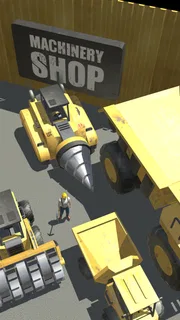
- Unlockable machines add a sense of progression.
- Short levels suit quick play sessions.
- Destruction provides satisfying visual feedback.
- The mining theme offers a change from typical racing games.
Cons
- Gameplay may feel repetitive after several levels.
- Progress can depend on repeated upgrades.
- Vehicle handling may feel simplistic to experienced players.
- The game may include frequent advertisements.
- Some upgrades may take time to unlock.


