


Our review
 Analysis by Lookingapps
I’m drawn to strategy games that make a short break feel satisfying without demanding a long session, and Auto Drill: Galaxy has a clear appeal: you work through a planet one section at a time, with weapons and skills shaping how quickly you progress. The central loop is easy to grasp, but the choices around upgrades give it more to consider than a simple tapping diversion. My impression is that it suits players who enjoy visible progress and experimenting with builds, provided they are comfortable with a game whose pace can depend on how they develop their setup.
What the drilling loop feels like
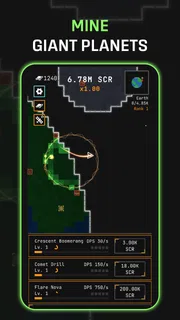
Auto Drill: Galaxy is a free strategy game from LAVA LABS OYUN YAZILIM VE PAZARLAMA ANONİM ŞİRKETİ. Its premise is focused: break through a planet block by block, unlock weapons, and combine skills as you push toward longer runs. Rather than asking you to master a large map or manage a squad, it puts the emphasis on improving a compact set of tools and seeing how those improvements affect your next stretch of progress.
That makes the game approachable when I only have a few minutes. I can understand the immediate objective without having to remember a complicated chain of missions. At the same time, “strategy” here is more about deciding where to invest and how to combine capabilities than about planning a battlefield. If you want turn-based positioning, elaborate diplomacy, or a campaign built around story choices, this is not that sort of strategy game.
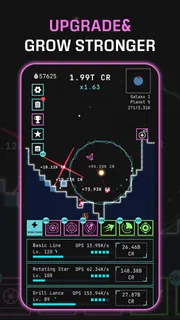
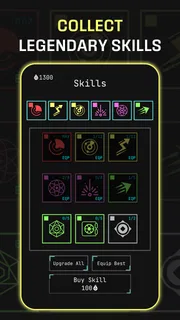
The most useful way to think about the loop is as a series of small decisions with a visible payoff. A weapon unlock can change how a run feels, while fused skills invite you to consider whether a broader combination is more valuable than concentrating on one approach. That gives each upgrade a practical question behind it: will this help me break through the next stretch, or am I spending resources on a benefit I may not feel right away?
I would avoid treating every new unlock as an automatic improvement. In games built around upgrades, adding options can be exciting but also make a setup less focused. My advice is to pay attention to what actually speeds up your current attempt and make one meaningful change at a time. That makes it easier to tell whether a weapon or skill combination is helping, instead of changing several things and guessing which one mattered.
Speed depends on the choices you make
The name and premise suggest a brisk, repeatable experience, but I would not equate “auto” with a guaranteed instant finish. The block-by-block structure gives progress a steady, incremental feel; how satisfying that feels will depend on whether you enjoy watching a run develop and adjusting your setup. Players who want a burst of action from the first second may find the upgrade loop more measured than they expect.
There is a useful distinction between quick access and quick progress. It is easy to understand what the game wants you to do, but reaching a stronger rhythm can depend on unlocking equipment and making decisions that work together. If you are in a hurry, a short session can still give you a clear objective. If you are chasing a much longer run, you may need more patience and a willingness to refine your approach rather than expect one early upgrade to solve everything.
More articles

Instagram Makes Everyday Moments Worth Sharing
A rare social app that can be a photo diary, a neighborhood window, and a lively conversation in the same session—though its best moments still require a little restraint.
For a practical routine, I would use each attempt to test a single idea. Try a different weapon emphasis, or see whether a fused skill makes a noticeable difference to the way you clear blocks. Keep the rest of your approach steady where possible. This is a small but useful habit: it turns a retry into a comparison, rather than a repeat that teaches you very little.
That approach also helps answer whether the game rewards planning or just repetition. It offers room for decisions, but the decisions are most useful when you connect them to what happened in the previous run. If you prefer a game that lays out exact tactical consequences before every move, this may feel too loose. If you like learning through trial, progress, and adjustment, the compact loop has a better chance of holding your attention.
When a run gets busy
The heavier moments are likely to come when you have several weapons and skill effects to consider, or when you are trying to keep a promising run going while deciding what to improve next. That is where the game’s combination idea matters most: a skill fusion is not just another item to collect, but a reason to think about whether your current setup has a coherent purpose. I find that kind of focused tinkering more engaging than unlocking things without a plan.
There is a trade-off, though. A build that feels strong in one stretch may not be the most useful answer to every situation. If you become attached to one combination, you may miss the value of testing a different direction. I would treat a good run as evidence about what works under those conditions, not proof that the same configuration will always be best.
For everyday play, this makes the game easier to fit around an ordinary schedule than a strategy title that expects uninterrupted attention for a long match. A short break can be used to make progress or reconsider an upgrade path. I would still choose a calmer moment if I wanted to compare several options carefully; rapid tapping through menus, if that is how you tend to play, can make the strategic part feel like an afterthought.
It is also worth setting expectations about what kind of “infinite” appeal to look for. The attraction is the prospect of extending a run by improving weapons and fusing skills, rather than a promise that every attempt will grow without friction. If you enjoy pushing a system to see how far a build can go, that goal is compelling. If you need a clearly defined ending and a tightly authored sequence of stages, a conventional level-based game may suit you better.
Reliability and returning to a run
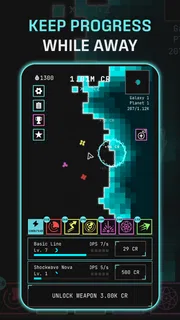
I judge reliability in a game like this by whether the main loop is easy to return to: can I pick up the idea of breaking through blocks, remember why I chose a particular upgrade, and get back into the next attempt without a long warm-up? Auto Drill: Galaxy’s focused premise makes that kind of return appealing. There is less conceptual overhead than in a sprawling strategy game, so it can work well as something to revisit in short bursts.
For a longer session, I would be more deliberate about how I spend attention. Repeated runs can make choices feel routine if I stop noticing what each one teaches me. One way to keep the experience fresh is to set a small goal before starting—such as testing a weapon direction or seeing whether a skill combination changes the pace—rather than treating every session as a race to advance as far as possible.
I would not recommend building expectations around uninterrupted marathon play. The appeal is strongest when a run has a purpose, and the repeated nature of the loop may feel less rewarding if you want constant new environments, a large cast of characters, or a narrative that unfolds between battles. For players who like improving a system incrementally, that repetition is part of the point; for players who need novelty at every turn, it can become the main limitation.
The game has a 4.3 average from around 4,200 ratings, with 371 written reviews, and has passed 100,000 installs. Those figures suggest that it has found an audience, but they do not tell me whether its particular upgrade rhythm will suit you. I would use them as context, not as a substitute for asking whether you enjoy incremental progression and experimenting with equipment.
Device fit and spending expectations
The minimum operating system is Android 7.0, so compatibility is relevant for people using older phones or tablets. That requirement does not, by itself, tell me how smoothly the game will run on a particular device. Performance can vary with hardware and other conditions, so I would avoid assuming that a newer-looking strategy loop necessarily needs a powerful phone—or that every older device will handle it equally well.
In terms of perceived speed, a game centered on breaking blocks and improving weapons sounds easier to approach on a small screen than a strategy game full of tiny units and dense menus. Still, screen size and comfort matter if you like to inspect upgrades closely or spend time comparing combinations. On a compact phone, brief sessions are the natural fit; someone who wants to study a build at length may prefer a larger display if they already have one available.
The game is free to start, with in-app purchases ranging from $1.99 to $99.99 per item. I would go in with a simple boundary: enjoy the core loop first, then decide whether any purchase would genuinely improve your experience. A broad purchase range makes it sensible to check each item carefully before spending, especially if you are playing casually and are not sure yet whether you will stick with the game.
Its content rating is Everyone, which makes it suitable for a broad age range in that respect. The current version is 25. These details can help with basic compatibility and household decisions, but they do not change the central question: are you looking for a focused progression game, or for a more traditional strategy experience with deeper tactical control?
Who will enjoy it—and who should look elsewhere
I would recommend Auto Drill: Galaxy to someone who likes watching a simple objective become more interesting through upgrades. It is especially suited to players who enjoy trying a weapon, noticing where it falls short, and then seeing whether a skill fusion or a different investment improves the next run. The game’s appeal is less about mastering a huge set of rules and more about shaping a compact progression system.
It is a weaker fit for anyone who wants strategic decisions to involve a large map, simultaneous opponents, careful unit placement, or a long campaign with a clear narrative arc. Compared with those familiar strategy alternatives, this game pares the genre down to repeated advancement and build choices. That can be refreshing when you want a low-commitment session, but it will feel limited if tactical depth means controlling many moving pieces to you.
It may also be the wrong choice if you dislike repetition or prefer games where each level introduces a completely different challenge. Here, the satisfaction comes from improving your ability to push through the same broad kind of obstacle, not from constantly switching to unrelated modes. I would skip it in favor of a puzzle strategy game if you want to solve a different handcrafted problem each time, or a real-time tactics game if you want immediate control over every action.
For a realistic everyday use case, imagine having a few spare minutes while waiting for an appointment. You can open the game, focus on one upgrade decision, and use the next attempt to see whether it helps. If the wait ends, the small-scale goal makes it easier to stop than a long match would. Later, when you have more time, you can experiment with a different combination rather than feeling obliged to complete a lengthy campaign.
My verdict on the pace and performance
Auto Drill: Galaxy has a clear identity: a compact strategy game about drilling through planetary blocks and improving the tools that make each run more effective. I like the idea of using weapon unlocks and fused skills to give a repeated loop room for experimentation. Its best quality is that it makes progress easy to understand while leaving enough choice for players who enjoy learning from one attempt to the next.
Its limits are just as clear. The formula depends on your patience for repeated runs, and the strategic layer is narrower than the label might suggest to someone expecting a full-scale tactics game. Spending also deserves a little restraint: the game is free, but optional items can be expensive, so I would not treat purchases as a shortcut before deciding whether the core loop has earned a place in your routine.
My overall recommendation is to try it if you want a straightforward, upgrade-led game that can fit into short sessions and gives you a reason to rethink your setup. I would choose something else for story-heavy progression, intricate tactical control, or constant variety. If the satisfying part for you is making a small change, watching how it affects a run, and then deciding what to test next, Auto Drill: Galaxy is a focused option worth considering. If you want a sprawling strategy sandbox, it is better to look elsewhere.
In short, I see it as a game to approach with modest expectations about complexity and a willingness to experiment. The best sessions are not necessarily the longest ones; they are the ones where a weapon or skill choice gives you a clear lesson about how you want to play. That is a specific, appealing hook, even if it will not be enough for players who need every run to feel entirely new.
Pros
- Quick drills make short practice sessions easy to fit into your day.
- Galaxy-themed visuals give the learning experience a distinctive style.
- Automatic question delivery keeps practice moving with little setup.
- Useful for reviewing material through repeated question attempts.
- A focused quiz format helps reduce distractions while studying.
Cons
- Question quality can vary depending on the subject and topic.
- Repeated questions may make longer sessions feel predictable.
- The app may not cover every curriculum or exam standard.
- Learners who prefer detailed lessons may find the quiz format limited.
- Progress can be harder to judge without clear performance breakdowns.


